





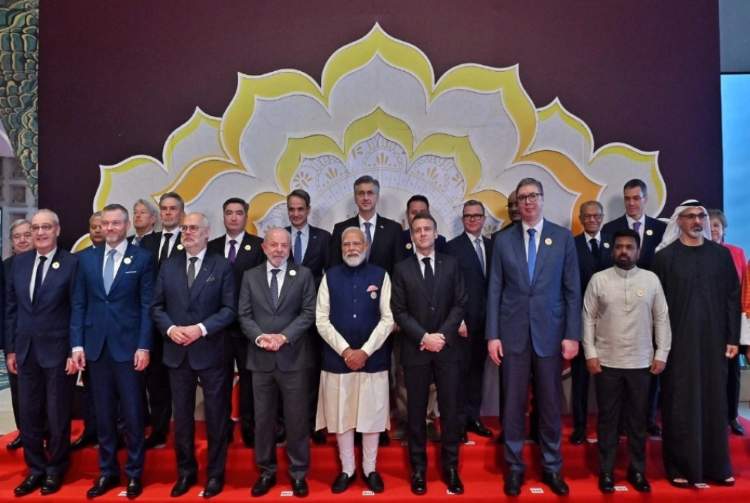
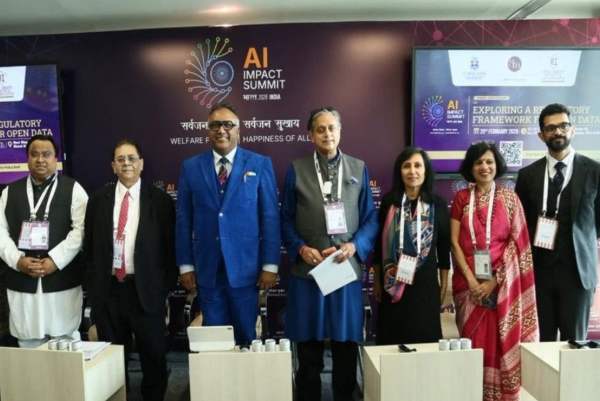
Women workforce in India: The India AI Impact Summit 2026 ended with the right rhetoric. Its official messaging stressed inclusive innovation, gender equity and the need to widen participation in the AI economy. But the Union budget sends a less confident signal. The IndiaAI Mission has been cut from ₹2,000 crore in Budget Estimates for 2025-26 to ₹1,000 crore in 2026-27, after a revised estimate of ₹800 crore for 2025-26. Ambition has survived but fiscal conviction has weakened.
This matters because the summit’s language on women in technology sits atop a labour market that has become more crowded, but not necessarily more secure. Official PLFS data show female labour force participation rising sharply, from 23.3% in 2017-18 to 41.7% in 2023-24 on usual status for those aged 15 and above. On current weekly status, the rise is from 21.1% to 35.6%. That is real movement. It is also not the same thing as durable empowerment.
The gap between entry and empowerment is where policy usually fails. More women may be entering the labour market, but India still leans on a structure in which care work is weakly funded, frontline women workforce is poorly paid, and the institutions meant to make work safer remain patchy. A rising participation rate can hide a harsher truth: growth in female work without growth in security, pay or support systems. That is not transformation. It is labour absorption under constraint.
READ I Women’s jobs face greater disruption from artificial intelligence
MWCD spending remains narrow and skewed
The same pattern shows up in the Ministry of Women and Child Development. Its total budget rises to about ₹28,183 crore in 2026-27. But the bulk of that money still goes to Saksham Anganwadi and POSHAN 2.0, which receives ₹23,100 crore. That is more than four-fifths of the ministry’s allocation. Mission Shakti, the ministry’s main umbrella for women’s safety and empowerment, gets far less: ₹3,200 crore in all, with ₹627 crore for Sambal and ₹2,573 crore for Samarthya.
There is no case for belittling nutrition. But there is a case for noticing what gets squeezed when nutrition takes up almost the entire field. The institutions that matter for women’s economic participation, crèches, working women’s hostels, safety systems, helplines, one-stop centres, skills support, remain fiscally secondary. That is the contradiction at the heart of India’s inclusion story. The state wants women to work more, train more and join the digital economy. It is less willing to fund the conditions that make such participation viable.
This is not a new problem. PRS analysis of ministry spending has already shown persistent underutilisation in Mission Shakti and Mission Vatsalya in recent years. The Rajya Sabha committee examining the ministry’s demands for grants also flagged weak utilisation under Mission Shakti in 2024-25. India does not only underfund women-focused support systems. It often fails to spend even what it sets aside.
READ I Women’s land rights central to India’s agriculture reform
Anganwadi infrastructure exposes a gap
The sharpest evidence lies in the care economy. Parliamentary committee data show about 13.98 lakh anganwadi centres in the country. Yet only 59.25% have permanent electricity connections and 72.10% have functional toilets. Nearly 2.13 lakh posts for anganwadi workers and helpers remain vacant. The same committee recorded that anganwadi workers at main centres get ₹4,500 a month from the Centre and helpers ₹2,250, with small performance-linked incentives added on top. It also said plainly that this honorarium sits below minimum wages and recommended a substantial increase.
That should settle the matter. India cannot speak grandly of unlocking women’s productivity while running its care infrastructure on fragile buildings, vacant posts and low-paid women workers. The contradiction is not incidental. It is structural. The state depends on underpaid female labour to make it possible for other women to join the workforce.
READ I India’s energy security cannot rest on coal alone
Women workforce and safe workplaces
The same problem extends to women’s safety architecture. Sambal covers One Stop Centres, Women Helplines and related support systems. The 2026-27 budget keeps ₹405 crore through the Nirbhaya Fund route for the OSC and helpline components. That is necessary, but the wider pattern of underutilisation and administrative weakness keeps returning in committee reviews and budget analysis. Safety cannot rest on announcements. It needs functioning institutions, timely releases and credible last-mile delivery.
This becomes more important, not less, in an AI-led economy. Technology does open doors. It can lower entry barriers, expand access to information, enable remote work and widen access to training. But technology does not remove unpaid care burdens. It does not create safe transport. It does not substitute for childcare. It does not write social-security rules or enforce contracts. If those gaps persist, digital inclusion will not neutralise old inequalities. It will digitise them.
AI inclusion without fiscal seriousness
That is the policy question the summit left behind. India wants women workforce to be seen not as passive beneficiaries of technology, but as builders, founders and leaders. Fine. Then the test is not the tone of summit declarations. It is whether budgets, ministries and state capacity are aligned to that ambition.
A serious inclusion strategy would begin with care infrastructure, not end with it. It would treat anganwadis as economic infrastructure. It would fund crèches and working women’s hostels as labour-market enablers. It would pay frontline care workers wages consistent with the value they create. It would treat women’s safety systems as core public institutions, not side schemes. And it would stop presenting higher participation rates as proof that the hard part is over.
India has made progress in raising women workforce. That deserves recognition. But the next question is harder and more important: what kind of work are women entering, and on what terms? Until policy answers that with money, institutions and implementation, empowerment will remain too cheap a word for what is still, in large measure, precarious inclusion.
Shiney Chakraborty is affiliated with International Center for Research on Women, Asia Office. Views expressed are personal.