






Governance lessons from Punjab: It has always fascinated me how theory and practice in public policy work together. It is rare to find people who can inhabit both worlds. Usually, there are theorists, who sit in the proverbial ivory towers, and then there are practitioners who throw theory by the wayside and look at it somewhat condescendingly. One of the few people who is able to appreciate theory while remaining very much a practitioner is Mr Suresh Kumar, and this approach is quite easily visible in his book, Insights from the Frontlines of Governance: Reflections of a Civil Servant.
Written largely in the form of op-eds, the book is, in a way, a treasure trove of cases, arguments and lessons accumulated by a civil servant. One practical advantage of this form of writing is that policy analysts get a plethora of cases to read and anyone interested in the future of nation-building in India can access it in a world that remains increasingly distracted (i.e., they don’t have to follow a 300 page story to gain their first lesson).
READ I Shrinking middle class calls for economic policy reset
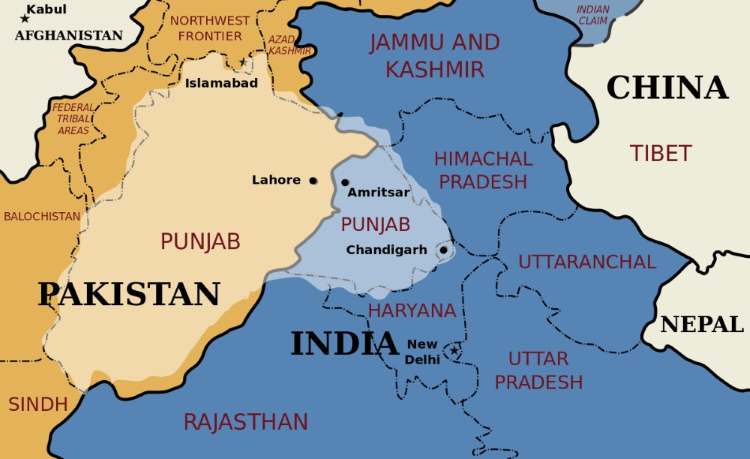
Suresh Kumar, after nearly four decades in public administration and public policy, retired after serving at the highest levels of the Punjab government, including as Chief Principal Secretary to the Chief Minister. Spending a career in any state in India is, I am sure, full of challenges and successes, but Punjab is not just any state. It borders Pakistan, has been a powerhouse of national agriculture and food security, and has faced practically every variety of governmental problem, from Centre-State tensions and river disputes to fiscal stress, militancy and political instability, ecological decline, agricultural stagnation, migration and substance abuse.
Kumar himself writes of having witnessed the violent Punjab of the 1980s and early 1990s. Another practitioner could perhaps give a sigh of relief upon retirement. What is admirable about Kumar is his choice instead to intellectually probe his experiences almost as a data set and present cases and lessons for others to examine.
So, this book is truly in the tradition of Roman statesmen, generals and civil servants who would set out on an intellectual journey to write histories of the times they had seen first hand. To the long and illustrious line of practitioner-theorists including Sallust, Cato and Herodian, we may add a few modern Indian names, and Suresh Kumar’s name would be befitting of that tradition. His book is not a memoir in the conventional sense. The protagonist is less Suresh Kumar than the Indian state itself, particularly the Punjab state, observed by somebody who has seen its machinery from the inside.
READ I Foreign retail ecommerce firms get a new export route
Punjab agricultural policy beyond wheat-paddy trap
The book is at its best when Kumar notices things that an outside theorist might miss. Consider something as mundane as paddy stubble. The usual debate turns very quickly into one about farmers burning residue and Delhi choking on pollution. Kumar instead reconstructs the policy chain that produced the problem. When paddy cultivation was expanded in Punjab, the state created systems for seeds and inputs, agricultural credit, assured procurement, rice shelling and marketing. Some 5,000 rice shellers eventually became part of this production architecture. Yet one link in that elaborate policy chain was simply absent. Nobody designed a policy for what was to happen to the residue after the crop was harvested.
This changes the character of the problem. Stubble burning is no longer simply bad behaviour by farmers. It is partly an unpriced final stage of a production system deliberately built by public policy. Kumar therefore argues that residue management should itself become part of agricultural policy. If society wants farmers to collect, bale, transport, store or otherwise process residue, their costs must be recognised, potentially through an incentive or even as part of the Minimum Support Price.
At the same time, industries using residue for biofuel, plywood and other purposes can be developed, with warehousing and even a system of residue bonding to assure industry of raw material supplies. This is precisely the sort of observation that distinguishes administrative experience from an abstract exhortation to make agriculture sustainable.
READ I Wastewater crisis is worsening India’s water shortages
There is a similarly interesting argument about the Minimum Support Price. Kumar rejects the false choice between maintaining the existing wheat-paddy procurement system forever and simply liberalising agricultural markets. He points out that a legal floor price does not necessarily mean that the government must buy every crop produced at that price. He suggests instead a diversified MSP covering pulses, oilseeds, millets and other crops, with prices capable of reflecting regional conditions, markets and environmental considerations.
A millet that conserves water, for instance, should not be placed within precisely the same incentive structure as water-intensive paddy. Private firms could be encouraged to procure at or above the support price, while cooperatives and digital markets provide alternative routes to the consumer. MSP then ceases to be merely a procurement mechanism and becomes potentially an instrument for ecological and agricultural transition.
Perhaps even more interesting is Kumar’s application of the idea of the resource curse to Punjab. The resource in this case is neither oil nor diamonds. It is Punjab’s extraordinarily productive agricultural economy. Kumar’s contention is that the very system which made Punjab prosperous and indispensable to India’s food security gradually locked farmers, markets, public institutions and politicians into the wheat-paddy equilibrium.
Guaranteed procurement reduced the incentives to move elsewhere, political institutions became organised around preserving it, industry and services failed to develop sufficiently, and ecological depletion accumulated underneath the apparent prosperity. In his formulation, Punjab’s great historical strength gradually became its “silent resource curse”. This is a considerably more interesting explanation of Punjab’s stagnation than merely saying that the state failed to diversify.
River federalism and the unfinished Punjab settlement
The same ability to recast an apparently familiar problem is visible in Kumar’s treatment of river federalism. His argument is not merely that Punjab deserves more water. He asks a more subtle question. If Haryana and Rajasthan are beneficiaries of a river-management system, why should Punjab disproportionately bear the downside risk? The beneficiary states share in water and certain costs of the Bhakra Beas Management Board, or BBMB, while flood losses and much of the ecological burden remain concentrated in Punjab.
Kumar therefore proposes that the Centre, the BBMB and beneficiary states should participate in the costs of flood management and losses. The principle that emerges is larger than Punjab. When the benefits of a common resource are shared across a federation, there is a strong case for sharing the risks and externalities associated with producing those benefits as well.
His adjoining argument on the BBMB is equally revealing. Kumar treats it as an example of how temporary arrangements can acquire extraordinary permanence. The Board arose out of the Punjab Reorganisation Act of 1966, but Kumar questions why an institution rooted in transitional reorganisation legislation should remain the permanent constitutional architecture for managing major river systems decades later.
He proposes dedicated parliamentary legislation for the Ravi, Beas and Sutlej system, explicitly defining riparian rights, the participation of non-riparian beneficiaries, ecological considerations and routes for adjudicating disputes. There is a wider lesson here. Administrative expedients created to survive a particular crisis can quietly become permanent institutions even after the circumstances that produced them have disappeared.
His proposed solution to the Chandigarh problem carries the same instinct for disaggregating a political dispute. Instead of treating the question as simply Punjab versus Haryana, Kumar separates territorial history, administrative function and fiscal capacity. His proposal is that Haryana should build a new capital with central assistance, while Chandigarh remains a Union Territory functioning as Punjab’s capital. Crucially, this avoids handing Punjab the enormous fiscal burden of administering Chandigarh entirely by itself. Whether or not one agrees with the proposal, it is a genuine policy solution rather than another recitation of competing historical claims.
Institutional memory and governance lessons
Kumar talks repeatedly about operationalising bureaucratic knowledge and memory, and in a way institutionalising it. While many have given statements of aspiration about governments learning from the past, his book actually points towards a pathway for future policymakers to operationalise that aspiration. Governments change, officers are transferred and records become fragmented. Consequently, policies are sometimes reinvented without anybody knowing why an earlier version succeeded or failed. Kumar makes an important distinction here. Institutional memory is not the same as archiving. It requires evaluation, feedback and the incorporation of accumulated experience into subsequent decisions.
His proposal becomes unusually concrete when he asks why governments should not actually employ historians inside ministries. He points to the British Foreign, Commonwealth and Development Office’s use of professional historians, the History & Policy network used by British departments, and the practice of assembling historians quickly when ministers confront questions with significant historical precedents. India, he argues, possesses historians in abundance but has no comparable institutional mechanism for placing historical knowledge inside policymaking.
As a historian by training myself, I can only see the tremendous and so far underappreciated upsides of this. Historical knowledge is not valuable because the past supplies ready-made answers. Kumar is careful about precisely this danger and writes about the need to distinguish historical and spatial analogy, since something that worked in another place or another period cannot simply be transplanted into the present. The value lies instead in giving policymakers a longer memory, allowing them to recognise old failures in new clothes and to understand how the circumstances that produced a policy have changed.
One cannot entirely ignore here echoes of higher theoretical work such as that of Dr Kaushik Basu at Cornell University and Jörgen Weibull at the Stockholm School of Economics, where a profound point emerges that the equilibrium in a game is defined partly by its knowledge conditions. Kumar’s contribution, in a very different setting, is to bring something analogous down to the level of administration.
If bureaucratic knowledge disappears every time an officer is transferred, a government has effectively altered the knowledge conditions under which the next round of policymaking takes place. If Kumar’s path is followed, then bureaucratic knowledge, recorded through an honest account of what worked, what failed and why, could itself become one of the most valuable resources of a nation.
There is another excellent illustration of this in Kumar’s discussion of Punjab’s ₹31,000 crore food-credit gap. Rather than treating public debt merely as a macroeconomic number, Kumar reconstructs how disputed procurement expenses, reimbursement delays and administrative inaction were allowed to accumulate until, in 2017, the discrepancy was converted into a long-term state liability. He is particularly struck by the fact that something of this magnitude could enter the public balance sheet without commensurate legislative or public scrutiny.
His proposed response is very bureaucratic in the best sense of that word. He proposes digitising procurement from tender to payment, subjecting high-value contracts to pre-audit, creating independent real-time fiscal oversight and establishing a Fiscal Risk Management Cell specifically to identify off-budget liabilities before they quietly become debt crises. The larger insight is that fiscal disasters are not always created by one spectacularly bad decision. They can be produced by years of administrative silence.
Kumar also coins the provocative expression “litigation terror” to describe another pathology familiar to administrators. He uses it for litigation deployed not merely to obtain justice but to delay decisions, intimidate officials, obtain through courts what could not be secured administratively, or permit the executive itself to avoid taking responsibility. Whatever one thinks of the phrase, the mechanism deserves attention.
Kumar argues that indiscriminate retrospective scrutiny can cause officials to become so conscious of future investigations, audits and litigation that the rational bureaucratic strategy becomes not corruption but inaction. Elsewhere he therefore calls for a much clearer distinction between an honest error made in good faith and mala fide conduct. Without that distinction, an accountability system can perversely punish the very administrative judgment and experimentation that effective government requires.
In agricultural policy too, Kumar makes an intellectually useful change in perspective when he asks policymakers to stop looking only at the crop and look instead at the household economy of the farmer. The farming household has agricultural income, but it also has debt, consumption expenditure, medical shocks, non-farm work, women’s labour and the possibility of seasonal employment or migration. This leads him, among other things, to the unusual suggestion that employment guarantees should also cover marginal and ultra-marginal farmers during periods when their own holdings cannot provide sufficient work. It is a seemingly small shift in the unit of analysis, from the profitability of cultivation to the economic resilience of the household, but it changes what good agricultural policy would look like.
The op-ed form inevitably means that some arguments recur, and the book is less compelling when it speaks in the familiar vocabulary of ethical, inclusive, sustainable and evidence-based governance. Its real power appears when Kumar moves away from those general aspirations and shows how administrative systems produce consequences that were never consciously chosen. Again and again, he finds the interesting part of public policy not merely in its declared objective but in its institutional afterlife, in the incentives it creates, the knowledge it preserves or destroys, the costs it leaves unallocated and the structures that remain long after their original purpose has faded.
At the end, the charm of his book is that despite having spent nearly all his life as a practitioner, Suresh Kumar comes across first as a theorist. But he is a theorist of a particular kind. His abstractions arise out of the practical workings of government rather than being imposed upon them. He repeatedly takes a concrete administrative problem, reconstructs how it came into being, and then asks what larger principle of governance it reveals. That, to my mind, is what makes Insights from the Frontlines of Governance worth reading.
READ I UPI MDR needs a shield for small merchants

Arpit Chaturvedi is the Co-Founder and Chief Executive Officer of Global Policy Insights (GPI), a centrist thinktank based out of New Delhi, New York, and London.