





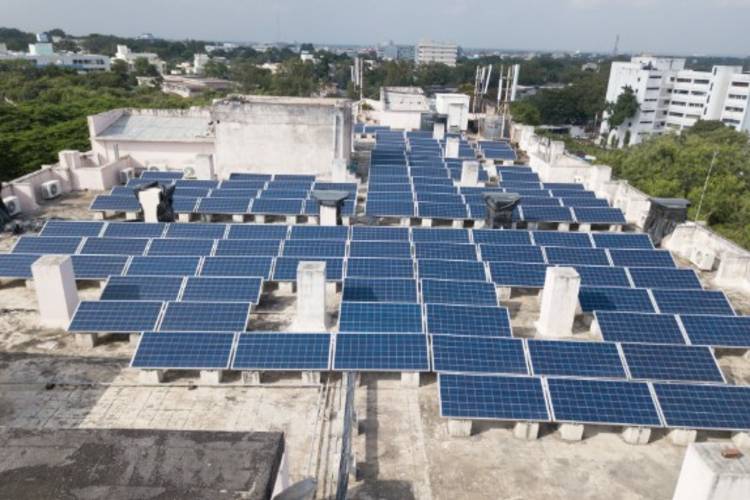
PM Surya Ghar Yojana: India’s energy transition has moved from declarations to actions. As electricity demand rises sharply with urbanisation and income growth, policy choices now matter more than intent. The launch of the PM Surya Ghar Muft Bijli Yojana marks a decisive shift in how the state approaches clean energy- away from centralised generation alone, and towards household-level participation. The scheme sits at the intersection of energy security, fiscal design, and citizen empowerment. Its significance lies not in ambition, but in execution.
India’s power demand is projected to rise by over 35% by 2035, according to official planning estimates. Yet more than half of electricity generation still depends on coal, while around 85% of crude oil is imported. This exposure leaves households and public finances vulnerable to global price volatility. Against this backdrop, decentralised solar power is no longer an environmental preference; it is a strategic necessity.
READ | India’s renewable energy sector crosses a cost turning point
By end-2024, India’s renewable electricity capacity reached roughly 203 GW, accounting for over 46% of installed power capacity. The national target of 500 GW of non-fossil capacity by 2030, alongside the commitment to cut emissions intensity of GDP by 45% from 2005 levels, requires faster adoption beyond utility-scale projects. Rooftop solar is where that acceleration is now occurring.
Policy intent to household adoption
Launched in February 2024, the PM Surya Ghar Yojana is the world’s largest rooftop solar programme. Its objective is direct: enable households to generate their own electricity, lower monthly bills, and reduce dependence on the grid. Solar power capacity crossed 100 GW by early 2025, placing India among the top global producers. Rooftop installations expand this base while distributing ownership.
Budgetary backing has been decisive. The Union Budget for 2025–26 raised allocations for the scheme by 80%, from ₹11,100 crore to ₹20,000 crore, taking the total approved outlay to ₹75,021 crore through FY 2026–27. The target—10 million rooftop installations and 30 GW of additional capacity—signals a scale rarely attempted in distributed energy.
Implementation rests on a clear governance structure. A national programme agency oversees coordination, while state-level implementation is anchored in electricity distribution companies. DISCOMs handle vendor registration, inspections, and net-metering approvals, integrating rooftop systems into the grid rather than treating them as peripheral assets.
READ | Budget 2025-26: A green pledge with glaring gaps in climate action
PM Surya Ghar Yojana: Subsidies, credit, scale
The subsidy design is deliberately tiered. Systems up to 2 kW receive a 60% capital subsidy, with 40% support for the next kilowatt, capped at 3 kW. At prevailing benchmark prices, this translates into subsidies of ₹30,000 for 1 kW, ₹60,000 for 2 kW, and ₹78,000 for 3 kW systems. The intent is clear: keep upfront costs within reach of middle- and lower-income households.
Eligibility norms remain simple—ownership of a suitable rooftop, a valid electricity connection, and no prior solar subsidy. This has reduced administrative friction. By March 2025, nearly one million homes had rooftop solar systems installed, while applications crossed 47 lakh nationwide. Subsidies worth ₹4,770 crore had been disbursed to over six lakh households.
Credit access has amplified adoption. Collateral-free loans up to ₹2 lakh, priced at 6.75%, are being extended through public-sector banks. By September 2025, over 5.79 lakh households had secured solar loans worth ₹10,907 crore. Integration with the Jan Samarth digital portal has shortened approval timelines and reduced paperwork, a rare example of financial inclusion aligning smoothly with energy policy.
Jobs, savings, and behavioural change
Rooftop solar is delivering outcomes beyond capacity numbers. Government estimates suggest the scheme could generate 1,000 billion units of clean electricity over 25 years and offset 720 million tonnes of carbon emissions. Employment effects are material: roughly 1.7 million direct jobs are expected across manufacturing, installation, logistics, and maintenance.
Household outcomes are more immediate. Around 8.46 lakh beneficiary households report tangible gains, with nearly 45% experiencing zero electricity bills for parts of the year, depending on consumption patterns and state regulations. The ability to sell surplus power back to the grid has altered perceptions of energy—from a fixed expense to a manageable asset.
Decentralised generation also eases pressure on transmission networks and reduces peak-load stress. Each rooftop installation offsets emissions equivalent to planting around 100 trees. More importantly, it embeds clean-energy behaviour at the household level, where long-term transitions are ultimately decided.
Manufacturing dependence and supply-chain risk
Operational progress masks a structural weakness: India’s continued reliance on imported solar components. In FY 2024–25, photovoltaic module imports exceeded 352 lakh units, valued at about $1.7 billion, largely from China. This dependence persists despite steep customs duties—40% on modules and 25% on cells.
Policy response has combined protection with production incentives. The ₹24,000-crore Production-Linked Incentive scheme targets domestic manufacturing of high-efficiency modules. Domestic content requirements now link subsidies to locally sourced equipment, while procurement rules mandate minimum local value addition.
Early signals are encouraging. Adani Solar supplied over half the modules used under the scheme in FY 2025, accounting for nearly 1.8 GW of domestic capacity. Other manufacturers report gradual reductions in import dependence, aided by tariff protection, PLI incentives, and tighter Approved List norms. However, price competitiveness and scale remain challenges that will take several years to resolve.
READ | Green jobs: India’s path to a sustainable future
What still needs fixing
Rapid expansion has exposed bottlenecks. Financing gaps persist for lower-income households despite subsidised loans, often due to documentation hurdles or limited financial literacy. Urban density constrains rooftop availability, while awareness gaps skew uptake toward middle-income segments. Delays in subsidy disbursal and weak grievance-redressal systems have also dampened momentum in some states.
Grid readiness is another constraint. Distributed generation requires investments in smart meters, digital monitoring, storage, and high-voltage corridors. Without these, intermittency risks will grow as rooftop penetration increases.
Administrative solutions exist. State- and district-level facilitation cells can guide households through approvals. Standardised plug-and-play rooftop kits can cut installation delays and quality variance. Stronger certification and after-sales norms will be critical to sustaining consumer trust, particularly as domestic manufacturing expands.
The PM Surya Ghar Muft Bijli Yojana is not merely a subsidy programme. It is a redefinition of how energy assets are owned and managed in India. By converting consumers into producers, it distributes the gains of the energy transition while reducing exposure to fossil-fuel volatility.
Reaching one crore installations by 2027 will require coordination across manufacturers, banks, DISCOMs, and state governments. The direction, however, is correct. Rooftop solar has moved from pilot to policy pillar. In India’s long road to net-zero by 2070, this scheme stands out not for its rhetoric, but for its capacity to deliver change where it matters most—on household rooftops.
Subhajoy Mahanta is currently pursuing his MBA at IIM Visakhapatnam. Dr Barun Kumar Thakur is an Associate Professor in the Department of Economics at FLAME University, Pune.