





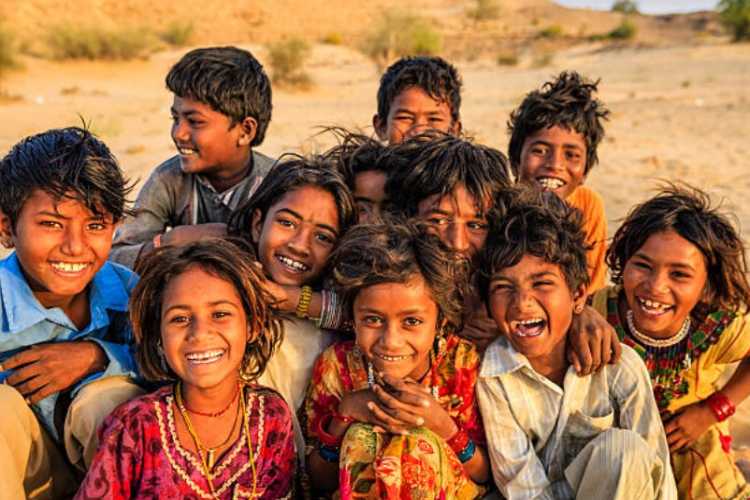
New MPI data: The 2025 Global Multidimensional Poverty Index (MPI) report leaves little room for abstraction. Poverty and climate hazards are no longer parallel emergencies that occasionally intersect. They now occupy the same geography, reinforce each other, and trap the same people. Published by the Oxford Poverty and Human Development Initiative (OPHI) and the United Nations Development Programme (UNDP), the report: Overlapping Hardships: Poverty and Climate Hazards—uses subnational data to map, with unusual precision, where deprivation and environmental risk collide.
The results are stark. Of the 1.1 billion people living in acute multidimensional poverty worldwide, nearly 80 percent reside in regions exposed to at least one major climate hazard—extreme heat, floods, drought, or dangerous air pollution. For most of the world’s poor, climate risk is not a future threat. It is a present constraint on health, livelihoods, and survival.
READ | Multidimensional poverty gains and fiscal federalism
What distinguishes this MPI round is not its poverty measurement, which remains consistent with the framework used since 2010, but the way it overlays poverty with climate exposure across 1,359 subnational regions. The result is a granular map of compounded vulnerability that policymakers can no longer ignore.
What MPI data measures—and why it matters
The MPI defines poverty not by income alone but by deprivation across three equally weighted dimensions: health (nutrition, child mortality), education (years of schooling, school attendance), and living standards (cooking fuel, sanitation, drinking water, electricity, housing, and assets). Using data covering 6.3 billion people across 109 countries, the 2025 report identifies 1.1 billion people—18.3 percent of the global population—as multidimensionally poor.
This matters because income poverty often obscures the structural deficits that keep households vulnerable. A family may cross an income threshold yet remain exposed to unsafe housing, polluted air, or chronic malnutrition. When climate shocks strike, these deficits determine who recovers and who falls deeper into deprivation.
The climate metrics used in the report are deliberately concrete. “High heat” refers to regions experiencing at least 30 days a year with maximum temperatures above 35°C. Drought is measured using the Standardised Precipitation–Evapotranspiration Index, which captures soil moisture stress. Flood exposure is drawn from EM-DAT disaster records, while air pollution is defined as annual PM2.5 concentrations exceeding 35 μg/m³. These thresholds convert climate risk from a conceptual concern into a measurable constraint on human wellbeing.
Climate hazards deepen deprivation
The report’s most troubling finding is not merely that poverty and climate hazards co-exist, but that exposure to climate risk systematically worsens every major deprivation measured by the MPI.
In climate-exposed regions, 726 million poor people rely on polluting solid fuels for cooking, compared to 229 million in non-hazard regions. Housing deprivation follows a similar pattern: 654 million poor people in hazard-prone areas live in inadequate shelter, versus 208 million elsewhere. Sanitation deprivation affects 617 million people in exposed regions, three times the number in safer areas.
Nutrition shows the sharpest divergence. In climate-exposed regions, 506 million poor people live in households with at least one undernourished member—more than four times the number in non-exposed areas. Droughts destroy crops, heat lowers agricultural productivity, and floods disrupt food distribution. Climate shocks convert chronic food insecurity into acute hunger.
Education outcomes also deteriorate under environmental stress. In hazard-prone areas, 461 million poor people live in households where no adult has completed six years of schooling, and 384 million live with at least one out-of-school child. Disasters interrupt schooling, push children into coping labour, and transmit deprivation across generations.
READ | Eradication of extreme poverty in Kerala sets a new benchmark
Where poverty and climate risks collide
This crisis is geographically concentrated. Sub-Saharan Africa and South Asia together account for over 83 percent of the world’s multidimensionally poor—565 million and 390 million people respectively. Nearly all of South Asia’s poor—99.1 percent—are exposed to at least one climate hazard. More than 90 percent face two or more simultaneously.
The nature of exposure differs. South Asia’s poor are overwhelmingly threatened by extreme heat and air pollution, while sub-Saharan Africa faces a more diffuse combination of drought, floods, heat, and infrastructure deficits. Yet the outcome is similar: climate hazards intensify already deep deprivation.
In South Asia, 86.7 percent of the poor are exposed to unsafe air and 80.4 percent to extreme heat. In sub-Saharan Africa, deprivation is deeper across all MPI indicators—cooking fuel, sanitation, electricity, and housing—leaving communities with little resilience when climate shocks strike.
Who bears the burden
Children carry the heaviest load. Though they constitute just over one-third of the global population, they account for 51 percent of the multidimensionally poor—586 million children. The youngest, aged 0–9, alone represent one-third of the global poor. For them, deprivation during critical developmental years locks in lifelong disadvantage.
Poverty is also overwhelmingly rural. While rural areas house 54.9 percent of the population covered by the MPI, they contain 83.5 percent of the poor. Weak infrastructure, climate-sensitive livelihoods, and limited access to services make rural households especially vulnerable to environmental shocks.
Perhaps most counter-intuitively, nearly two-thirds of the global poor live in middle-income countries. Large populations mask deep pockets of deprivation. Six countries—India, Bangladesh, Pakistan, China, Nigeria, and Tanzania—together host almost half of the world’s multidimensionally poor. In these countries, climate exposure threatens to reverse hard-won gains.
READ | Why India’s poverty decline may not be what it seems
Progress under threat
The report documents genuine progress. India reduced multidimensional poverty from 55.1 percent in 2005–06 to 16.4 percent in 2019–21, lifting an estimated 414 million people out of deprivation. Bangladesh and Nepal posted similarly sharp declines.
But momentum is weakening. Among 26 countries with recent data, only 16 show statistically significant reductions. Afghanistan and Kyrgyzstan have seen reversals. Several subnational regions—particularly in conflict-affected states—are slipping backwards.
Climate shocks are a key factor. Floods, heatwaves, droughts, and pollution are eroding the historical link between economic growth and poverty reduction. Without climate resilience, growth alone is no longer sufficient.
India’s poverty challenge is a warming world
India’s poverty reduction record is substantial, but incomplete. While headcount poverty has fallen sharply, the intensity of deprivation among those still poor has declined more slowly. Rural India accounts for nearly 90 percent of the country’s multidimensionally poor.
Living-standards deprivations—cooking fuel, housing, sanitation—dominate rural poverty, while urban poverty is more closely linked to education and health deficits. Nutrition remains the single largest contributor to deprivation across both rural and urban areas.
State-level disparities are extreme. Kerala’s MPI is near zero, while Bihar’s is over fifty times higher. Six states—Bihar, Uttar Pradesh, Madhya Pradesh, Jharkhand, Odisha, and West Bengal—account for more than two-thirds of India’s multidimensionally poor. These are also states where heat stress, flooding, and air pollution increasingly overlap.
A hotter future for the poorest
Climate projections deepen the concern. Under high-emissions scenarios, the poorest countries are expected to experience up to 92 additional days of extreme heat annually by the end of the century. Even under moderate mitigation pathways, the poorest quartile of countries faces disproportionately higher heat exposure.
Those least responsible for global emissions will face the gravest health risks, productivity losses, and survival threats. Extreme heat undermines labour capacity, overwhelms health systems, and makes basic living conditions untenable for households without cooling or adequate shelter.
The evidence demands an integrated response. Poverty reduction must address bundled deprivations—housing, sanitation, nutrition, energy—not in isolation but together. Climate risk must be treated as a multiplier of deprivation, not an external shock.
Heat action plans, clean cooking fuel access, resilient housing, early-warning systems, and climate-smart livelihoods are no longer optional. They are core poverty-reduction tools. Children and rural communities must be prioritised. Middle-income countries, where poverty is hidden by averages, need targeted, data-driven interventions.
The MPI’s granular mapping makes one conclusion unavoidable. Poverty and climate policy can no longer be designed in separate silos. Delay will not merely slow progress. It will reverse it.
Dr Akarsh Arora is Assistant Professor, Economics and Sustainability, at Institute of Management Technology Ghaziabad.