




India’s microfinance sector has expanded access to institutional credit, but its growing dependence on commercial intermediaries has exposed borrowers to high lending costs and repeated episodes of financial distress. The Economic Survey 2025-26 has questioned whether the pursuit of portfolio growth by microfinance institutions (MFIs) has weakened their original commitment to household welfare. Its concerns about excessive lending, multiple borrowing and rising defaults warrant a reconsideration of how banks finance low-income households.
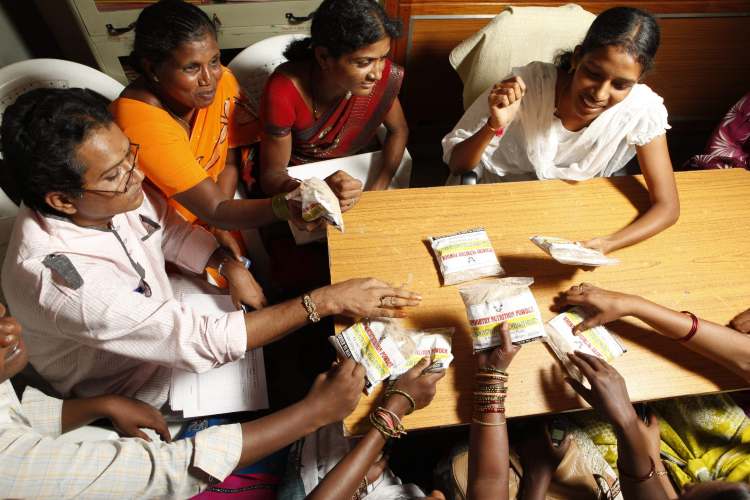
The alternative has existed for nearly four decades. Self-help groups (SHGs), built around collective savings, peer appraisal and direct relationships with banks, have extended formal credit to millions of rural women. Their experience suggests that India can expand financial inclusion at lower cost by restoring direct bank lending to a more prominent place in microfinance policy.
READ I MSMEs face a growing squeeze on profitability
Self-help groups retain an advantage over MFIs
India’s collective microfinance model traces its origins to experiments by the Mysore Resettlement and Development Agency (MYRADA) in the late 1980s. The National Bank for Agriculture and Rural Development (NABARD) subsequently developed the SHG-Bank Linkage Programme, which brought community savings groups into the formal banking system.
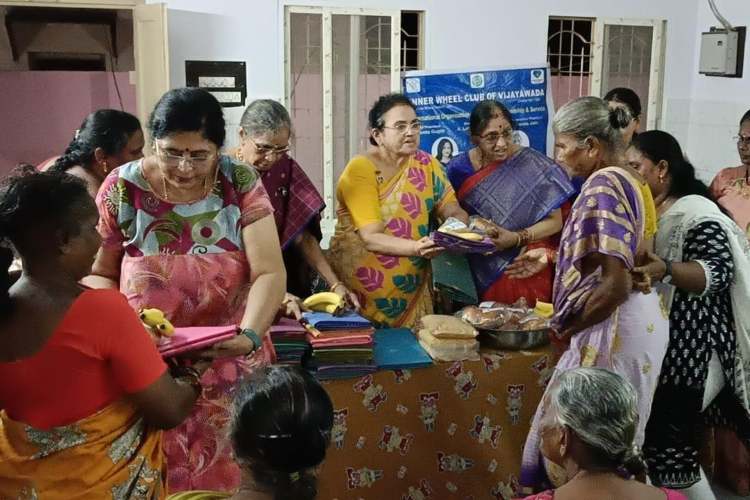
The model rests on a straightforward principle. Members accumulate savings, assess one another’s credit requirements and establish repayment discipline before seeking larger loans from banks. Credit expands with the group’s savings record and repayment performance. This helps lenders assess borrowers who lack conventional collateral or formal income documentation.
The Deendayal Antyodaya Yojana-National Rural Livelihoods Mission (DAY-NRLM) subsequently expanded this institutional network. According to the Ministry of Rural Development, SHGs under the mission had accessed cumulative bank credit of ₹12.18 lakh crore since 2013-14, as reported in February 2026. That figure represents lending over several years, rather than outstanding credit at a particular date.
READ I AI adoption can lift MSME productivity, only if businesses can act on it
Sa-Dhan’s Bharat Microfinance Report 2026 presents a more useful comparison of outstanding portfolios. Bank loans to SHGs stood at ₹3.33 lakh crore on March 31, 2026, while outstanding credit in the wider institutional microfinance sector was approximately ₹3.34 lakh crore. The two channels therefore operate on a broadly comparable scale, although their coverage and reporting categories differ. The experience of these models also differs in important respects.
SHGs combine credit with regular savings and community-based assessment. Members generally develop borrowing histories through small loans before graduating to larger amounts. Banks can lend to groups directly, avoiding some of the funding costs incurred when an MFI borrows from a bank and subsequently lends to households.
Commercial MFIs have advantages of their own. They can reach borrowers outside established SHG networks, standardise loan processing and use technology to expand operations. Their ability to mobilise capital has helped increase the availability of unsecured credit, particularly where banks have limited capacity to serve individual borrowers.
However, these advantages carry costs. MFIs face substantial expenditure on field operations, collections and institutional borrowing. Unlike banks, non-deposit-taking MFIs cannot mobilise public deposits to finance their lending.
Sa-Dhan reports that the average yield on the loan portfolios of reporting micro-lending institutions was 18.54% in FY2025-26, while operating costs averaged 8.47% and financing costs 10.90%. These are institutional averages, and portfolio yield is not identical to the interest rate paid by every borrower. Nevertheless, the figures illustrate the cost structure of intermediated lending.
Direct lending through collectives can reduce this burden, particularly where groups have established savings records and banks possess the capacity to service them. The potential savings must be weighed against the costs of forming and supporting groups, including expenditure borne by government programmes and community institutions.
READ I A microfinance reset may be painful — but necessary
Over-indebtedness exposes microfinance
The financial performance of the two models offers further grounds for reconsidering the balance between them.
Sa-Dhan reports that non-performing assets in the SHG-Bank Linkage Programme stood at 2% of outstanding loans in March 2026, up from 1.74% a year earlier. Among reporting micro-lending institutions, loans more than 90 days overdue, including longer-standing arrears, accounted for 4.73% of portfolios, compared with 4.83% in the previous year.
These indicators are not perfectly comparable because reporting definitions, borrower characteristics and institutional coverage differ. They nevertheless show that SHG lending has maintained relatively strong repayment performance even as stress has affected the wider microfinance sector.
A major weakness of commercial microfinance is the incentive to expand lending to borrowers who may already have obligations to other institutions. Competition between lenders can lead to repeated borrowing without a corresponding increase in household income.
The Economic Survey 2025-26 identifies weaknesses in household income assessment and gaps in lenders’ visibility over borrowing from other sources, including gold loans, agricultural credit and cooperative institutions. These deficiencies make it difficult to measure a household’s total repayment capacity.
India Brand Equity Foundation
Multiple borrowing is not automatically evidence of financial distress. A household may legitimately require different loans for agriculture, a small business and consumption. The difficulty arises when repayment depends increasingly on fresh borrowing rather than income from productive activity.
The collective model offers an additional form of scrutiny through peer appraisal and members’ knowledge of household circumstances. Savings discipline also provides information about repayment behaviour that conventional credit scores may overlook.
Yet collective lending is not immune to over-indebtedness. SHG members may borrow from MFIs or informal lenders alongside their group loans. Peer pressure can also become coercive when repayment difficulties arise. Stronger supervision and reliable credit information are therefore necessary under both models.
The Reserve Bank of India’s microfinance framework limits monthly household repayment obligations to 50% of monthly household income. The limit covers existing loans as well as the proposed borrowing, including collateralised and unsecured credit. The RBI’s regulatory framework thus recognises the importance of assessing the household’s total debt burden.
Implementation remains difficult when income estimates are unreliable or lenders lack complete information about outstanding liabilities. Borrower-level credit reporting, accurate income assessments and timely updates from regulated institutions would make the existing framework more effective.
Rebalance bank lending towards collectives
The policy response should begin with the allocation of bank credit. Greater emphasis on direct lending to SHGs and eligible individual borrowers would reduce excessive reliance on institutional intermediaries.
Banks should face specific targets for expanding direct microfinance lending, supported by appropriate regulatory incentives. These could include differentiated prudential treatment where justified by observed credit risk, improved credit-processing systems and incentives for lending in underserved districts.
A proposed ceiling of one-third of each bank’s microfinance exposure for indirect lending through MFIs deserves examination. Such a limit would encourage diversification between direct and intermediated credit. However, imposing it immediately could reduce lending in areas where SHG networks are weak. A phased approach, linked to banks’ capacity to identify and service borrowers, would be preferable.
Separate reporting of direct and intermediated lending is a necessary starting point. At present, aggregate figures can obscure how much bank finance reaches borrowers through community institutions and how much passes through commercial lenders. Greater transparency would allow regulators to compare costs, repayment outcomes and geographical coverage.
Institutional concentration also warrants attention. Large MFIs can benefit from economies of scale, but banks financing a narrow group of intermediaries may face correlated losses during a sector-wide downturn. Exposure limits should take account of institutional size, funding concentration and the geographical distribution of underlying borrowers.
India’s microfinance portfolio is concentrated in a relatively small number of states. Lending incentives could encourage expansion into districts with limited formal credit access, although uniform state-wise caps would be difficult to justify without considering population, credit demand and repayment performance.
A dedicated credit guarantee mechanism could help banks expand direct lending in underserved areas. Any guarantee should be partial and linked to sound underwriting, so that lenders retain sufficient exposure to exercise credit discipline.
Banks could also use MFIs as service providers rather than relying exclusively on them as independent lenders. Under such arrangements, an MFI could handle loan origination, servicing and collections for a fee, while the bank retains the credit exposure. This would make the intermediary’s compensation more transparent, though the bank would also need stronger oversight of recovery practices.
The RBI’s Unified Lending Interface could support direct lending by improving access to verified borrower information and simplifying loan processing. Technology alone, however, cannot substitute for the local knowledge and continuous engagement that have supported successful SHG lending.
Protect borrowers and restore savings discipline
Rebalancing institutional credit must be accompanied by reforms in borrower protection.
The first priority is a reliable, frequently updated picture of household indebtedness across regulated lenders. Credit bureaus already provide important information, but gaps in coverage and delays in reporting can undermine underwriting decisions. Better information-sharing, backed by safeguards for borrower privacy, would help prevent households from taking on repayment obligations they cannot sustain.
Self-regulatory organisations have introduced restrictions on borrower indebtedness and multiple lending. These measures have helped address emerging stress, but the number of lenders is an imperfect substitute for measuring actual repayment capacity. A borrower with one large loan may face greater distress than another with three manageable obligations.
Recovery practices require equally close attention. Commercial lenders should be held accountable for the conduct of field staff and collection agents. Partnerships with SHG federations and recruitment of more women from local community institutions could improve borrower engagement, provided they are accompanied by training and effective grievance redressal.
Borrowers already in distress need credible restructuring options. The Grameen II approach offers useful lessons in accommodating repayment difficulties without permanently excluding borrowers from formal finance. Restructuring must nevertheless reflect viable household cash flows. Additional loans should support recovery where there is a reasonable prospect of repayment, rather than finance the servicing of existing debt.
Pilot partnerships between banks, SHG federations and MFIs could be considered in states such as Bihar, Andhra Pradesh, Karnataka and Tamil Nadu. These should test whether community-based origination and direct bank lending improve repayment, reduce effective borrowing costs and strengthen household incomes.
India can also draw lessons from the Self Employed Women’s Association’s member-owned cooperative banking model and BRAC’s approach to helping low-income households build sustainable livelihoods. Their experience underlines the importance of savings, institutional support and opportunities for income generation alongside credit.
The Economic Survey’s concerns should prompt a shift in how microfinance performance is judged. Portfolio growth, loan disbursements and institutional profitability provide an incomplete picture of financial inclusion. Borrowers’ savings, income stability, repayment capacity and ability to withstand financial shocks deserve greater weight.
Commercial MFIs will continue to have a role in reaching households beyond established collective networks. But banks should not allow their dependence on intermediaries to displace the savings-led institutions that made Indian microfinance successful. Direct lending through collectives offers an established route to lowering borrowing costs and restoring household welfare as the principal measure of success.
The author is an agro economist with more than 20 years of experience in social and economic inclusion, policy evaluation and inclusive livelihoods.