






Banking fraud rose 30% on-year in April-September FY2026 to ₹21,515 crore, even as reported cases declined. The focus remains on large corporate frauds. RBI data points elsewhere. The stress sits in last-mile delivery. The business correspondent model, built to extend banking access, is now a site of exclusion and fraud. Since RBI introduced the business correspondent model in 2006, it has become the dominant rural interface. Over 84% of village banking outlets operate through BCs, not branches. These agents run on basic technology and thin oversight. RBI rules bar them from charging customers. Banks pay commissions. This design has created a predictable distortion.
Business correspondents depend entirely on commissions. Rural transactions are small and infrequent. Costs are high. The incentive is clear. Maximise commission, not access. Cs prioritise high-value, frequent users. They push loan-linked services over basic deposits. Low-value customers are discouraged. Informal charges emerge despite formal prohibition. Some customers are denied service outright.
The constraint tightens with bank pricing. Lending rates capped around 11–13% leave limited room to compensate BCs adequately in high-cost rural settings. The model assumes viability where margins do not exist.
READ I Urban incomes growth masks real inequality divide
Technology gaps enabling fraud
BC operations rely on point-of-service devices, mobile networks, and Aadhaar authentication. Failures are routine in rural areas. Each failure opens space for discretion. BI guidance on fallback processes is thin. Manual overrides exist but are weakly specified. BCs can refuse service citing authentication failure, or selectively process transactions. These actions leave little audit trail.
Biometric compromise is rising. Around 29,000 biometric cloning incidents were reported in 2024. Unlike passwords, biometric data cannot be reset. The risk is permanent. For affected users, the system offers no credible recovery. Technology failure and incentive design reinforce each other. When connectivity drops, low-value transactions are not worth the effort. The poorest customers are the first to be excluded.

For millions of rural households, the BC is not just a banking touchpoint but the gateway to welfare payments routed through the Direct Benefit Transfer and accessed via the Aadhaar Enabled Payment System. When authentication fails, devices do not work, or agents exercise discretion, the effect is not limited to a missed transaction. It disrupts income flows. This raises the cost of exclusion and fraud well beyond account access. Current oversight does not capture this. It records completed transactions, not failed or denied ones that block access to welfare.
READ I Microfinance crisis: Structural flaws beyond credit guarantees
Oversight gaps at the last mile
Banks are responsible for business correspondent oversight. Their systems are built for branches, not dispersed agents. Transaction data is visible. Service quality is not.
Refusal of service, informal fees, and coercive practices do not show up in bank dashboards. Customers lack effective complaint channels. RBI mandates risk controls but focuses on transaction monitoring. Service quality remains largely unmeasured.
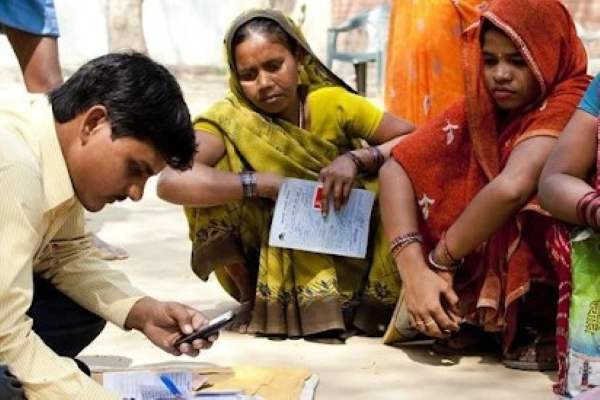
The lag shows up in fraud detection. The surge in fraud value suggests detection after damage, not prevention. For rural customers, delayed detection often means irreversible loss.
READ I Rising credit-deposit ratio signals a structural funding problem
Uneven distribution, local monopolies
BC density follows commercial logic. Better-off districts attract more agents. Remote and tribal areas see fewer. The pattern mirrors existing inequality.
In many locations, one BC serves multiple villages. This creates local monopolies. With no alternatives, customers absorb poor service and informal charges. Banks lack the visibility to intervene.
Monopoly conditions combined with weak oversight and skewed incentives produce predictable outcomes. Exclusion and rent extraction persist.
Reform requires redesign, not patchwork
The failures are structural. Treating them as implementation gaps will not suffice.
Commission design must change. Payments should reward service availability and inclusion, not only transaction volume. Fixed retainers, incentives for small accounts, and penalties for denial of service are necessary.
Oversight must shift from transaction tracking to service monitoring. Banks need metrics on access, reliability, and customer treatment. Independent audits, customer feedback systems, and field verification are essential.
Grievance redress must be usable. Current systems assume literacy, mobility, and time. Rural users have none of these in surplus.
Geographic gaps need policy intervention. Where private provision is unviable, public support is required. Banking access in such areas is infrastructure, not a market service.
Treating agent banking as infrastructure
The Business Correspondent model expanded access at scale. It also exposed limits of a contractor-based approach to essential services.
Rural banking is not optional consumption. It underpins welfare delivery, savings, and credit access. The current model treats BCs as market agents. In practice, they function as the sole interface for millions.
Regulation has not caught up with this reality. Oversight remains indirect. Accountability is diffused. The result is rising fraud and persistent exclusion.
The policy choice is clear. Accept these outcomes as market limits, or redesign the system as public infrastructure with enforceable service obligations. The recent surge in fraud suggests the present course is untenable.
Sagari Gupta is a public policy researcher and writer with more than eight years of experience. She had stints at NCAER and the Ministry of Consumer Affairs.