





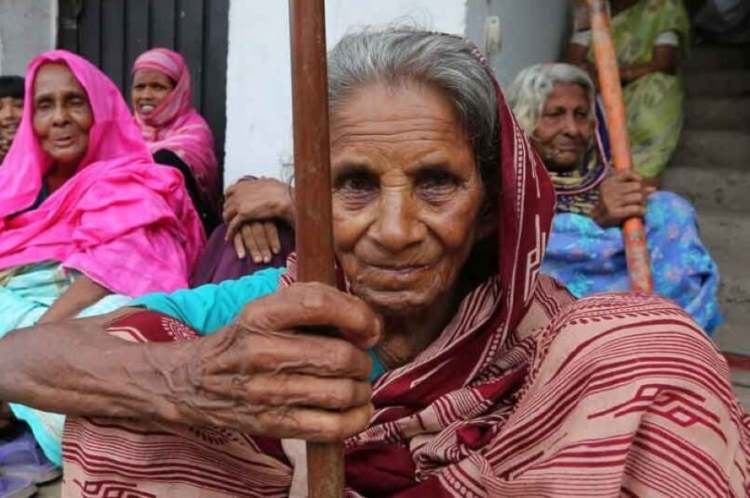
Congoda, an octogenarian who runs a small tea shop in Santiniketan, West Bengal, told us he had been unable to withdraw his old-age pension for six months. He had visited the bank several times, but the Aadhaar-based system could not read his fingerprints. Bank staff told him the pension might not have been paid. They also advised him to apply moisturiser and return after a fortnight to register his fingerprints again. He worried about how much more time he could afford to spend away from his shop.
When we enquired at Bolpur municipality, we found that all six months of pension had already been credited. We helped resolve the problem. The payments had gone through each month, yet it took someone intervening on Congoda’s behalf for him to get his money.
READ I India’s ageing population demands a universal pension plan
What a pension credit leaves out
Direct benefit transfers give administrators a record of when money reaches an account. That record can help trace a missing payment. In Congoda’s case, it showed where the money was, while leaving the problem he faced at the bank invisible. The distinction matters when officials use payment records to judge how well a welfare scheme is serving its beneficiaries.
The postal network offers one way to close that gap. India Post Payments Bank already offers doorstep cash withdrawal. A pensioner who cannot make repeated trips to a bank could use such a service where it is available. But if the doorstep transaction depends on the same fingerprint check, the postman can arrive with the means to pay and still be unable to hand over the money. Pensioners need a way to establish their identity when a fingerprint fails.
James C. Scott described the state’s effort to make society “legible”. To administer a programme across thousands of communities, officials need categories and figures they can compare. The trouble begins when those categories determine what officials look for. C. Wright Mills approached the problem from the other direction, asking what an individual’s troubles could reveal about the institutions that shaped them. Congoda’s account shows where to look. How often does authentication fail, and what happens to pensioners who have nobody to take up their case?
READ I Need a universal pension scheme for dignified retirement in India
What Sonagachi taught HIV programmes
A survey can ask whether someone knows that condoms reduce the risk of HIV. Whether that person can insist on using one is harder to establish. In a household where sexual health is rarely discussed, even keeping condoms may invite questions. In an intimate relationship, a woman who wants to use protection may have little say if her partner objects. A campaign can raise awareness while leaving those circumstances intact.
The Sonagachi project in Kolkata addressed some of the conditions in which sex workers made decisions about condom use. HIV education was part of the work. Sex workers also organised collectively, and researchers who interviewed participants found that organising helped them negotiate condom use with clients. An awareness survey could have recorded whether participants knew how to protect themselves. The interviews helped explain what gave them more room to act on that knowledge.
READ I World Bank’s India poverty numbers rest on questionable statistics
What school records tell us about classrooms
India’s Unified District Information System for Education Plus, or UDISE+, collects data on pupils, teachers and school facilities. These figures help officials see where children are dropping out and where schools lack basic infrastructure. The records also tell officials whether a school reports having electricity. A visit can establish whether power is available when classes are held and whether teachers know how to use the computers the school has acquired.
Girls’ toilets pose a similar problem. A school may report a toilet as functional, yet girls may avoid it because there is too little water during the day or the door does not offer enough privacy. An inventory can show where toilets need to be built. Finding out why girls avoid an existing toilet requires speaking to them.
Fieldwork of this kind can guide what an administration measures next. For pension departments, that could mean recording failed withdrawals and tracking how long it takes to resolve them. But the immediate test is at the bank or the doorstep. When a machine cannot read a pensioner’s fingerprints, the person handling the transaction should have another way to verify his identity and pay him that day.
Sukanya Das is Associate Professor of Sociology at Amity University, Noida. Ayanendu Sanyal is an independent economist based in Delhi.