





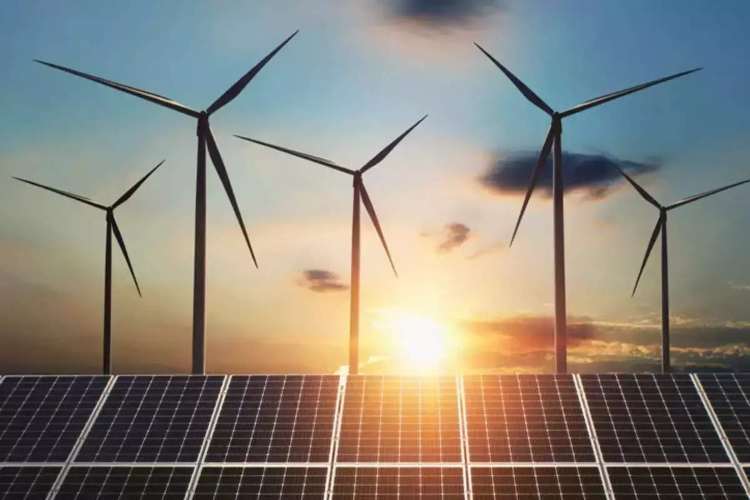
Derisking India’s energy transition: Ajay Shankar’s Rising Ambition — Carving New Pathways: India’s Energy Transition (TERI Press, 2025) starts from a commitment already made. India has said it will reach net zero by 2070. Shankar asks a more useful question- what is the least-cost route from today’s energy system to that destination?
His answer differs from where he began. Indian policy has long treated development and decarbonisation as competing claims. Rising Ambition argues that falling technology costs have brought them closer together. A faster shift to a green economy could also accelerate India’s move towards an advanced industrial economy.
READ I India’s green energy transition runs into grid constraints
Energy transition is now about price
Much of the case rests on costs. Solar tariffs have fallen from about ₹17 a unit at the start of the national solar mission to below ₹2.50. Installed solar capacity has crossed 150 GW. Recent bids have brought solar with storage to about ₹5 a unit, compared with roughly ₹5.50 for new thermal generation. Nor does Shankar see resource availability as a constraint. Official estimates put India’s solar potential above 3,000 GW, against total installed power capacity of about 550 GW. On those numbers, the argument over new coal capacity increasingly becomes a commercial one.
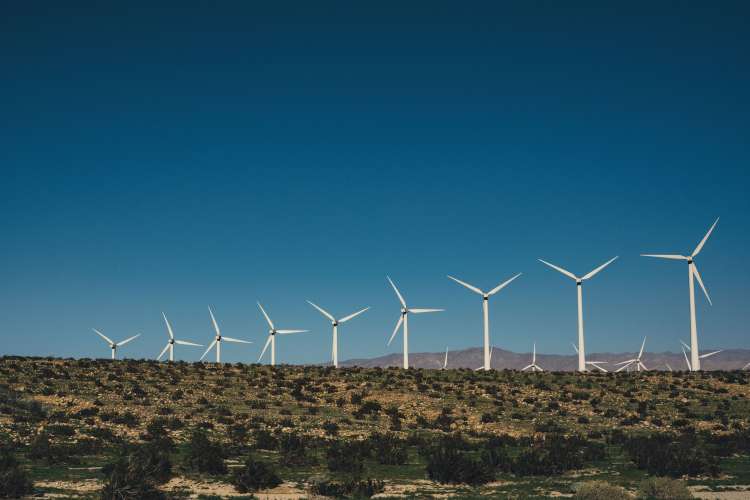
The more interesting part of the book is its explanation of how India got here.
International climate policy has spent three decades relying heavily on carbon pricing to induce private investment in clean energy. India’s solar programme used a different instrument. Investors faced two large risks: whether they could sell their output and at what price. Competitive bidding backed by long-term power purchase contracts reduced both.
Private capital financed the resulting solar expansion, with limited direct budgetary subsidy. Shankar therefore places less weight on the international argument over climate finance than on government’s ability to remove market risk.
READ I E20 debate reveals India’s uneven energy transition trade-offs
De-risking clean industry strategy
The book proposes applying the same method to harder sectors.
For steel, cement, fertiliser, solar panels and battery cells, firms would bid to produce with full value addition in India. Government would guarantee purchase of the output at the discovered price for 15 years. Bidding would continue until at least three producers had entered each market.
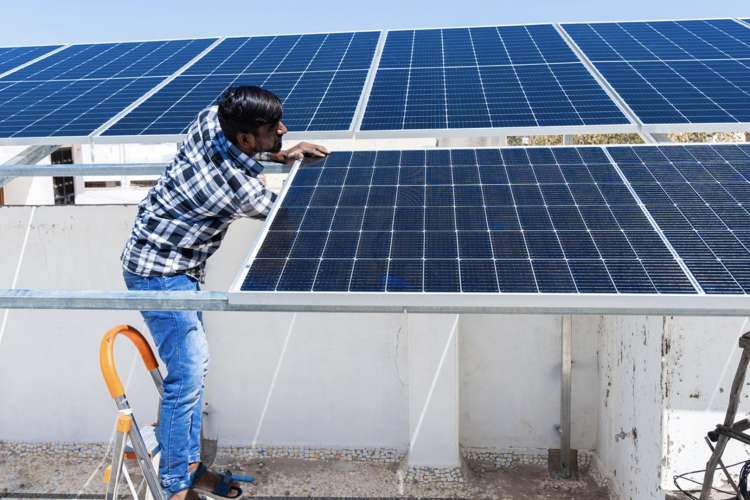
The premium, Shankar argues, need not appear as a large new subsidy. More expensive green steel could be absorbed through public procurement because steel is only one part of the cost of a government building. Indian-made solar panels could similarly be purchased through existing rooftop programmes.
The EU’s carbon border adjustment mechanism gives the argument urgency. India also has one advantage over China. China must eventually replace large amounts of functioning industrial capacity. India still has much of its capacity to build and can choose lower-carbon technology at the investment stage.
Even the cost of closing fossil-fuel assets may be smaller than usually assumed, the book argues, because many occupy valuable land.
READ I Renewable energy transition faces grid and pricing risks
Storage and finance complicate the net-zero path
The discussion around the book produced four important qualifications.
The first concerns storage. Costs have fallen rapidly, but a strategy that assumes they will continue falling at the same rate carries risk.
The second is dependence on China. Replacing imported hydrocarbons with imported battery cells and rare earths changes the source of vulnerability rather than removing it.
Shankar’s response is that two important storage technologies do not create the same external dependence. India has more than 100 GW of river-based pumped-storage potential. Concentrated solar thermal is also an established technology that can be manufactured domestically. Where dependence remains, he would again use competitive bidding and government purchase guarantees to build domestic capacity.
The third issue is finance. India’s cost of capital remains above that in advanced economies. Efforts to close the gap through concessional climate finance have delivered less than expected. Financing the transition through large capital inflows also carries a macroeconomic cost if it pushes up the rupee and weakens other tradable sectors.
The fourth is electricity pricing. India still makes limited use of time-of-day tariffs. Yet an electricity system with large amounts of solar power, storage, electric vehicles and electric cooking needs prices that reflect when power is scarce and when it is abundant. Shankar accepts that reform here is overdue.
Missing parts of clean-energy debate
The discussion also widened the argument beyond net zero.
One concern is the evening demand surge. Tens of millions of electric vehicles charging after work, combined with households switching to induction cooking around the same hours, could produce a load spike that tests even a much larger storage system.
Another is nuclear power. Low-probability accidents carry unusually high costs in a densely populated country, especially where agricultural land surrounds generation sites.
The strongest addition concerned biological resources. India has large quantities of crop residue, forest biomass, cattle waste and municipal waste that remain underused as energy sources.
Marketable crop biomass is estimated at 230-260 million tonnes of coal equivalent, while forest biomass could add about 260 million tonnes. India’s cattle population offers substantial biogas potential. The technologies needed to convert these resources into gas, syngas and liquid fuels already exist.
The problem is economics on the ground. Biomass is bulky, dispersed and expensive to collect. The constraint is aggregation and transport rather than laboratory technology.
Biochar may also offer a route to lower emissions from existing steel plants by replacing part of their coking coal requirement. That could prove cheaper than depending entirely on green hydrogen, where electrolyser technology remains concentrated among relatively few producers.
Two other gaps remain. Electricity distribution is still the weakest part of the power system, and its problems are mainly political rather than technological. India also lacks a satisfactory framework linking local environmental limits with nationally determined energy demand.
Rising Ambition survives these qualifications. India’s solar experience shows that government can attract private capital by reducing market risk rather than financing the investment itself. Extending that model to industry is plausible, though storage, distribution and expensive capital could slow the timetable.
The important change is narrower. Cost is no longer the strongest argument for delaying India’s energy transition.
This article is written with inputs from a discussion hosted by EGROW Foundation.