





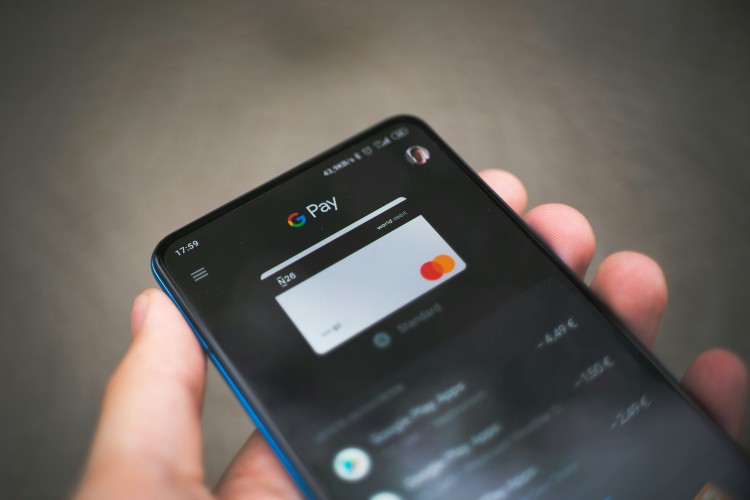
UPI MDR isn’t about card fees: The decision to introduce a merchant discount rate (MDR) on select Unified Payments Interface (UPI) transactions has been postponed until after Diwali, following its originally scheduled October 15, 2026, rollout. The proposed 0.4% charge on eligible merchant payments above ₹2,000 has attracted attention for its implications for traders and consumers. The larger issue, however, is how long India can sustain a payment system whose operating costs have grown while government support has proved uncertain.
Since January 2020, the zero-MDR policy has allowed merchants to accept UPI payments without paying a transaction fee. The government chose to support the payments ecosystem through budgetary incentives rather than charge merchants. That arrangement helped remove a price barrier to digital payments, but it also left banks and payment service providers dependent on annual government allocations that have fluctuated considerably. The proposed MDR framework reflects an attempt to establish a more dependable source of revenue.
READ | UPI MDR charges must balance financial viability and inclusion
A subsidy that has struggled to keep pace
UPI was not always free for merchants. In January 2020, the government prohibited charges on UPI and RuPay debit-card transactions to encourage digital payments, promising budgetary incentives to compensate the ecosystem. Under the arrangement, incentives were distributed through the acquiring bank and shared across participating institutions, including issuer banks, payment service provider banks and third-party application providers such as PhonePe and Google Pay.
The expenditure figures show how uneven the government’s support has been. Incentive disbursements for UPI and RuPay debit-card transactions rose from ₹1,389 crore in FY22 to ₹2,210 crore in FY23 and peaked at ₹3,631 crore in FY24. They then fell to ₹1,046 crore in FY25. The initial allocation for FY26 was ₹437 crore, while the FY27 Budget provided ₹2,000 crore. The distinction between budget allocations and actual disbursements is important: money earmarked for a scheme does not necessarily reach payment providers when they incur the costs.
The payments industry has long argued that these incentives do not cover the cost of maintaining the system. The Payments Council of India estimated that UPI and RuPay debit-card transactions would cost the industry ₹5,500 crore in 2022 under the zero-MDR regime. Other industry estimates put the annual cost at around ₹10,000 crore by 2025. A parliamentary committee examining the issue also found that the incentive mechanism was inadequate to compensate banks and payment companies for operating the infrastructure.
These estimates need to be read with care because industry-wide cost calculations may use different assumptions and cover different components of the payments chain. They nevertheless point to a structural problem: the government has sought to preserve free merchant payments through a subsidy whose size and timing have not consistently matched the industry’s claimed costs.
Meanwhile, transaction volumes have continued to rise. UPI processed 24.51 billion transactions worth ₹29.82 lakh crore in August 2026, according to the National Payments Corporation of India (NPCI). The monthly volume was 22% higher than a year earlier.
The payment network now operates at a scale far beyond that envisaged when the zero-MDR policy was introduced. More transactions increase the demands on banks’ technology systems, fraud monitoring and customer support, even when individual payments generate no direct merchant-fee revenue.
READ | UPI MDR: The government can ban a surcharge, not a price rise
Why NPCI wants a new revenue stream
NPCI’s own explanation for the proposed framework gives the debate a sharper focus. In its accompanying FAQs, the organisation said annual government incentives were intended as short-term support rather than full compensation for banks’ and fintechs’ operating costs. It also pointed to the uncertainty created by dependence on budgetary allocations, which can constrain long-term technology investment.
NPCI cited industry estimates of roughly ₹20,000 crore a year to operate UPI’s payment infrastructure, including server capacity, bandwidth, fraud prevention and technical support. This figure should be treated as an industry estimate, rather than an independently audited statement of NPCI’s own expenditure. Even against the lower estimates of annual costs, however, the peak government incentive of ₹3,631 crore would cover only part of the bill.
The proposed MDR is intended to reduce that dependence on public funding. Under the announced framework, eligible person-to-merchant transactions above ₹2,000 would attract a 0.4% fee, capped at ₹300 per transaction. Person-to-person transfers would remain free, while the framework provides exemptions for small merchants and other specified categories. NPCI has also proposed directing 5% of MDR collections to a dedicated fund to encourage UPI adoption among small merchants, particularly in rural and semi-urban areas.
The arrangement amounts to a cross-subsidy within the payments ecosystem. Merchants making eligible higher-value transactions would generate revenue that could help finance the infrastructure supporting a much wider network of payments. The proposal also recognises that smaller merchants, whose margins and transaction values may be limited, are less able to absorb payment-processing costs.
The commercial logic is understandable, but the design will determine whether it works as intended. A fee levied on merchants can reduce their margins, and some may seek to recover the cost from customers or encourage cash payments instead. NPCI’s framework does not by itself establish how merchants will respond. Nor does the existence of an MDR guarantee that the resulting collections will be sufficient to meet the system’s operating costs.
READ | UPI MDR explained: What changes from October 15
The unresolved question of public funding
The government must now decide how the new revenue mechanism will relate to the existing incentive scheme. The FY27 Budget has allocated ₹2,000 crore for UPI and RuPay incentives, but the future of that support remains uncertain as MDR-based revenue is introduced. Ending the subsidy before the new mechanism has demonstrated that it can finance the ecosystem would expose payment providers to another funding gap. Maintaining it indefinitely, on the other hand, would leave taxpayers supporting a system that is increasingly capable of generating its own revenue.
The policy test is whether the revised arrangement can sustain the expansion of digital payments without undermining the inclusion that helped UPI grow. Large merchants and higher-value transactions may provide a stronger revenue base, but the commercial case for extending acceptance into less profitable markets is weaker. If the subsidy is withdrawn too quickly, banks and payment companies could have less incentive to invest in those areas. If it remains, the government needs clearer criteria for the amount, duration and purpose of its support.
UPI’s success has depended in part on keeping digital payments inexpensive and easy to use. A more predictable funding model could strengthen the infrastructure behind that promise. The transition will succeed only if the new charges generate enough revenue to sustain the network while leaving small merchants and low-value payments with a viable route into the digital economy.
Mehak Sharma is a research scholar at Malaviya National Institute of Technology Jaipur, Jaipur.