





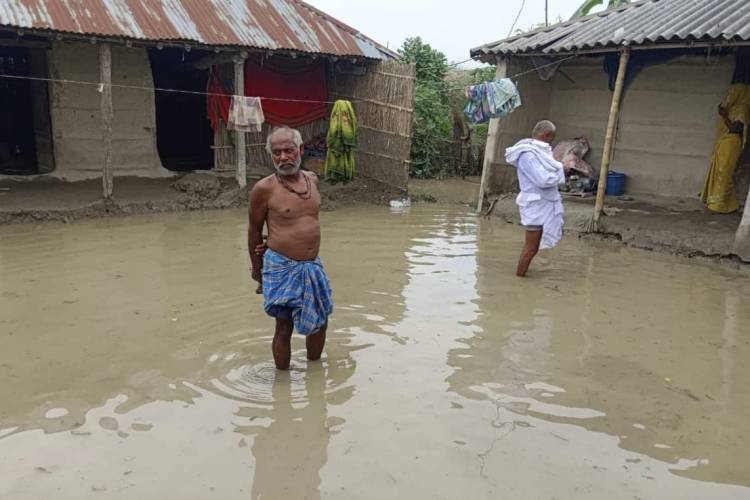
India’s elderly people need a place in disaster planning: India’s ageing rural population faces a particular vulnerability as heatwaves, floods and other climate-related hazards become more frequent and severe. An older person living alone may be unable to reach a relief centre without assistance; someone with limited mobility may need transport during an evacuation; another may depend on medicines that are difficult to replace after a flood. Yet policies on ageing, healthcare, climate adaptation and disaster management are still largely designed in separate compartments.
The problem is partly one of coordination, but it is also one of scale. Disaster preparedness may be framed through national and state policies, but the decisions that determine whether an elderly person is actually protected are often made much closer to home. The gram panchayat and the frontline workers who know its households are better placed to identify an older person who lives alone, has difficulty walking or needs regular medical care. If India wants its ageing policies to account for a more hazardous climate, that local knowledge needs to become part of routine disaster planning.
READ | Himalayan floods, climate crisis and the need for disaster diplomacy
That changes the policy question. India does not need another broad statement about protecting vulnerable populations. It needs to make the identification of vulnerable older people, and the preparation of local responses to their needs, a routine part of disaster planning.
India’s elderly people: Disaster preparedness has to reach the village
India’s disaster-management framework already recognises the importance of local capacity and community participation. The National Disaster Management Plan assigns roles to panchayats and other local institutions and calls for community-based preparedness. The problem is that older people with specific health and mobility needs do not appear to have a sufficiently visible place within this system.
That matters because the operational decisions that determine whether an evacuation works are often local. A relief centre may be identified at the district or state level, but someone has to determine whether an elderly resident can reach it. Someone has to know whether a person living alone needs transport, whether a shelter is accessible, whether essential medicines will be available and whether a household should receive an early warning through an intermediary.
The existing institutional architecture offers a starting point. Village Health, Sanitation and Nutrition Committees are designed for community-level health planning and function as sub-committees of Gram Panchayats. Their membership is supposed to include health workers, elected representatives and vulnerable sections of the community. These committees could provide a practical institutional base for identifying older people at heightened risk, provided their mandate and resources are expanded.
Data must become local knowledge
A proposal for a centralised database of older people with chronic illness or mobility impairments could improve disaster response by allowing authorities to identify those who may require assistance. But a database maintained at the state or district level cannot substitute for local knowledge.
A useful system would combine administrative data with information collected and periodically updated at village level. Accredited Social Health Activists, auxiliary nurse midwives, Anganwadi workers, revenue officials and panchayat representatives already have contact with households for different purposes. The task is to connect those existing points of contact rather than create an entirely new bureaucracy.
READ | Success of disaster management systems rests on community power
The information collected need not become an elaborate surveillance exercise. It could focus on a small number of operational questions: Is an older person living alone? Do they have difficulty walking? Do they require regular medication or medical equipment? Is the household located in an area exposed to flooding, landslides, heat or other known hazards? Who can help the person reach a safe location?
Such information would have value only if it is updated and linked to an actual response plan. A list that sits in a database during normal times but is inaccessible to those coordinating an evacuation is of little use.
Give panchayats a mandate and money
The more fundamental gap is institutional responsibility. Age-disaggregated vulnerability mapping is not yet a routine function of local disaster planning across the country. Where such exercises exist, their continuity can depend on individual programmes or projects.
This is where disaster-management rules and local planning systems can be strengthened. States could require Gram Panchayats, working through existing health and disaster-management structures, to maintain a basic vulnerability register for older residents and incorporate their needs into local disaster plans. The requirement should be auditable and updated periodically rather than treated as a one-time survey.
The second requirement is finance. A panchayat cannot be expected to provide accessible shelters, backup power at a health facility or transport for immobile residents without resources. Panchayats already receive Finance Commission grants, including tied and untied components, and the Sixteenth Finance Commission’s framework for 2026–31 continues to address local-body financing. The issue is whether local governments have sufficient flexibility and capacity to use these resources for climate and disaster resilience, and whether state programmes provide additional funds where local needs exceed those general-purpose allocations.
This makes a case for clearer financing arrangements rather than simply another centrally designed scheme. States could identify climate-resilient local infrastructure for older people as an eligible expenditure under appropriate grants and programmes. State climate action plans could also give greater attention to the needs of ageing populations in local adaptation planning. Kerala’s climate action plan, for example, has explicitly recognised the role of local governments in climate adaptation and called for area-specific climate-resilient planning.
READ | Global debt crisis: Can regulators stop a disaster?
Coordination must extend beyond Delhi
Better coordination between health, environment and disaster-management authorities remains necessary. Data on age, gender, social vulnerability and health conditions should inform climate adaptation and emergency planning. But coordination at the national level cannot by itself solve a problem that is ultimately experienced household by household.
The case for bringing ageing into climate policy is therefore also a case for strengthening local government. The panchayat should know which older residents are at risk before the flood warning arrives, where they need to be taken and what assistance they require once they reach safety.
India has many of the institutional pieces already: village health committees, frontline health workers, panchayats, disaster-management authorities and systems for fiscal transfers. What is missing is a clear connection between them. If India revises its elderly healthcare and disaster-management frameworks to account for a warmer and more hazard-prone environment, that connection needs to run all the way to the panchayat, with defined responsibilities and predictable resources.
Otherwise, the country may continue to produce sound policies for vulnerable older people without giving the institutions closest to them the means to act.