





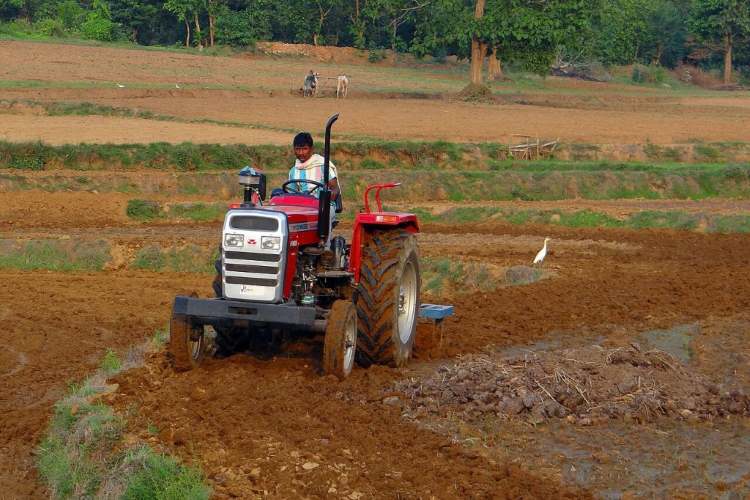
Agriculture and carbon market: The current global market has targeted structural transformations aimed at aligning industrial emission targets with net-zero commitments. However, the agricultural sector, which is regarded as the second-largest contributor to global greenhouse gas (GHG) emissions, has remained excluded from standard compliance carbon-trading mechanisms.
The agricultural sector contributes approximately 13 percent to GHG emissions, while AFOLU (agriculture, forestry and other land use) accounts for approximately 25 percent of net anthropogenic GHG emissions. For developing and agriculture-dependent economies, where a significant share of the population continues to rely on agriculture and its allied sectors, such as India (42 percent), Bangladesh (44 percent), Kenya (46 percent), Pakistan (36 percent), Uganda (65 percent) and Ethiopia (60 percent), agricultural transitions and transformations can bring better livelihoods to them.
Therefore, integrating agriculture into high-integrity carbon credits from activities such as methane reduction, improved soil management, fertiliser management and sustainable agricultural practices can help mobilise climate finance while simultaneously supporting farmers and rural economies.
READ I India’s carbon market needs a firewall
Indian Carbon Market initiative
India launched the Indian Carbon Market (ICM) under the Carbon Credit Trading Scheme (CCTS) in 2023. It is governed by the National Steering Committee for Indian Carbon Market (NSC-ICM) and managed through the Bureau of Energy Efficiency (BEE).
The CCTS created two mechanisms: compliance and offset. Initially, the compliance mechanism focused on energy-intensive industrial sectors, but the current compliance mechanism covers sectors including alluminium, cement, fertiliser, pulp and paper, and petrochemicals, with the possibility of adding others. With respect to the agricultural sector, India also did not initially include it as part of the ICM.
The emerging offset mechanism has created a pathway for agricultural mitigation projects, signalling India’s interest in bringing agriculture into the carbon-market ecosystem. BEE has even approved methodologies under the CCTS Offset Mechanism with respect to methane recovery from livestock, manure management and small farms. Thus, agriculture could become the next major frontier for India’s carbon market, as India has hundreds of millions of people whose livelihoods are connected to agriculture.
However, it is important to note that a segment of the agricultural sector has already begun to enter India’s carbon-market framework through the CCTS Offset Mechanism. Given the vast scale and diversity of India’s agricultural sector, there remains significant scope for further integration of agricultural activities, particularly through sustainable farming practices, improved soil and nutrient management, agroforestry, livestock and manure management, and other mitigation measures.
A robust agricultural carbon-market framework could not only support the transition towards more sustainable farming practices but also enable India to unlock a significant source of carbon-credit supply and strengthen its position in the emerging global carbon market.
READ I Carbon markets can drive India’s growth and net-zero goals
Decarbonisation via policy interventions
Successful agricultural climate programmes demonstrate that policy can convert sustainable farming practices into measurable climate and economic outcomes. Brazil’s ABC Plan supported the adoption of low-carbon practices across 54 million hectares, associated with an estimated 193.7 MtCO₂e reduction.
Kenya’s agricultural carbon project showed that soil-carbon practices could generate carbon revenue while improving farm productivity and resilience; the project reached tens of thousands of smallholders and generated carbon credits. These cases demonstrate that finance, technical support, measurable practices and credible carbon accounting can work together, creating both emissions reductions and tangible benefits for farmers.
India already has a substantial organic-farming ecosystem. Reports produced by organisations specialising in organic farming show that India ranked first globally in the number of organic producers and had about 4.48 million hectares of land under organic agriculture in 2023. More recently, data for 2024-25 by the National Programme for Organic Production reported approximately 2.25 million hectares of certified organic land and another 1.71 million hectares under conversion, covering nearly 4 million hectares in total.
This creates an important opportunity for the ICM. Organic and sustainable farming practices can potentially reduce emissions associated with synthetic fertiliser use, improve soil management and increase soil carbon, while practices such as improved water management, agroforestry and better livestock/manure management offer additional mitigation opportunities.
However, organic certification itself should not be treated as a carbon credit; the climate benefit must be demonstrated through an approved methodology, baseline, additionality and robust MRV (measuring, reporting and verification).
India need not attempt integrating its entire agricultural sector into its carbon market at once. A more practical approach would be to begin with organised and traceable farmer groups, particularly certified organic and transitioning producers, and use them to develop scalable agricultural-carbon methodologies.
India already has a significant organic-agriculture base. Organic certification does not automatically qualify as a carbon credit. The integration of agriculture into the ICM requires more than recognising sustainable or organic farming practices. A practice must translate into a measurable, additional and verifiable climate outcome.
READ I India-EU FTA and CBAM: The coming carbon tax shock
Credible aggregation
This requires establishing a credible baseline, demonstrating additionality, and developing robust MRV systems covering farm-level inputs, cropping and irrigation practices, soil or biomass changes, and emission reductions.
For India, aggregation is equally important. Individual smallholders may face high transaction costs for monitoring, verification and certification. Farmer Producer Organisations, cooperatives and project developers can therefore aggregate farmers into larger carbon projects.
India has already taken an initial step through the CCTS Offset Mechanism, which includes an approved agricultural methodology for methane recovery from livestock and manure management at households and small farms.
The opportunity now is to move from individual agricultural carbon projects towards a scalable, high-integrity agricultural carbon ecosystem within the ICM.
A practical Indian framework could therefore develop around four interventions:
Methodology standardisation: Develop approved methodologies for agricultural mitigation, including soil-carbon enhancement, improved nutrient management, rice-methane reduction, agroforestry and livestock interventions.
Digital MRV: Combine farm records, soil sampling, remote sensing and digital logbooks to reduce monitoring costs while maintaining credibility.
FPO-based aggregation: Use FPOs, cooperatives and grower groups to aggregate smallholders into commercially viable carbon projects and distribute revenues transparently.
Blended finance: Combine carbon-market revenues with existing agricultural finance, sustainability programmes and climate funds to support farmers during the transition to lower-emission practices.
India has already established a starting point: the CCTS Offset Mechanism currently includes an approved agriculture methodology for methane recovery from livestock and manure management at households and small farms. Thus, the policy opportunity is therefore not to “carbon-credit organic farming”, but to build a credible system that converts measurable agricultural climate outcomes into marketable carbon assets.
India can strengthen agricultural participation in the ICM by developing standardised methodologies for soil carbon, nutrient management, rice methane, agroforestry and livestock; establishing low-cost digital MRV using remote sensing, field sampling and farm records; and using FPOs and cooperatives to aggregate smallholders and reduce transaction costs.
The framework should also ensure transparent rules on additionality, permanence, revenue sharing and double counting, while integrating carbon finance with existing agricultural schemes and climate-finance instruments. The objective should be to build a high-integrity, farmer-centred agricultural carbon market, rather than simply maximise credit volumes.
India’s agricultural sector represents both a climate challenge and a significant carbon-market opportunity. Global experience shows that policy support, finance, credible MRV and farmer aggregation can convert sustainable agricultural practices into measurable mitigation outcomes.
After the CCTS Offset Mechanism, the next step is to scale this architecture through organised farmer groups, organic and transitioning farms, and robust agricultural methodologies, moving from isolated projects towards a credible, scalable and farmer-centred agricultural carbon ecosystem within the ICM.
Devpriya Sarkar is a Lecturer at the Jindal School of Environment and Sustainability, O.P. Jindal Global University, Sonipat. Originally published under Creative Commons by 360info .
.