





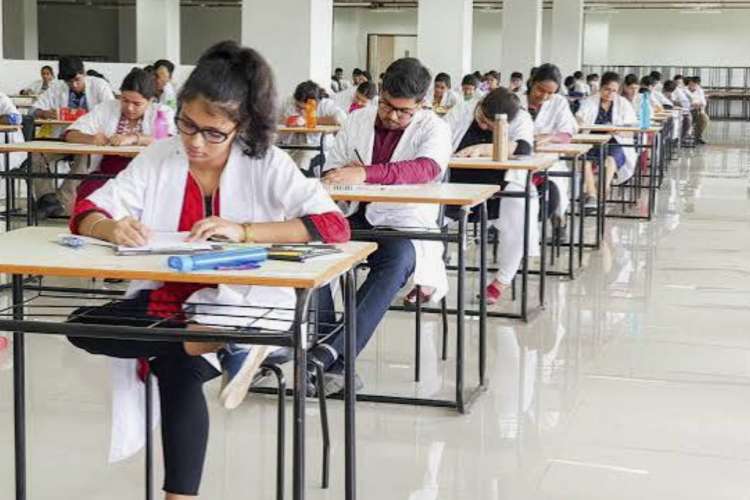
NEET reforms: The NEET-UG 2026 paper leak has produced an unusually forceful response. The CBI registered a case on May 12 after allegations that parts of the examination had circulated before the May 3 test. A re-examination followed on June 21. Education minister Dharmendra Pradhan resigned on July 25. Parliament then passed the Public Examinations (Prevention of Unfair Means) Amendment Bill, and it received presidential assent on July 31.
That sequence shows that the government has treated the breach seriously. The harder question concerns what happens after punishment. A leaked paper is a criminal act, but repeated failures in high-stakes examinations also raise questions about the institutions that design, secure and administer them. NEET matters because one examination carries enormous weight in deciding entry into medical education.
READ | India’s education trap begins with unequal access
Tougher law addresses one part of the problem
The 2026 amendment substantially raises the cost of examination fraud. For individuals using unfair means, imprisonment rises to between five and 10 years and the maximum fine to ₹50 lakh. Fines on service providers can reach ₹5 crore. The minimum imprisonment for organised examination crime rises to seven years, while the minimum fine rises to ₹10 crore. The law also provides for special task-force investigations, tighter timelines and special fast-track courts.
These are significant changes, but they build on an existing legal framework. The Public Examinations (Prevention of Unfair Means) Act, 2024 had already criminalised paper leaks, organised examination fraud and other forms of manipulation. The new law therefore strengthens deterrence and speeds up enforcement. Questions of access control, insider risk, vendor supervision and institutional accountability remain matters of examination governance.
That distinction matters. A severe sentence may deter an examination racket. It cannot substitute for a system in which access to question papers is tightly controlled, responsibility is traceable and a breach is detected before millions of candidates enter an examination hall.
NEET reforms: The NTA question is organisational
India has been here before. After the controversy surrounding NEET-UG 2024, the education ministry appointed a high-level committee headed by former ISRO chairman K Radhakrishnan. Its mandate covered the examination process, data security, NTA’s structure and functioning, and grievance redressal. The remit was later widened to include examination administration, technological safeguards and student mental health.
By July 2026, the government said that 35 of the committee’s 46 recommendations had been implemented. These included biometric and face authentication, CCTV surveillance, signal jammers, state and district coordination mechanisms, grievance procedures and restructuring of the NTA.
READ | Algorithmic transparency key to digital democracy
The 2026 leak does not establish that these reforms failed across the board. It does, however, provide a real-world test of them. The useful question is where the security chain broke despite the safeguards already introduced and whether responsibility was sufficiently clear at each stage.
The government has since constituted another high-powered task force, headed by Nandan Nilekani. Its terms are notably broader. It is examining the conduct, security, design and governance of public examinations, along with technology, infrastructure, accessibility, inclusion and student well-being.
That is an appropriate frame for the debate because examination integrity is partly a security problem and partly an institutional-design problem.
A common examination and equal opportunity are different questions
NEET has a clear administrative logic. A common examination creates a comparable national score for candidates seeking admission to medical colleges. It also avoids a system in which applicants have to sit several entrance tests with different rules and standards.
The argument over equity starts elsewhere. Candidates sit the same examination, but they do not arrive at it with the same educational or financial resources. Access to intensive coaching, stronger schools, language support, repeated preparation and the ability to relocate for training can affect how well students compete in a highly selective examination.
This does not invalidate standardised testing. It does mean that procedural equality and equality of opportunity cannot be treated as synonyms. The decision to rank candidates through one examination inevitably gives that examination enormous importance in the education system.
The current task force’s explicit reference to accessibility and inclusion therefore deserves attention. The policy debate can separate three issues that are often bundled together: the minimum academic standard for entry into medicine, the institution that administers the entrance examination, and the weight assigned to one examination score in determining admission.
READ | When youth protest tested the limits of centralised governance
Greater state discretion is one possible approach to the second and third questions. It could allow admission systems to respond more closely to differences in school systems, languages and local educational conditions. A national system offers other advantages, including comparability and mobility across states. More decentralisation may also create uneven standards and multiply administrative systems.
These are genuine trade-offs. They are better examined as questions of institutional design than as a contest between centralisation and federal autonomy.
NEET selects students; medical colleges train doctors
There is also a limit to what any entrance examination can establish. NEET determines who gets the opportunity to study medicine. It does not, by itself, produce a competent doctor.
The National Medical Commission’s undergraduate curriculum makes this clear. Medical education is designed around competencies that include knowledge, clinical skills, attitudes, ethics, communication, early clinical exposure and continuous assessment. The quality of faculty, hospitals, clinical training and institutional supervision therefore matters after admission just as much as the mechanism used to allocate seats.
An entrance examination and a medical curriculum perform different functions. Treating the examination rank as a complete measure of future professional ability gives the selection mechanism more significance than it can bear.
The NEET controversy has already produced a stronger criminal law, a re-examination, a change at the education ministry and another institutional review. The next test is whether the examination architecture itself becomes more resilient and accountable. Securing the question paper is indispensable. So is defining what a national entrance examination can reasonably be expected to measure and how much weight the education system asks it to carry.
Bhaskar Simha is Assistant Professor at St Joseph College of Law, Bangalore. Sumit Jain is Director at the Centre for Competition Law and Economics (CCLE).