





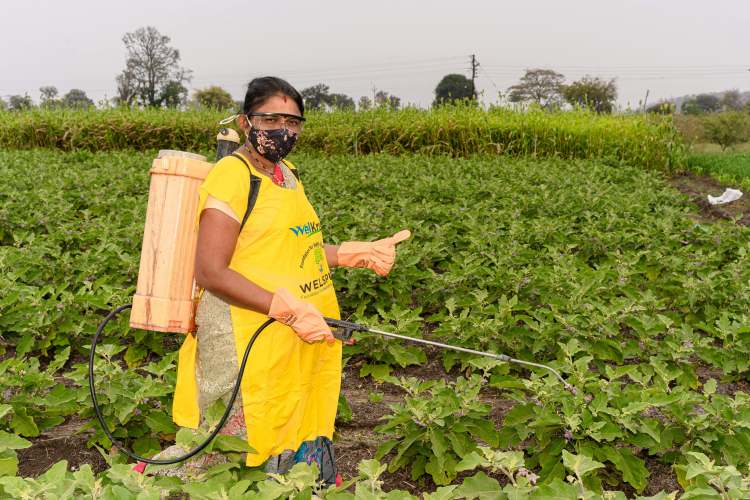
Women in farming and land rights: Every year on International Women’s Day, governments and institutions renew their commitment to gender equality. This year’s theme, “Rights. Justice. Action. For All Women and Girls”, is both aspirational and urgent. In rural India, where nearly half the population depends directly or indirectly on agriculture, the most consequential right for women is not symbolic representation; it is the right to own land.
Land in rural India is more than property. It is livelihood, social status, insurance against poverty, and often the only route to economic security. Yet Indian agriculture rests on a sharp contradiction. Women do a large share of farm work, from planting and weeding to harvesting, livestock care, and post-harvest processing. But they rarely own the land they cultivate.
READ I Climate change threatens India’s farm income goals
Feminisation of agriculture, without ownership
Indian agriculture is undergoing a quiet feminisation. Male migration to cities and non-farm jobs has left many farms dependent on women’s labour. Women now manage fields, livestock, and household food security in ways still undercounted in official statistics. They are estimated to contribute to more than 75% of agricultural activities.
But when ownership is counted, the answer is still overwhelmingly male. Only about one in eight agricultural landholders in India is a woman, going by PM-KISAN data. Land remains registered largely in the names of fathers, husbands, and sons. Women cultivate the land, but lack legal control over it.
READ I India-US trade deal: Which farm products enjoy tariff cuts
Why land rights shape women farmers’ lives
This gap has direct consequences. Without land rights, women farmers struggle to access bank credit, crop insurance, input subsidies, and institutional support. Agricultural policy usually recognises landowners, not cultivators. That bias is visible in the design and reach of schemes such as PM-KISAN, Kisan Credit Cards, and crop insurance databases.
The result is plain. Crores of women who keep Indian agriculture running remain invisible to the very systems meant to support farmers.
READ I Creation of quality jobs remains weak despite strong GDP growth
Inheritance law exists, but social norms prevail
India has taken an important legal step. The 2005 amendment to the Hindu Succession Act, 1956 gave daughters equal land rights in ancestral property by making them coparceners alongside sons. Court rulings later reinforced that daughters have equal coparcenary rights by birth.
On paper, the legal framework now exists. In practice, social norms often override it.
Many daughters give up their claims to preserve family peace. Others are pressured by relatives who see property rights as a threat to settled family arrangements. Some do not know they have such rights at all. Legal reform, therefore, has not yet changed land ownership patterns at scale.
Patriarchal customs still block women’s land rights
Rural land rights are shaped not only by statute, but by entrenched custom. In many communities, inheritance still follows a patriarchal logic: sons continue the family line, daughters are seen as belonging to their marital homes. A daughter claiming ancestral property is often treated as defying social expectations. The persistence of dowry has made this worse, with marriage payments often used to justify excluding women from inheritance.
These pressures are subtle, but effective. Even when land is transferred to women on paper, control often stays with male relatives. They continue to decide what to grow, when to sell, and how to use income. Ownership does not automatically become control.
Land rights a development issue
This is not only a question of legal equality. It is a question of economic change. Evidence from many countries shows that when women control land and assets, households spend more on nutrition, education, and health. Women landowners also tend to invest more in soil conservation, crop diversity, and long-term sustainability.
In India, stronger land rights for women could reshape both farm productivity and rural welfare. Secure tenure improves access to credit, extension services, and government support. It also raises women’s bargaining power within households and communities.
As climate risks intensify for small farmers, secure land rights can also encourage investment in water management, soil conservation, and agroforestry. Land ownership is not a side issue in the gender debate. It sits at the centre of rural development.
Policy priorities for gender-equal land ownership
There are signs of movement. Several government programmes now encourage housing and land titles in the names of women, or jointly with spouses. The Pradhan Mantri Awas Yojana-Gramin has helped expand women’s property ownership. Land record modernisation is improving documentation and transparency through digitisation, limiting manipulation in male-dominated local systems.
But these steps are not enough.
Awareness campaigns must tell women clearly that inheritance rights exist and can be claimed. Land records must record ownership by sex and encourage joint titles. Agricultural policy must recognise women as farmers in their own right, whether or not formal title exists. Legal aid and dispute-resolution systems must be strengthened so women can assert inheritance rights without social intimidation. Women’s collectives such as self-help groups, cooperatives, and farmer producer organisations can also strengthen bargaining power and reduce isolation.
The issue comes down to a simple question: who owns the future of rural India? If women remain excluded from land rights, agricultural development will remain partial and gender equality will remain rhetorical. If women gain secure rights over land, the gains will not stop at individual households. Productivity can rise. Rural economies can strengthen. Social justice can deepen.
On International Women’s Day, the promise of “Rights. Justice. Action.” should extend beyond speeches. For crores of rural women, justice begins with something tangible beneath their feet: the land they cultivate, the land they sustain, and the land they deserve to own.
A Amarender Reddy is Joint Director, Policy Support Research, ICAR-National Institute of Biotic Stress Management (ICAR-NIBSM), Raipur.