





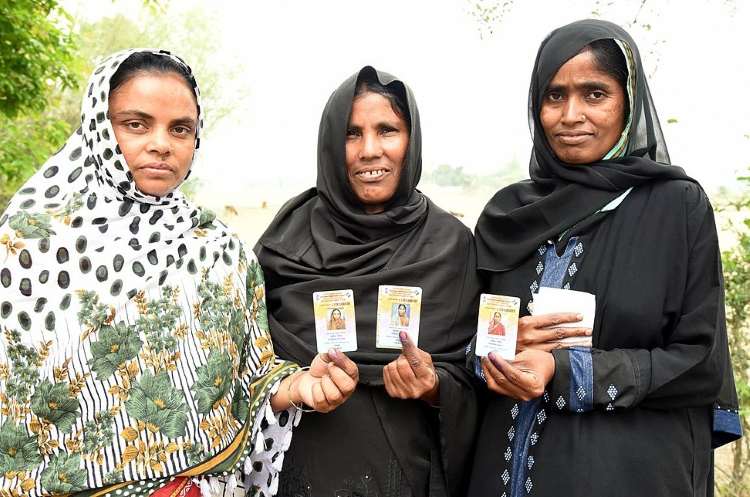
In late January, Assam Chief Minister Himanta Biswa Sarma went on a tirade against a section of the state’s Muslim population, derogatorily called miyas with their roots allegedly in Bangladesh. On January 27, while addressing a public rally in a state which is headed for Assembly elections in March-April this year, Sarma said that his “job is to make the miya people suffer”.
He then went on to declare that the names of “four to five lakh (400,000-500,000) miya voters” will be deleted from the electoral roll. This was roundly criticised by the All India Muslim Personal Law Board which described the chief minister’s diatribe as “anti-Muslim, dangerous and deeply divisive”.
The miya Muslims are the descendants of peasants from the Bengal province of British India, brought to Assam to grow more food to sustain the colonial enterprises like tea plantations in upper Assam and supply raw jute for their mills in Calcutta.
READ I Universal health coverage begins with prevention, not insurance
Political exclusion of miya Muslims
In post-colonial Assam, the descendants of these peasants, now known as miyas, are often not included in the mainstream imagination of the Assamese society. Political decision-making, manifested through evictions, detention, deportation, and mass compulsory registration processes like the National Register of Citizens (NRC), negatively impacts the health outcomes of the vulnerable and marginalised miya community.
Their health outcomes are also shaped by political decisions that perpetuate inaction, thereby creating conditions that violate their right to health – a necessary condition for enjoying the right to life, enshrined as a fundamental right under Article 21 of the Indian Constitution.
READ I India’s global health opportunity amid US withdrawal
For the World Health Organization, being healthy is not merely the absence of disease or infirmity, but a state of complete physical, mental, and social well-being. Health is often determined by where people are born, grow, live, work and age.
The concept of the political determinants of health offers a useful lens to understand how the Assam government’s political actions and inactions have produced negative health outcomes for the miya community.
Impact of political action
During the updating of the National Register of Citizens (NRC) in Assam, the miya Muslims were referred to as “termites”. They were threatened with expulsion from the state. Of late, miya Muslims have faced instances of forced deportation to Bangladesh at gunpoint.
These political actions are adversely impacting the community. A survey conducted by the National Campaign Against Torture during the NRC update process found that about 89 percent of the people suffered from extreme mental torture because of the fear of being marked as foreigners and its consequences.
READ I Menstrual health is enforceable right after Supreme Court ruling
Mental ill-health escalated with loss of income, debt, prolonged anxiety, increasing depression and severe stress. There have also been several dozen suicides directly linked to structural violence through NRC and other mechanisms.
Prolonged detention in specified camps has contributed to the deteriorating health conditions for miya Muslims interned in these locations or living outside. Most of the former detainees suffer from hypertension, heart disease, poor eyesight, asthenia or generalised weakness apart from moderate to severe mental health conditions.
In many cases, miya Muslims’ health condition collapsed due to inhuman conditions in the detention centres. Their condition in detention camps in Goalpara and Kokrajhar was grim.
Mobility justice is an essential component of the social determinants of health. For miya Muslims, mobility is curtailed through various political measures, including formal public policies. For example, former detainees are prohibited from travelling beyond the jurisdiction of their respective police stations. Already traumatised by prolonged detention, mobility injustice, inflicted by nationalist organisations, further compounds their suffering.
The banal use of physical and structural violence against the members of the miya community has not only created a mental health epidemic in the community but also contributing to large scale physical ill-health through violence and displacement. Most of the eviction drives are executed using brute forces, indiscriminate use of lethal weapon has been resulting in killing and maiming, often the most vulnerable like pregnant women and children.
The miya community’s health outcomes are also shaped by political inaction: noninvestment in health care systems and infrastructure, refusal to address the trust deficit faced by health institutions and avoiding punitive action against health workers who practice discrimination and racialised medical negligence, among others.
Limited access to healthcare
A large section of the miya population lives on river islands (chars) of the Brahmaputra. The British colonial administration originally settled them in these islands to expand food and jute cultivation. The char areas span 14 districts and are home to nearly 2.5 million people—about one-tenth of Assam’s total population. Historically, miya Muslims living in the chars have had severely limited access to healthcare, education and livelihoods. The same survey found that for a population of 2.5 million, there were only 132 sub-centres and 52 primary health centres.
A 2009 study noted that residents often rely on self-medication – an improvised mix of locally available medicinal herbs, witchcraft in some cases and ‘over-the-counter’ allopathic drugs. Another study in 2014 found that 91 percent residents lacked access to clean drinking water, and only 1.4 percent had sanitary latrines within their premises.
This condition is compounded by deliberate political inaction aimed at restricting miya Muslims’ access to essential services. A 2017 government report described the public health situation for nearly 10 percent of the state’s population as deplorable.
In 2005, the Centre for Northeast Studies and Policy, an NGO, began providing health services via a specialised boat clinic. This model was later adopted under a national health programme. However, in March 2016, the CAG found that these boat clinics served only 19 percent of the river islands, leaving 81 percent effectively excluded from the public healthcare system. Although these findings were reported to the government, no corrective measures were taken.
Political decision making is not only withdrawing investment from health systems serving the miya community, but also actively pushing them further away from these systems. One stark example was when the biometric data of more than 2.7 million people was recorded and then locked. Without access to their biometric information, these individuals were unable to obtain Aadhaar cards – a prerequisite for availing many welfare schemes and health services.
Similarly, the Assam government has weaponised public health concerns, such as child marriage, to further alienate the miya community from the health system. The government used public health infrastructure, including hospitals and community health workers, as part of its surveillance apparatus. Health institutions, which should be spaces of trust and care, have instead become sites of fear and mistrust.
The condition of Assam’s miya Muslims is reflected in Amartya Sen’s remarks that “health equity cannot but be a central feature of the justice of social arrangements in general.”
The miya community has long been subjected to both physical and structural violence. Health is one of the domains most deeply scarred by such injustice. It is imperative that any inquiry on this community must engage with the realities of its members’ health inequities. This is particularly urgent since what is unfolding in Assam is not an isolated occurrence but resonates with a wider global erosion of moral courage in the face of atrocities—where even health institutions have become targets of political violence.
Abdul Kalam Azad is Assistant Professor at the Jindal School of Public Health and Human Development, O.P. Jindal Global University, Sonipat, Haryana. Originally published under Creative Commons by 360info .
.