





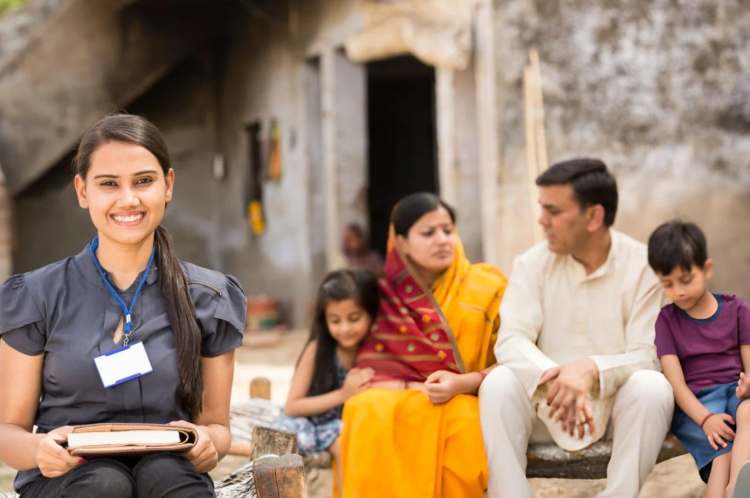
India’s welfare rights debate: The Indian welfare argument has become too narrow. It asks whether a scheme is “free,” whether a subsidy is affordable, or whether a transfer can be digitised. It should ask a more basic question- does the state allow people to live with dignity?
For millions of Indians, welfare is not an abstract policy category. It is the difference between hunger and one meal, sickness and treatment, a failed season and a few weeks of survival. Yet welfare has increasingly been shaped by two pressures: fiscal restraint and administrative efficiency. Both matter. Neither can be the purpose of welfare. The purpose is well-being.
India has always had a large and uneven welfare system. Its weakness is not only inadequate reach. It is poor quality, uncertain access, and repeated exclusion. From the early decades of the republic, welfare was shaped by debates over work, nation-building, and regional claims. The result was a system that often treated work obligation as more important than citizenship rights. That legacy remains visible in schemes that appear universal but are narrowed through filters, conditions, and exclusions.
READ I Rising state debt: Welfare politics meets fiscal limits
Welfare rights, not charity
There is nothing wrong with welfare. The problem lies in how it is framed. In public debate, welfare is too often described as a handout to the poor rather than a right in a constitutional democracy. This framing suits politics. Governments can present basic support as benevolence. Critics can dismiss it as waste. Both positions weaken citizenship.
Welfare and charity are not the same thing. The state is accountable for equality, social justice, and the right to life with dignity. That duty cannot be reduced to a transfer cleared on a dashboard.
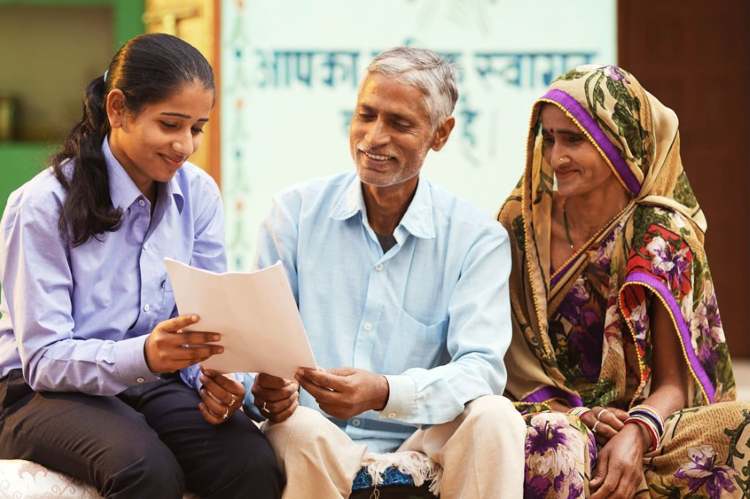
Many welfare schemes now depend on digital verification, biometric authentication, strict documentation, and tight eligibility checks. These tools are justified in the language of efficiency and transparency. In practice, they can turn welfare into a maze. The most vulnerable are often least able to authenticate, travel, upload documents, correct records, or wait for a local official to fix an error.
A system can look clean on a dashboard and still fail the person standing outside it.
READ I Women’s land rights central to India’s agriculture reform
Welfare delivery and exclusion errors
India’s poverty is not only about income. It is also about precarious work, poor health, discrimination, weak public services, and the burden of living without dependable support. In such a setting, welfare must be judged not only by how much is spent, but by how much humiliation and deprivation it prevents.
A delayed pension, a ration denied for technical reasons, or a cash transfer inaccessible to a woman who does not control her bank account is not a small administrative lapse. It is a failure of citizenship. The test of welfare delivery is not whether the state can identify the poor with precision. It is whether the poor can access support without being made to prove their worth repeatedly.
The language of “freebies” has worsened this problem. It turns welfare into a political accusation and hides the reasons why people need public support. India’s economic growth has not removed insecurity for all. Work remains overwhelmingly informal. Jobs are uncertain. Health shocks still push households into distress. In such an economy, the state cannot assume that dignity will be secured in the market.
READ I Transgender rights in India: From recognition to reform
Dignity-first welfare for India
A better welfare model would begin with a clearer political idea: social protection is not an exception to growth. It is one of its conditions. The poor do not encounter the state as an annual Budget document. They encounter it through school meals, public hospitals, pensions, food grains, anganwadis, ration shops, panchayats, and municipal offices.
This is where dignity is either protected or lost.
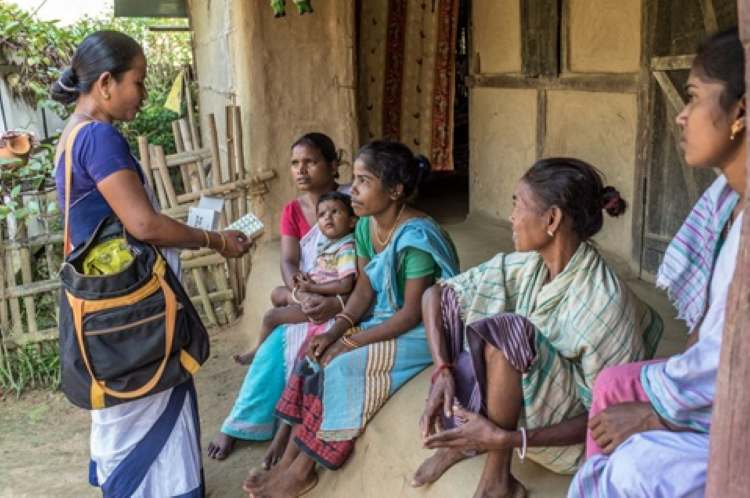
A dignity-first welfare system would reduce needless verification. It would make pensions predictable. It would make food security less vulnerable to biometric failure. It would strengthen public health and nutrition as universal services rather than narrow benefits guarded by gatekeepers. It would rely more on local institutions, panchayats, self-help groups, frontline workers, and community networks, not as substitutes for the state but as humane points of delivery.
This does not mean fiscal irresponsibility. It means judging expenditure by public purpose. A welfare state that excludes the weak in the name of efficiency saves money in the wrong place. A democracy that makes the poor repeatedly prove that they deserve support pays a larger political price.
The real question for India is not whether it can afford welfare. It is whether it can afford a democracy in which the poor must constantly prove that they deserve to live with respect.
India’s welfare debate must move beyond spreadsheets, dashboards, and the rhetoric of “freebies.” The measure of welfare is not the elegance of the delivery architecture. It is whether an old woman receives her pension, whether a child eats without shame, whether a sick worker can seek care, and whether a household survives distress without humiliation.
To protect dignity, India must first recognise that welfare is not a favour. It is a claim of citizenship.
Anusreeta Dutta is a columnist and climate researcher with experience in political analysis, ESG research, and energy policy.