




Thirty-six years ago, General Manuel Antonio Noriega, one-time CIA informant and Panamanian president, was captured and taken to the United States to face trial on charges of drug-trafficking and money laundering.
At that time, around 24,000 US troops and Navy Seals commandos undertook ‘Operation Just Cause’ that involved landing on Panamanian soil on December 20, 1989, before arresting Noriega, who was installed by the American regime of George Bush Sr, and flying him back to the US to stand trial.
While the Bush administration followed the now familiar trope – the adverse impact of drugs on America – the real reason for violating Panama’s sovereignty, which had been restored in 1979 following the signing of a treaty between then US President Jimmy Carter and Panama’s military ruler Omar Torrijos, was reclamation of the Panama Canal which was tied to US economic and political interests.
READ I NATO’s decline: The alliance has outlived its purpose
American foreign policy under President Trump
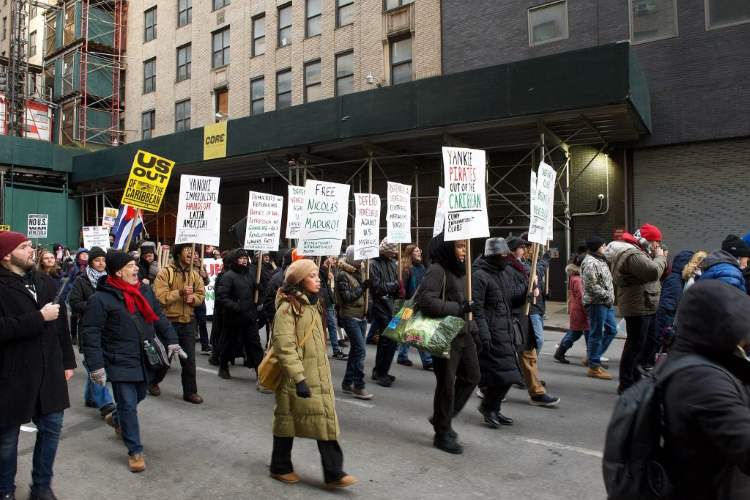
The US invasion of Venezuela and abduction of President Nicolas Maduro and his wife Cilia Flores, dubbed loftily as Operation Absolute Resolve, on January 3 this year, on charges of narco-terrorism, throws the spotlight back on state sovereignty and how it is violated with impunity by big powers in pursuit of self-interests – in this case, laying claim on Venezuela’s massive oil reserves of 303 billion barrels.
Latin America had always been in the US’ sphere of influence during the Cold War period. The US and its agencies, specifically the CIA, sponsored governments and rebels as long as they supported American policies. In the 1990s, in the guise of helping debt-ridden South America, the IMF and its structural adjustment policies overrode domestic policies of several South American countries such as Chile, El Salvador, and Guatemala. However, its influence in Asia was not as deep relatively, except in Korea and Vietnam.
The rise of China in the new millennium has added a new dimension to the old Cold War politics. The so-called spectre of ideological war and the Communist threat do not exist. It is now more about thwarting China’s expansion, and the new popular narrative is to Make America Great Again (MAGA).
In the new wave of “overt regime changes” in Latin America and Asia, the containment policies are slightly different from the Cold War playbook. During the Cold War, the reason for intervention in any country, almost always, was access to resources, which was couched by the overarching thwart-communism narrative.
This is exemplified in the post-Cold War period by the Panama and Venezuela cases. US Secretary of State Marco Rubio clearly stated that America cannot leave the access and control of important minerals in the hands of another power.
Global condemnation of US action
The US arrogance and impetuosity in Maduro’s capture has been roundly criticised by international institutions such as the United Nations, the International Commission of Jurists, the global media and academia. On the one hand, it is an example of the “hollowing out of the UN Charter system” and the “nihilistic geopolitics”, while on the other Venezuela represents a gross attack on state sovereignty and an “imperial management of global security”.
Territorial sovereignty is integral to a state’s existence, and the US’ use of aggressive force on Venezuela is a clear violation of Article 2(4) of the UN Charter, which states that all member states “shall refrain in their international relations from the threat or use of force against the territorial integrity or political independence of any state”.
Michael Walzer, one of the foremost scholars of territorial sovereignty, states in his book Just and Unjust Wars that while intervention can sometimes be justified, the “practice of intervening often threatens the territorial integrity and political independence of invaded states”. Walzer’s defence of intervention was in the case of secessionist movements in which “states can be invaded and wars justly begun…to balance the prior interventions of other powers, and to rescue peoples threatened with massacre”.
Among the cases that Walzer relied on to justify humanitarian intervention was India’s 1971 war over liberating East Pakistan (now Bangladesh), NATO bombing of Serbia in 1991 in the war over Kosovo, the invasion of Iraq after the terror attack in the US on September 11, 2001, and the 2011 intervention in Libya.
The West, particularly the US, has often disregarded state sovereignty, especially with its call for war against terrorism. After the September 11, 2011, terror strikes in the US, key policymakers in the then President George Bush Jr administration used the concept of “contingent sovereignty” to “promote the idea” that some exceptional circumstances and cases – when states harbour terrorists and seek to acquire weapons of mass destruction – “norms of sovereignty do not apply”.
Maduro and Flores have been accused by Trump administration officials for pursuing actions that have encouraged narco-terrorism and Venezuela, and therefore did not possess a blank cheque to do whatever it allegedly preferred to do within its borders. In other words, Venezuela had failed to exercise effective control within its territory as it encouraged drug trafficking within and beyond its borders.
Threat to territorial sovereignty
Venezuela aside, in practice, successive US regimes have objected to the “use of the principle of sovereignty” as a “shield” to pursue activities that caused “enormous threats to their citizens, neighbors, or the rest of the international community” and then launched wars against terrorism.
Such arguments have been used to justify US armed interventions in Iraq and Afghanistan.
It is not surprising that many states did not voice strong condemnation of the Trump administration’s action against Venezuela, although a minority of international organisations such as the International Commission of Jurists did describe the January 3 raid on Caracas as a “violation of international law” and demanded reestablishment of rule of law and respect for human rights.
In November 2025, the Trump administration set out the US’ National Security Strategy whose opening pages reflect not just individual presidential narcissism for obliterating Iran’s nuclear programme but also patted itself on the back for declaring “drug cartels and savage foreign gangs” as “Foreign Terrorist Organizations”. At the same time, Trump said in a self-congratulatory tone that the US had “settled raging conflicts” that made America “strong and respected again”.
The rest of the document bemoans the “hugely misguided and destructive bets on globalism and so-called free trade”, which should have been indication enough that Trump would embark on unprovoked military missions against less powerful countries to achieve predatory objectives even if they violated states’ sovereign rights.
Trump’s actions in Venezuela, followed immediately thereafter with claims over Greenland and threats of a second strike on Iran are designed to project US supremacy. Such pre-eminence is designed to be achieved by any means necessary, even if it means destabilising other states with the ultimate objective of extracting resources, securing more and more oil reserves, rare earths and minerals to benefit American corporations. This obviously places less emphasis on the ethical dimensions of military interventions and more on self-interested realist foreign policy.
The threat to the sovereignty, both territorial and substantive, of other states such as Cuba and Colombia is no doubt crude but signals an intention that can potentially cause destabilisation not only in South America but elsewhere around the globe. The US’ threat to send out fighter jets if Canada does not agree to purchase the American F-35 aircraft only suggests Washington is willing to turn against its own allies.
Far beyond the gunboat diplomacy that the US is known for, the American Navy Seals’ operation in Caracas exposes a broader strategy that rejects and ignores international law and institutions, an unwillingness to engage in rules-based diplomacy and recognising the rights of other states. Such cynical pursuit of power and resources does not make America great. It trivialises all that America once stood for.
Swetasree Ghosh Roy is Professor, Jindal School of Government and Public Policy, O.P. Jindal Global University, Sonipat, Haryana. Originally published under Creative Commons by 360info