





Climate negotiators, researchers, and activists converged in the Amazonian city of Belém for the 30th Conference of the Parties (COP30) to the UN Framework Convention on Climate Change from November 10–21. With part of the conference venue nearly engulfed in flames just days before the summit’s decisive phase, the symbolism was not lost on delegates. The roof is, quite literally, on fire even as governments struggle to phase out fossil fuels.
These annual climate conferences are dominated by a longstanding and continuing tension between industrially advanced countries that emitted a majority of the accumulated stock of greenhouse gases (from 1850-2021) responsible for climate change, and the rest of the world, which has contributed very little.
India has added relatively little (~4 percent) to the accumulated stock of GHGs, and its per capita emissions remain the lowest among major economies. These statistics validate India’s long-held position that any demands to reduce India’s emissions amount to a climate injustice. Yet, both history and per-capita emissions are poor indicators of who is responsible for India’s rapidly increasing emissions, and who bears the cost of the impacts India is already experiencing.
READ I What does Australia’s social media ban really mean
India’s carbon footprint inequality
Over the past 30 years of global climate negotiations, inequalities in emissions within India have worsened, albeit with changing patterns that require careful attention.
Today, India counts among the most unequal countries globally. According to the World Inequality Dataset, 2023, the richest 1 percent and 10 percent of India’s population control 22.6 percent and 57.7 percent of the national income share, second only to South Africa. By the end of 2023, India’s richest 1 percent of citizens owned 40.1 percent of the country’s wealth.
The wealthiest 10 percent of Indians emit over 10 times the per capita emissions of the bottom 50 percent. Yet, surveys show that public perception, including among the wealthy and the most influential, grossly overestimates the average carbon footprint within the bottom 50 percent and underestimates those of the top 10 percent and top 1 percent. This suggests that even the well-intentioned policy priorities on climate and energy may not reflect the true extent of emission inequalities. Without a proper understanding of such inequalities, climate action may produce socially regressive effects, such as adding to the inflationary pressures in the economy.
Following economic liberalization, income and wealth inequality in India have been consistently increasing since the late 1980s. Recent research shows that the relationship between annual carbon emissions and economic inequality has undergone a fundamental transformation in post-liberalization India.
In the pre-liberalization period, states with high levels of economic inequality had relatively low carbon emissions. This changed subsequently with the opening up of markets from 1990 onward, where higher state-level economic inequality is associated with higher carbon emissions. This suggests economic liberalization has shifted the pollution burden from more equal and developed states to less equal ones.
India’s delegation at COP30 emphasised the need for an “equity-driven, economy-wide just transition architecture”, arguing that fairness—both among countries and within them—should shape the global shift away from fossil fuels. New Delhi has called for transition pathways that reflect developmental realities, differentiated responsibilities, and a “whole-of-society approach — leaving no one behind.”
This framing marks a significant shift: India is no longer only defending its development space but increasingly articulating how global climate action must address domestic inequalities.
Prioritising human security
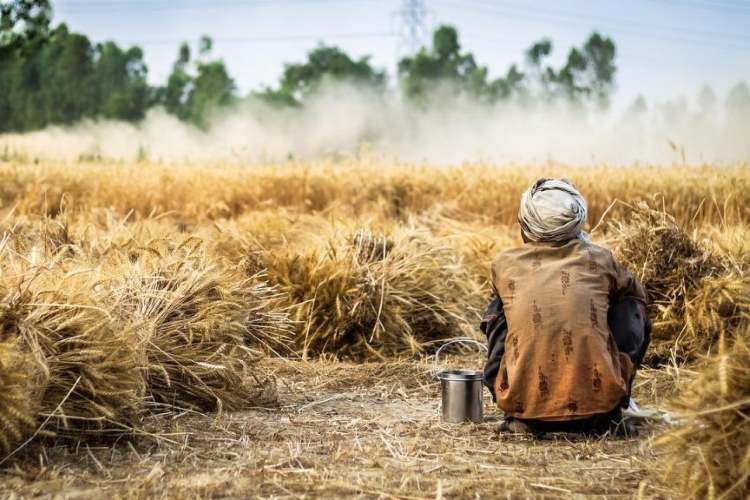
The concept of human security—a people-centred approach that prioritises the safety and well-being of individuals and communities over state-focused security—accurately describes India’s most urgent domestic climate policy challenges. Extreme heat, now a recurring and intensifying feature across the subcontinent, poses grave risks to millions of outdoor workers, including agricultural laborers, construction workers, sanitation staff, delivery personnel, and those employed in India’s informal urban economy.
India’s outdoor workforce remains deeply exposed due to limited access to cooling, inadequate occupational safety regulations, and the near-absence of heat-related labor protections, such as mandated rest periods or heat-safety protocols.
Moreover, heat stress does not occur in isolation. It intersects with other climate threats, such as flash floods, landslides, and intensifying vector-borne diseases, creating cascading risks for already vulnerable populations, including internal migrants, daily-wage workers, and low-income rural households with minimal savings and limited social protection.
Agricultural workers face a double burden: blistering heat directly threatens their health and productivity, while crop losses and heat-related livestock mortality undermine livelihoods and food security. Nearly 80 percent of India’s marginal farmers have suffered crop losses due to adverse climatic conditions in recent years.
Over 4,000 people have died in India due to extreme weather events in the first nine months of this year. In the last three years, 3,812 heat-related deaths have been recorded in India. But this could be a gross underestimate, as inconsistent mortality classification and poorly coordinated reporting systems fail to capture the actual toll.
Given deadly flash floods and landslides, widespread public health crises triggered by extreme heat, and the growing vulnerability of urban infrastructure—with implications for civil and political unrest and national security—the need for effective climate adaptation and resilience strategies has never been more evident.
However, treating climate change merely as an environmental or diplomatic issue is insufficient: it is fundamentally a human security issue that demands climate adaptation strategies, including heat-resilient infrastructure, climate-proof urban planning, rural livelihood diversification, access to safe drinking water, and social protection systems capable of mitigating shocks.
A senior Indian government official told reporters ahead of COP30 that the global climate negotiations “should reflect national realities, capacity, and access to technology.” Applying the same standards in domestic policymaking would be to our great advantage.
Just as Indian leaders demand that industrialized countries support climate action, India’s climate and energy policies should be designed to protect India’s marginalized groups—women, Dalits, Adivasis, religious minorities, and workers—against the disproportionate burdens of climate change.
As India seeks to be counted among global powers, it would do well to invest some of its wealth in addressing climate change and climate inequalities at home. Unlike the West, where conservative ideologues have sown the seeds of climate denial, delay and obstruction, well over 90 percent of Indians are worried about global warming. Indian leaders must tap into this extremely high level of social awareness to respond to the demands from youth movements for socially just climate resilience and adaptation.
Prakash Kashwan is an Associate Professor of Environmental Studies at Brandeis University. Ashok Swain is a Professor of Peace and Conflict Research at Uppsala University, where he also holds the UNESCO Chair on International Water Cooperation. Originally published under Creative Commons by 360info .
.