


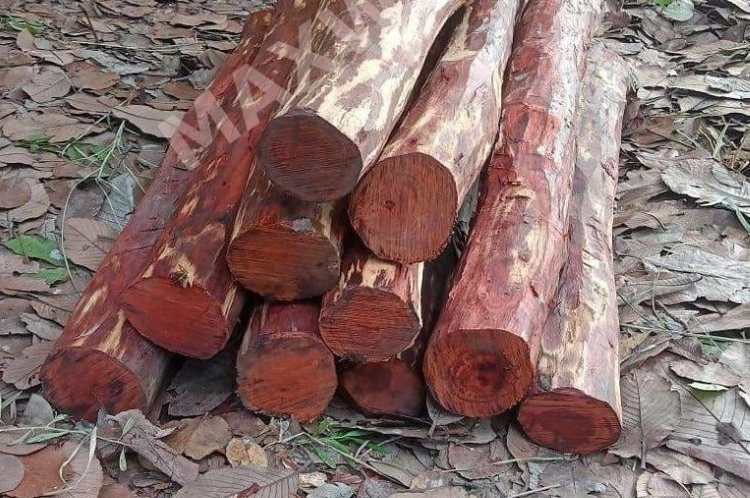
When the Union Budget 2026-27 suddenly put sandalwood in the spotlight as a “high-value crop”, it felt almost symbolic. A tree linked to temple rituals, Mysore soap and old forest stories was placed alongside cashew, cocoa and coconut as an income strategy for farmers. The intent is right. But if policy around sandalwood does not change as boldly as the Budget language, this will end as another neat paragraph in a speech, not a shift on the ground.
Agriculture still holds up most rural households, yet allocations remain modest. This year, the Centre has set aside about ₹1.63 lakh crore for agriculture and allied activities, only a limited increase over last year’s revised estimate. Within that tight envelope, naming sandalwood in a small club of “high-value crops” is not casual. It tells farmers to move beyond low-margin staples into longer-gestation, higher-value assets.
That is also where the problem begins. A small or medium farmer is being asked to lock up land and effort for 10–15 years. The support has to match the risk.
READ I Budget 2026: India needs urban governance, not big transport assets
India’s sandalwood decline
Sandalwood in Karnataka and Tamil Nadu has never been just another tree. Mysore sandalwood carried real economic weight in perfumery, Ayurveda and religious use. State forest departments treated it as “green gold”, auctioning heartwood and oil. Industries and temples relied on steady supplies.
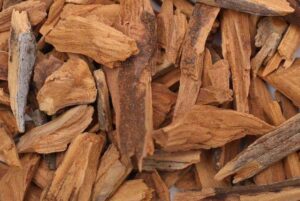

Then the slide became hard to ignore. Research on sandal conservation suggests annual production fell from about 4,000 tonnes in the 1950s to a few hundred tonnes by the early 2000s, even as demand stayed strong. Prices rose. Standing trees fell. India, once dominant in the global sandalwood market, created space for others to fill.
READ I RoDTEP scheme after Budget 2026: Fiscal tightening, strategic risks
Law punishes growers, rewards smugglers
Smuggling is the obvious villain. But policy wrote much of the script. In key producing states, sandalwood was treated as government property. Cutting, storing, transporting and selling it became a maze of permits, inspections and suspicion.
The farmer got a perverse proposition: grow a tree for a decade, and when it turns valuable, someone else controls it. Small farmers with rainfall risk and school fees do not bet on that.
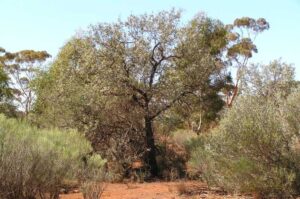

Predictably, many avoided sandalwood. Those who planted it faced thieves at night and officials by day. High prices met rigid rules, and trust collapsed. Middlemen prospered in the gap while the legal supply chain shrank.
The stakes are not small. Good-quality sandalwood heartwood can fetch about ₹7,500/kg in the domestic market. Sandalwood oil is around ₹1.5 lakh/kg, with export prices higher. The global sandalwood market is projected to nearly double between 2023 and 2030, growing around 9–10% a year. For a country that talks of doubling farm incomes and boosting agri-exports, this is not a sideshow.
READ I Budget 2026: Semiconductors drive MeitY’s recalibrated tech spend
Plantations growing, factories importing
The Budget now groups sandalwood with plantation crops and speaks of partnerships with states to restore the “glory” of sandalwood ecosystems, improve cultivation, and strengthen processing and marketing. But there is no large, dedicated outlay for sandalwood. Attention on paper is not reform.
Karnataka’s own numbers show the mismatch. Farmers are estimated to grow sandalwood on roughly 11,000 hectares after rules were eased to allow private cultivation. Yet Karnataka Soaps and Detergents Limited still imports nearly two-thirds of the sandalwood oil it uses each year. If the heartland cannot align plantations, factories and forest laws, the issue is deeper than a shortage of schemes.
Farmer ownership, felling permits, theft protection
For farmers, the questions are blunt.
- Will I clearly own the trees I plant?
- Will I be able to harvest and sell without delays and discretionary permissions?
- Who protects my trees when they become valuable?
- If rules change in ten years, what happens to my investment?
Committees and policy discussions have pointed at the fixes: treat sandalwood as the farmer’s produce, simplify felling and transit rules, strengthen extension and research, and expand agroforestry so sandalwood is mixed with food crops and cash flow does not vanish during the waiting period. Some states have moved in this direction. The danger is that Budget rhetoric will be mistaken for completion.
There is a second danger. If revival is driven mainly by large plantations and a handful of companies, “high-value crops” will not mean much in villages. A serious plan has to make small and medium farmers the centre. That needs credit that fits tree-based systems, insurance that recognises long-gestation risk, farmer producer organisations that can negotiate prices, and local policing that treats standing trees as assets to protect, not targets to ignore.
Traceable sandalwood supply
Environmental concerns about overexploitation are real, especially where natural forest enforcement is weak. But the last few decades show what rigid control can do: it often pushes trade underground. A workable balance is stricter protection of wild stands, with clear, simple rules for private and community cultivation—plus traceability and certification so buyers know what they are paying for.
Sandalwood is now more than a line in the 2026–27 Budget. It is a test of whether India can move from command-and-control to farmer-centric green growth. Can the state share risks and rewards with people who plant and protect the tree, instead of treating them as potential offenders?
The Budget has dragged sandalwood from the margins of forest policy into mainstream agricultural discussion. Whether it becomes a turning point will depend on what happens next: how laws are rewritten, how permits are issued, and how safe a farmer feels planting sandalwood in districts like Mysuru, Shivamogga or Chikkamagaluru.
If follow-through comes, sandalwood will become a model for how India reconciles forests, markets and farm incomes. If it does not, the pattern will repeat: praise the resource in speeches, and quietly allow it to fade from the countryside that once gave it life.
(Harshit Kumar is a student and Dr Barun Kumar Thakur Associate Professor of economics at FLAME University, Pune.)