


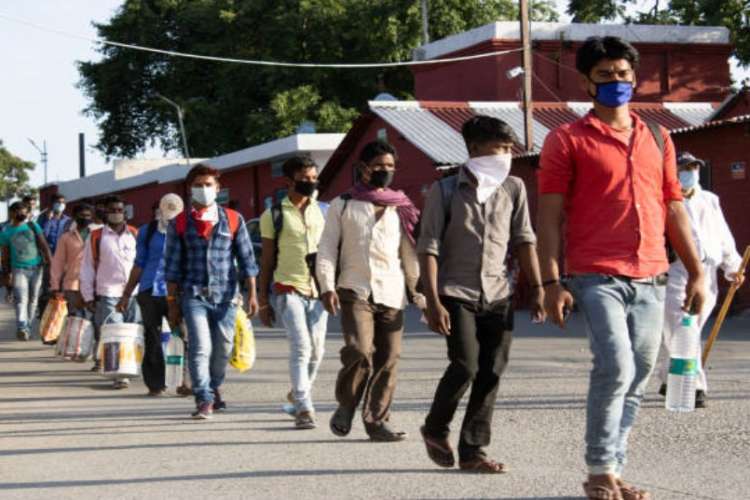
Few numbers are as politically inconvenient in India as the unemployment rate. According to CMIE, India’s unemployment rate hovered between 8% and 9.2% through much of 2024. In June 2024, it jumped to 9.2% from 7% a month earlier. Urban unemployment repeatedly touched 10% or more. These are not abstract percentages. They represent millions of working-age Indians who cannot find a job.
But the bigger failure lies elsewhere. It is the government’s refusal to craft a National Employment Policy, a framework that treats joblessness as a central economic challenge. After more than a decade in office, the Modi government still has none. What it has instead is a patchwork of schemes, a running dispute over inconvenient data, and, since October 2025, a draft labour policy that critics say shifts responsibility from the state to employers and markets.
READ | Educated youth unemployment explains India’s jobs crisis
Unemployment data show a deeper jobs crisis
Start with the India Employment Report 2024, published by the ILO and the Institute for Human Development. Its central finding was stark: more than 80% of India’s unemployed are young people. The unemployment rate for those aged 15 to 29 stood at 10.2% on the PLFS measure in 2023-24. Graduates fared far worse.
The report highlighted a striking Indian paradox: unemployment rises with education. In 2022, the unemployment rate for graduates was 29.1%, against 3.4% for those who could not read or write, and 18.4% for those with secondary education. The problem was not merely unemployment. It was unemployment concentrated among educated youth.
The youth unemployment rate more than doubled between 2000 and 2019, rising from 5.7% to 17.5%, before easing to 12.4% in 2022. That decline should not be romanticised. Much of the apparent improvement came as distressed workers moved into low-productivity agriculture and construction after the pandemic. That is not labour-market health. It is retreat.
In the first quarter of 2024, youth unemployment stood at 17%, about two and a half times the average for the working-age population. For young women, it was 22.7%. Female labour force participation remains among the lowest in the world. That is not a side issue. It is central to the jobs crisis.
Informal employment remains the default reality
Behind the unemployment numbers lies a harsher fact. India’s formal economy is not absorbing its workforce at scale. The ILO report found that nearly 90% of Indian workers are informally employed, without written contracts, social security or meaningful labour protection. More than 94% of the 300 million workers registered on e-Shram earn less than Rs 10,000 a month.
The informal sector employs nine in ten workers while accounting for about 45% of GDP. That is not evidence of flexibility or entrepreneurial vitality. It is evidence of low productivity and low wages on a vast scale.
READ | India unemployment data hides a job quality problem
Self-employment accounts for around half of all employment. That, too, is often presented as resilience. It is more often compulsion. Manufacturing, which should be the engine of formal job creation, increased employment by just 1.7% annually between 2000 and 2019, even as sectoral gross value added grew by 7.5% a year. Growth did not translate into jobs.
Wages tell the same story. Real wages for casual labour rose modestly in 2012-22, but regular workers saw stagnation or decline, and self-employed workers lost ground after 2019. In 2022, 62% of unskilled casual agricultural workers and 70% of construction workers did not receive the statutory minimum wage.
National employment policy is missing by design
The absence of a National Employment Policy is not an administrative omission. It is a policy choice.
The idea was discussed during the UPA years but never formalised. After 2014, it disappeared from the government’s agenda. In 2022, the Centre confirmed in Parliament that no National Employment Policy existed and gave no timeline for one. When asked in Lok Sabha in November 2024 whether it agreed with the ILO’s findings on high youth unemployment and weak job creation for educated youth, the government responded with a statistical rebuttal rather than a policy roadmap.
Its preferred narrative rests on rising labour force participation, EPFO subscriber additions, and schemes such as Mudra, MGNREGS and Make in India. In Budget 2024, it announced a Rs 2 lakh crore employment-linked incentive package across five schemes to encourage formal hiring. That was, at best, a delayed recognition of the problem.
But hiring incentives do not solve a structural failure. They do not create an economy capable of generating productive non-farm jobs at the required scale. Nor did the 2019 corporate tax cut deliver the promised employment surge. Investment did not translate into broad-based job creation.
Shram Shakti Niti 2025 avoids the core question
In October 2025, the Ministry of Labour and Employment released the draft National Labour and Employment Policy, Shram Shakti Niti 2025, for public consultation. The government described it as a landmark framework built on dignity, inclusion, cooperative federalism and data-led governance. It proposed a Universal Social Security Account, a Labour and Employment Policy Evaluation Index, and, eventually, AI-enabled labour administration.
The criticism was immediate. Trade unions objected to both the process and the substance. They said the draft bypassed established tripartite consultation. Others noted its heavy reliance on civilisational language and its light touch on enforceable obligations.
The criticism goes deeper than rhetoric. The draft places much of the responsibility for fair wages and worker dignity on employers, not the state. For a document presented as a comprehensive labour framework, it says remarkably little about binding job-creation targets, sector-specific employment goals or mechanisms for enforcement. It speaks the language of reform while stepping back from accountability.
Demographic dividend needs jobs, not slogans
India’s demographic dividend has been invoked for two decades as if it were self-executing. It is not.
According to the ILO, the working-age share of the population rose from 61% in 2011 to 64% in 2021 and is projected to reach 65% by 2036, after which it will begin to decline. Every year, around 7 to 8 million young Indians enter the workforce.
If they do not find productive work, the dividend turns into a liability. India must move workers from low-productivity agriculture into manufacturing and formal services. That transition has stalled. The ILO’s warning was direct: youth unemployment in India is now above global levels, and the economy has not created enough remunerative non-farm jobs for educated young entrants.
The share of educated youth among all unemployed youth rose from 35.2% in 2000 to 65.7% in 2022. One in three young Indians is not in employment, education or training. The skills deficit is also severe. Too many young people leave the education system without even basic digital or workplace competence.
READ | Official unemployment data misses the reality
National employment policy must define state role
A National Employment Policy would not be a magic wand. But it would force the government to state clearly what it is trying to achieve, in which sectors, over what time frame, and with what accountability.
That means explicit targets for formal job creation. It means a strategy for absorbing labour leaving agriculture. It means a framework to raise female labour force participation. It means enforceable wage standards that matter outside the formal sector. It means institutions that track outcomes rather than publicise outlays.
It would also require intellectual honesty. EPFO enrolments are not the same as net job creation across a labour force of more than 600 million. Scheme announcements are not employment outcomes. Statistical argument is not labour-market policy.
At bottom, a National Employment Policy is a political statement. It says the state accepts that jobs are a public responsibility. It says education and effort should lead to opportunity, not drift into precarious work, disguised self-employment or prolonged joblessness.
India jobs crisis shaped the 2024 political verdict
The 2024 general election offered a muted but clear warning. The BJP lost its parliamentary majority and had to rely on coalition partners. The reversal was sharpest in states where youth unemployment and economic distress were acute. Voters signalled that welfare transfers alone do not settle the question of livelihoods.
That is the heart of the matter. India’s electorate may tolerate hardship for a while. It does not indefinitely forgive the absence of work.
The country does not lack slogans, dashboards or schemes. It lacks a government willing to admit that employment is the central unfinished business of economic policy. Until that changes, the numbers will keep haunting India, whether or not they are spoken from official podiums.
Nihar Nalini Sarangi is a columnist based in Odisha. Views expressed in the article are personal.