


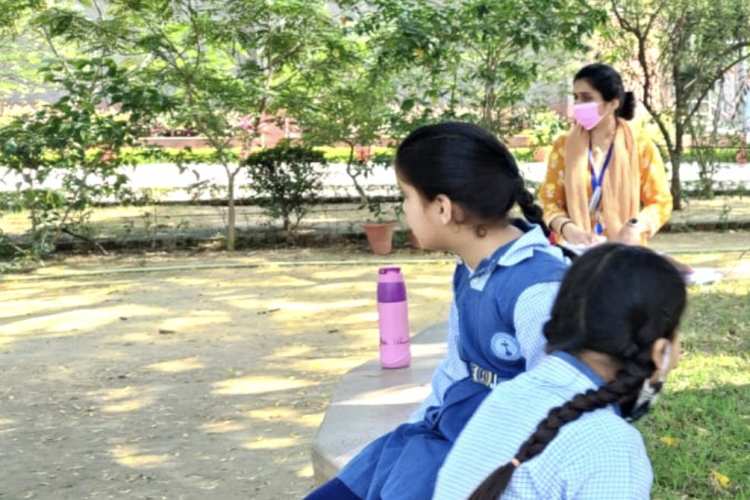
Kerala menstrual leave plan: Kerala’s proposal to allow up to three days of menstrual leave a month for schoolgirls is a small line in a policy address with large implications. It says menstruation can interrupt schooling, and that schools should not treat such absence as indiscipline. The plan, announced under Project Menstrual Dignity in the Governor’s address to the Kerala Assembly on May 29, also promises weekend catch-up classes so that girls using the leave do not lose academic ground.
Menstrual leave is not new in law. Japan incorporated it into labour law in 1947. Employment laws in Spain, Indonesia, South Korea, Taiwan and Zambia also have recognised some form of menstrual leave. These are worker protections. Kerala’s proposal moves the question into school education.
READ | Kerala elderly welfare needs a state-built care system
Kerala menstrual leave and the school taboo
In Kerala, the idea has a half-forgotten history. The Government Girls School in Tripunithura, then in the princely state of Cochin, allowed period leave for students during annual examinations in 1912 and permitted them to write the exam later. More recently, Kerala extended menstrual leave benefits to students in state universities. The present proposal matters because it places the issue in the school policy, not in an isolated school order or a university attendance rule.
That is why the policy cannot be judged as a welfare gesture alone. In many Indian households, menstruation is still governed by rules of avoidance: no entry into places of worship, no participation in rituals, no touching of food, no open discussion. The schoolgirl who takes leave may be resting from pain, but she may also be carrying shame that adults around her have normalised. A leave rule without menstrual education may mark girls out rather than protect them.
Kerala’s proposal is strongest when read as an educational accommodation. It treats menstruation as part of the school environment. Girls miss class because of cramps, heavy bleeding, fatigue, poor toilets, lack of privacy or fear of embarrassment. A school system that records such absence as ordinary absence punishes biology through attendance rules.
Menstrual leave and Supreme Court ruling
The constitutional context has shifted. On January 30, 2026, the Supreme Court held in Dr Jaya Thakur v Government of India that menstrual health is part of the right to life under Article 21 and the right to free and compulsory education under Article 21A. The Court directed governments to ensure functional gender-segregated toilets, water, sanitary products, safe disposal systems, menstrual-health education and compliance monitoring in schools.
READ | Kerala migration debate is trapped in remittance arithmetic
The Court did not order menstrual leave. It did something more useful for Kerala’s purposes. It recognised that the absence of menstrual-health facilities can block girls from exercising the right to education. Kerala’s proposal carries that reasoning beyond toilets and sanitary products into attendance, learning continuity and privacy.
The March 13, 2026 order in Shailendra Mani Tripathi v Secretary, Ministry of Women and Child Development is relevant in a narrower way. The Supreme Court declined to issue a nationwide mandamus on menstrual leave, leaving the issue to the competent authorities. Its caution about possible effects on women’s employment may apply to compulsory workplace leave. It has little force in schools. Schoolgirls are not being hired or passed over for jobs. A voluntary school leave rule, tied to catch-up classes, raises a different constitutional question: whether education rules can adapt when pain or bleeding disrupt attendance.
The Court has since pressed governments on implementation. In the Jaya Thakur matter, it noted submissions that 98,592 government schools did not have functional girls’ toilets and 61,540 lacked usable toilets altogether. It directed the Union to file progress reports every three months and warned that laxity would be viewed strictly.
That weakens any defence of a leave-only policy. Kerala cannot separate menstrual leave from school infrastructure. A girl who attends school during menstruation needs a clean toilet, water, disposal facilities and access to menstrual products. A girl who stays home during severe pain needs a private, non-punitive leave process and real catch-up teaching. Both are part of the same policy problem.
Evidence for menstrual leave in schools
The case for school-level leave does not depend on a trial of the exact policy. Such evidence cannot exist before the policy is tried. It rests on evidence that menstrual symptoms affect attendance and performance.
A 2025 systematic review and meta-analysis estimated pooled dysmenorrhea prevalence among Indian students at 65%. A 2025 Tamil Nadu study of 1,076 university students found that 92.47% reported menstrual pain, while 25.5% met the study’s dysmenorrhea threshold.
READ | Kerala budget bets on investors, skills and maritime growth
Kerala’s own evidence points to early adolescence. A 2016 study of schoolgirls in an urban Kerala school found the mean age at menarche to be 12.05 years. A 2025 PLOS Global Public Health study, using Indian demographic health data from 1992 to 2019, placed India’s mean age at menarche at 12.77 years and examined state-level shifts over a quarter century. A policy confined to universities misses the age at which menstruation first becomes an educational fact.
The educational cost is measurable. A 2025 prospective cohort study in npj Science of Learning found that menstrual pain was associated with 1.2 additional school days missed in a year and 42% higher odds of persistent absence. Heavy or prolonged bleeding was associated with lower examination scores. A 2019 systematic review in the Journal of Women’s Health, covering 21,573 young women, found that 20.1% reported absence from school or university because of dysmenorrhea and 40.9% reported poorer classroom performance or concentration.
This does not prove that three days of leave is the right number. It proves that menstrual pain is not a private inconvenience outside the school’s concern.
How Kerala can avoid new stigma
The first design test is privacy. A girl should not have to explain her menstrual cycle to a class teacher, male administrator or attendance clerk. Schools need a uniform process that records leave without public disclosure. The rule should be voluntary. It should not require routine medical certificates for ordinary menstrual pain, though recurring severe pain should trigger access to health counselling rather than suspicion.
The second test is literacy. Boys need to learn what menstruation is, because otherwise the policy can become a cue for teasing. Parents need clear communication, because absence from school can become a site of family conflict. Teachers need training, because one humiliating remark can defeat the purpose of the rule.
The third test is academic seriousness. Weekend catch-up classes cannot be a sentence in a policy address. Kerala must specify who will teach them, how attendance will be recorded, how missed practicals and tests will be handled, and whether schools will receive funds or staff support. Otherwise, the better schools will adjust and the weaker ones will improvise.
The fourth test is infrastructure. The Supreme Court’s January directions on toilets, water, sanitary products and disposal are not a parallel agenda. They are the floor. Menstrual leave protects the girl who cannot attend. Menstrual infrastructure protects the girl who can.
Kerala has done the rare public act of naming menstruation in school education. That is worth noting in a country where policy often hides the word behind hygiene, sanitation or adolescent health. The proposal now needs rules that protect privacy, fix school toilets, train teachers, fund catch-up classes and measure whether girls are actually better off. Without that, Project Menstrual Dignity will remain a strong phrase in a Governor’s address.
Justy Jain Thomas serves as Project Manager of the UDF Health Commission and Managing Director of Connecting Health Education Equality Rights (CHEER) Foundation.