


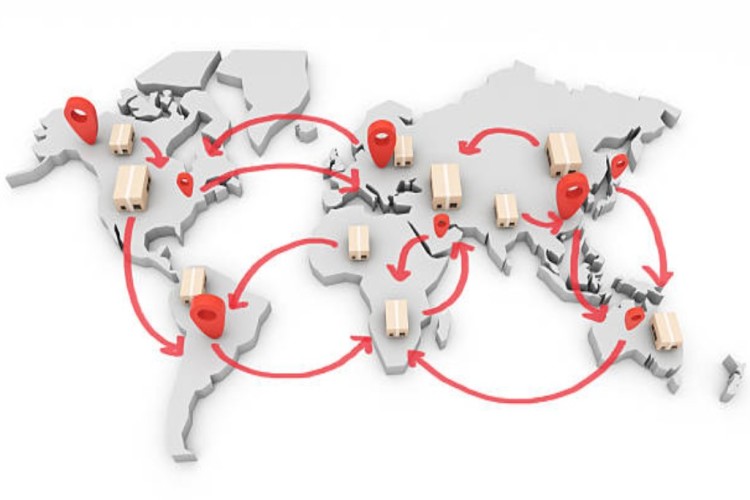
Global value chains are often described as casualties of geopolitics, but evidence suggests otherwise. The Global Value Chain Development Report 2025, published by the WTO and partner institutions, offers a useful corrective to the popular narrative of de-globalisation. Global value chains (GVCs) remain deeply embedded in the world economy. Around 46.3% of global trade is still linked to GVCs in value-added terms, only modestly below the 48% peak in 2022. What has changed is not the scale of cross-border production, but its logic. Cost minimisation is no longer the sole organising principle. Resilience, diversification, digital coordination, and compliance with environmental standards now matter just as much.
This distinction matters for India. As supply chains are rewired rather than dismantled, the question is no longer whether India can participate in global production networks, but whether it can capture durable value within them.
READ | Global value chains are not breaking — they are being rebuilt
India’s rising share in global value-added exports
India’s position in global value chains has strengthened steadily over the past decade. The WTO report places India among the top ten economies by domestic value added embodied in exports, accounting for 2.8% of global value-added exports. This is a meaningful improvement, and it reflects more than an increase in export volumes. It signals a gradual shift towards value creation within global production systems rather than simple expansion in gross trade flows.
That distinction is important. Economies that enter GVCs primarily through low-value assembly tend to remain vulnerable to price pressure and footloose investment. India’s progress, while uneven, points to a more resilient form of integration—one anchored in domestic capabilities rather than temporary cost advantages.
Forward linkages define India’s GVC profile
India’s integration into GVCs follows a different pattern from that of East and Southeast Asian manufacturing hubs. Participation has historically been stronger through forward linkages, where Indian exports, particularly services and select intermediates, are used as inputs in other countries’ exports. Backward linkages, which rely on imported intermediates for export production, remain comparatively limited, though they are rising gradually.
READ | MSMEs need access to global value chains and cheap funds
This structure has insulated parts of the Indian economy from supply-chain disruptions, but it has also constrained manufacturing depth. The absence of dense intermediate-goods trade reflects not only logistics bottlenecks, but also India’s trade policy stance. Higher tariffs on key inputs, frequent regulatory interventions, and the absence of broad regional trade agreements raise friction in intermediate trade. In contrast, East Asia’s manufacturing ecosystems are embedded within dense networks of preferential trade arrangements that lower transaction costs across borders.
The implication is straightforward. Without more predictable market access for intermediates, deeper backward integration will remain slow.
Services, digital capability, and the changing nature of manufacturing
One of the report’s central findings is the growing servicification of manufacturing. Services now account for over one-third of the value added embedded in manufacturing exports globally. Design, software, logistics, data analytics, finance, and after-sales support increasingly determine competitiveness along the value chain.
India has benefited disproportionately from this shift. Information technology services, business process outsourcing, and digitally delivered professional services are now critical inputs into global manufacturing. This allows India to capture higher-value segments of production even where its physical manufacturing presence remains limited.
Yet this advantage has boundaries. Services can complement manufacturing, but they cannot fully substitute for it. The countries that capture the largest share of GVC rents combine digital capabilities with strong industrial ecosystems. India’s challenge is to connect its services depth to manufacturing scale rather than treating the two as separate growth engines.
The missing middle: firms, suppliers, and workforce readiness
The constraints on India’s manufacturing integration are structural rather than cyclical. Participation in high-technology and complex manufacturing value chains remains modest, not because of a lack of intent, but because of gaps in firm-level ecosystems. Global value chains are organised around lead firms, system integrators, and dense supplier networks. India has relatively few large manufacturing firms that anchor such ecosystems, and its Tier-2 and Tier-3 supplier base remains fragmented.
Labour markets also matter more than is often acknowledged. High-value manufacturing GVCs require large pools of semi-skilled workers, stable industrial relations, and continuous firm-level training. India’s strength in digital skills is clear. Its readiness for large-scale, precision manufacturing, especially outside a few clusters, is still evolving.
These are not constraints that can be resolved through incentives alone. They require time, firm learning, and policy consistency.
READ | India’s big bet on supply chain realignment
Rewiring creates opportunity, but execution will decide outcomes
The WTO report characterises the current phase of globalisation as one of rewiring rather than retreat. Firms are diversifying suppliers, reducing geographic concentration, and integrating digital and environmental standards into supply-chain decisions. For India, this creates opportunities in electronics assembly, automotive components, pharmaceuticals, and digitally enabled manufacturing services.
India’s large domestic market, expanding digital public infrastructure, and improvements in trade facilitation provide a credible base. But opportunity does not automatically translate into outcomes. Deeper GVC integration will depend on logistics efficiency, regulatory predictability, trade openness in intermediates, and systematic supplier upgrading. Without progress on these fronts, services-led gains will struggle to translate into sustained manufacturing value addition.
Conclusion: a narrow but navigable path
The Global Value Chain Development Report 2025 presents India as a rising but incomplete participant in global value chains. Its strengths lie in services, digital capability, and forward integration. Its constraints lie in manufacturing depth, firm ecosystems, and trade frictions.
India’s task is not to replicate East Asia’s trajectory wholesale, but to adapt to a world where value chains are being re-engineered rather than abandoned. The path is narrow but navigable. Whether India walks it will depend less on grand industrial strategies and more on consistent execution across trade policy, logistics, firm development, and workforce readiness.
Suresh P Singh is Senior Director, VeK Policy Advisory & Research.