


Geoeconomics redrawing global trade map: The post-Cold War belief that commerce would tame geopolitics has not survived the return of tariffs, sanctions, export controls and restrictions on investment. Governments now use economic relationships to extract strategic concessions. Trade policy and national security are being folded into the same decisions.
Geoeconomics describes the use of trade, finance and investment to pursue economic or geopolitical goals. It is an old practice. The United States can cut access to its financial system. China can restrict supplies of rare earths. Countries controlling a vital input can use that position against economies with few alternative suppliers.
Post-war economic crises have repeatedly exposed such dependencies. The oil shocks of the 1970s, the debt crises of the following decade, the collapse of Soviet-era economies, the global financial crisis, Covid-19 and the Russia-Ukraine war differed in origin. Each showed how quickly commodity supplies, finance and trade routes could become instruments of state power. The current conflict involving Iran, Israel and the United States has returned attention to oil prices and shipping through the Persian Gulf.
READ I India-US trade deal needs a sunset clause
Geoeconomics and commodity power
Global trade started in scarce and unevenly distributed commodities. Trans-Saharan caravans carried gold and salt, and ships carried spices, cotton and other goods. These routes created wealth, but also exposed states to blockades, piracy and the loss of access to essential supplies.
The commodities have changed. Lithium, cobalt and other rare earth elements support batteries, defence equipment, digital networks and artificial intelligence. Oil and steel have retained their strategic value, but they are joined by minerals needed for advanced manufacturing.

Countries with rare earth mineral deposits have gained bargaining power, while import-dependent economies are seeking access through alliances, investment and redesigned supply chains. Export controls and domestic-production subsidies increasingly target the materials used in military and technological production.
A supplier gains leverage when it controls a large part of a market and buyers cannot find adequate substitutes. Christopher Clayton, Matteo Maggiori and Jesse Schreger describe these dependencies as economic choke points. Even a limited alternative can sharply reduce the dominant supplier’s power.
READ I How the Hormuz crisis can push India towards energy security
Geoeconomic dependence and supply chains
The General Agreement on Tariffs and Trade (GATT) and the World Trade Organisation reduced tariffs through reciprocity and non-discrimination. Companies started production across countries to reduce costs. Components crossed borders several times before a finished product reached the consumer.
This raised efficiency while concentrating the supply of some essential goods. Covid-19 exposed delays in medicines, semiconductors and medical equipment. Governments that had treated supply chains as commercial arrangements began examining them as security risks.

Europe’s dependence on Russian energy offered a more severe lesson. In 2021, Russia supplied 45% of the European Union’s gas imports and 27% of its oil imports. By 2025, those shares had fallen to 13% and below 3% respectively, after sanctions and an expensive search for alternative suppliers.
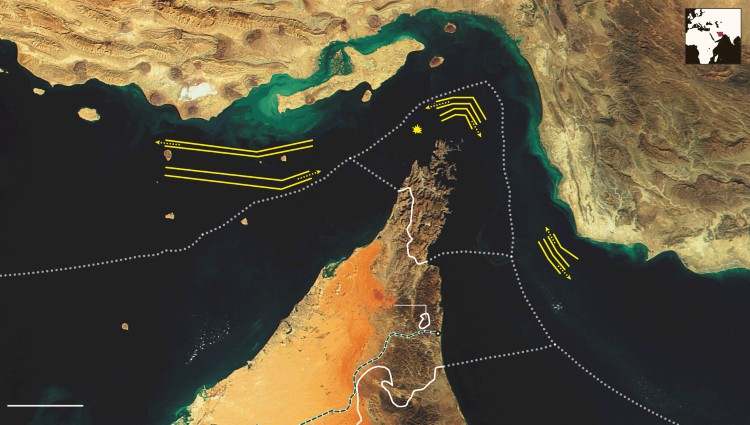
The Strait of Hormuz is another concentration risk. About 20 million barrels of oil passed through it every day in 2024, which is roughly a fifth of global petroleum and LNG consumption. Saudi Arabia and the UAE have laid pipelines that bypass it, but their capacity can replace only a fraction of the flow.
A country preparing for a prolonged conflict will need reliable access to fuel, medicines, chips and communications equipment. Imports remain useful, but dependence on a single supplier or route becomes a liability. Subsidies, financial controls and protectionism redirect production according to political priorities rather than prices.
READ I Hormuz disruption and the rising risk to sea trade
India’s geoeconomic exposure
N K Singh argues that geopolitical rivalry now influences trade and capital flows as strongly as market calculations. He also sees room for India and other middle powers to influence the emerging order through smaller, issue-based coalitions.
India’s most immediate exposure is oil. It is the third-largest oil consumer and the second-largest importer of crude oil in 2023. Imports reached 4.6 million barrels a day, with domestic production meeting only 13% of demand. The International Energy Agency estimates that India’s stocks provided 66 days of net import cover, with the strategic petroleum reserve accounting for about seven days.
Energy efficiency, biofuels, renewable power and a wider range of crude suppliers can reduce the cost of an external shock. India’s commitment to 500 gigawatts of non-fossil capacity by 2030 and net-zero emissions by 2070 therefore has an energy-security purpose as well as a climate objective.
Trying to replace every import would be costly. Diversification plan should focus on supplies for which alternatives are scarce. Oil routes, critical minerals, semiconductors and essential medicines need closer scrutiny than ordinary consumer imports.
India must also strive to keep markets open. Its export industries, energy purchases and access to technology depend on predictable trading rules. Economic security cannot be built by withdrawing from trade.
Geoeconomics and WTO
The institutions created after the Second World War are under strain. The veto at the United Nations Security Council limits collective action. Representation in the IMF and World Bank remains contested. The WTO’s Appellate Body has been unable to hear appeals since December 2019 because its vacancies have not been filled.
GATT and the WTO took decades to move the world away from high tariffs. Reciprocity and non-discrimination gave governments a way out of repeated protectionist retaliation. Geopolitical rivalry has weakened that settlement, but countries still gain from negotiated limits on tariffs and export restrictions.
The trading system will have to accommodate narrowly defined security restrictions without allowing every protectionist measure to be labelled a national-security decision. Large powers also have an interest in restraint. Coercive tactics encourage other countries to build alternative payment systems, suppliers and trading blocs, reducing the leverage of the power using it.
The emerging economies must defend WTO dispute settlement, transparency and non-discrimination while reducing dependence on chokepoints and concentrated mineral supplies. Complete fragmentation would raise costs. Unqualified dependence would leave countries open to coercion. Targeted diversification offers protection without abandoning the gains from trade.