


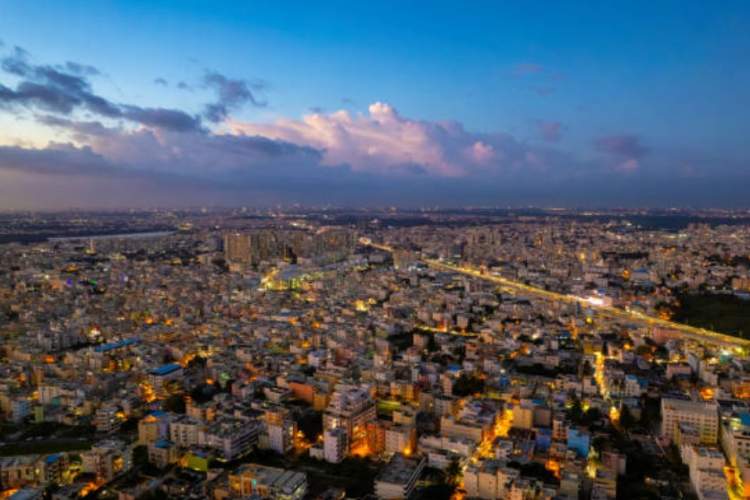
India is a nation looking to move from a largely rural past into an urban future but urban infrastructure has been an afterthought rather than the foundation of prosperity. Roads, mobility, water systems, waste management and public spaces determine whether a city is liveable and economically dynamic. Without such basics, demographic dividends turn into urban discontent as people struggle with congestion, pollution and unplanned sprawl.
In Budget 2026-27, the government has acknowledged this truth. Finance Minister Nirmala Sitharaman announced the creation of City Economic Regions (CERs) which is aimed at energising urban growth beyond the traditional metropolitan hubs. Under the proposal, each designated CER will receive Rs 5,000 crore over five years for implementing their plans through a challenge mode with a reform-cum-results based financing mechanism. Cities are engines of growth and hence attention has been paid to Tier-II and Tier-III cities and selected temple towns that have high economic potential yet lack foundational infrastructure.
READ | Education budget: India’s demographic dividend meets a half-hearted push
Urban policy rethinking
The new ambitions must be viewed against the backdrop of India’s earlier urban development flagship the Smart Cities Mission (SCMs). Launched in 2015 with the aim of transforming 100 Indian cities into citizen-friendly, sustainable and technology-enabled urban centres, the mission had nearly completed an estimated 95% of its 8,000 projects and utilised most of its allocated resources by the time it formally concluded in March 2025. The scheme had made gains in technological integration, improved services, integrated command centres, waste management systems, smart mobility and better governance frameworks. Cumulatively, the mission’s central and supplementary investments are pegged around Rs 1.6 lakh crore.
On paper, both initiatives share a recognition that India cannot grow sustainably without making its cities better places to live and work. But the emphasis, operational design and scale of ambition differ. The Smart Cities Mission was largely cities-centric and focused on defined urban pockets with an overlay of technology and urban services. It sought to make selected cities “smart” by retrofitting them with digital systems, citizen engagement platforms and pockets of enhanced infrastructure. The new CER framework recognises that the real engines of urban growth lie in connectivity, logistics, industrial linkages and integrated regional planning and not just digital enhancements alone.
In the early years of the urbanisation push, the Smart Cities Mission played a vital role in showing that focused financial support, combined with city-level planning and competitive selection, can yield tangible projects and visible transformation. But as projects matured and the mission wound down, it became clear that infrastructure gaps and uneven growth are not problems limited to a hundred cities. India’s urban challenge involves millions of internal migrants, growing secondary cities, lagging connectivity and strained civic services. CER is likely to address that wider challenge by investing in corridors of economic activity that can sustain long-term growth.
READ | Budget 2026-27 doubles down on infrastructure push
However, the mere announcement of funds is not itself a panacea. For cities to become truly liveable, infrastructural investments need to be predictable, sustained and complemented by strong governance. The Smart Cities experience shows both the potential and the limitations of centrally sponsored schemes. Project execution varied widely and in some cases, technocratic fixes overshadowed civic deficits in housing, transport and drainage. Smart lighting or command centres cannot substitute for reliable water, roads or affordable housing.
The Smart Cities Mission was not without criticism. Critics frequently pointed out that the mission privileged area-based development over city-wide transformation and led to islands of improvement. Many projects were concentrated in small, better-off enclaves. The heavy emphasis on digital dashboards, surveillance systems and command and control centres also drew scrutiny for promoting a technical vision of urbanism even while other pertinent issues were left in limbo.
In several cities, Special Purpose Vehicles created parallel governance structures that weakened municipal accountability instead of strengthening local institutions.
READ | Healthcare allocation rises, but structural gaps remain
The CER’s efficacy will hinge on local capacities and institutional reforms. Metropolitan governance structures, integrated land-use planning and citizen participation are a must for the scheme to show results. Cities across India differ vastly in their capacities to absorb funds, implement reforms and maintain investments. The key is tailor-made solutions.
Infrastructure push in cities is both economic and existential. Urban areas contribute a disproportionate share of GDP and their productivity is linked to how well they manage congestion, commuting times, housing affordability and environmental quality. Liveable cities will attract talent and create markets. Infrastructure push must also cater to preventing the social stresses of unplanned expansion, from slums to environmental degradation. The challenge now is to translate the Budget promises into tangible outcomes on the ground.
India is on the edge of a new urban century and the evolution from the Smart Cities Mission to City Economic Regions is a strategic maturing of policy. The focus has shifted from isolated smart interventions to infrastructure planning. Whether this shift will deliver the leap India’s urbanisation demands will depend on execution and the political will to sustain investments beyond the headline numbers.