


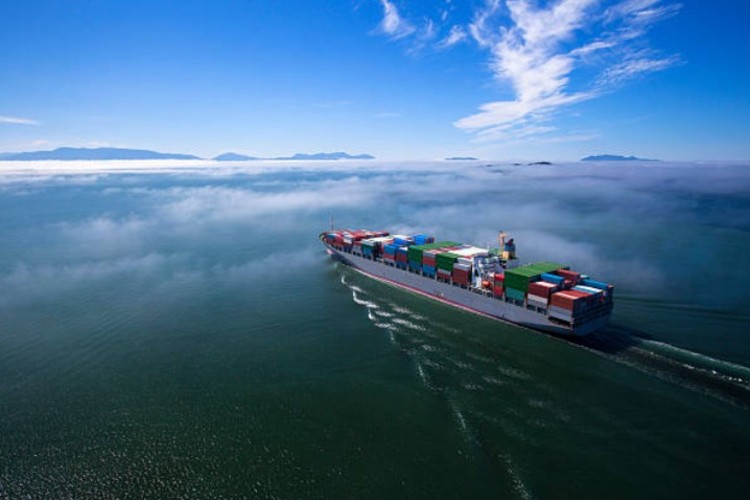
What India’s exports boom leaves behind: India’s goods and services exports reached an estimated $568.84 billion in April–October 2026, up 16.7 per cent from a year earlier. Merchandise exports grew nearly 22 per cent, faster than merchandise imports. Yet the goods deficit widened from $199.46 billion to $218.15 billion because imports rose from a much larger base, according to the Commerce Ministry’s November 13 release. The two figures describe the scale of India’s trade. The more consequential question for industry is what each additional export dollar leaves behind at home. A wider goods deficit tells us little about whether imported machinery and components are helping Indian firms become better suppliers.
The Economic Survey 2025–26 distinguishes import substitution from strategic resilience and describes a further goal, “strategic indispensability”. In practice, that means earning a place in global supply chains that customers would find costly to replace. India has something to build on. Goods and services exports reached a record $863.1 billion in 2025–26. Services receipts and remittances helped contain the current account deficit at 0.6 per cent of GDP. That cushion is valuable. Building a supplier base that global manufacturers can rely on takes a different kind of work.
READ | India-EU FTA puts India’s car exports ambition to the test
What electronics assembly can build
Electronics shows how far India has come. Production rose from about ₹1.9 lakh crore in 2014–15 to ₹13.11 lakh crore in 2025–26. Exports climbed from roughly ₹38,000 crore to ₹4.24 lakh crore over the same period. The next stage is to use that scale to build up local suppliers of components and materials and do more of the design and testing in India. An assembly line gives suppliers a customer. Keeping that customer depends on meeting its standards for quality, cost and delivery.
Imported inputs can help firms meet those standards. A manufacturer may need foreign machinery to produce a component to the tolerances a global buyer requires. A factory that depends on a single overseas source for a critical input faces a different problem. Diversifying supply may reduce that risk while allowing the factory to keep buying the best inputs it can find. The OECD’s trade-in-value-added data offer a way to distinguish the value generated in India from the foreign inputs embodied in its exports. The country figures run through 2022, so they cannot settle how much the recent electronics boom has added at home.
READ | Rice exports expose India’s groundwater paradox
The leave-behind test for exports
A leave-behind test would start with how much value is created in India. It would also ask whether export orders support productive, formal jobs and give local suppliers enough business to invest. Over time, firms should be able to take on more demanding engineering work, develop their own products and improve how they run their factories. An export industry can earn foreign exchange well before those gains show up.
The fiscal gains depend on what happens to wages, profits and formal employment. When they rise, they can broaden the tax base. That gives governments more room to invest in infrastructure, education and research. For a supplier trying to qualify for its first export contract, a reliable testing lab or a steady supply of trained technicians can make a difference to whether it wins the order.
READ | India’s basmati exports boom faces a West Asia problem
How services can strengthen manufacturing
India’s strength in services can help factories do more of this work at home. Software engineers can develop the tools a plant uses to identify defects. Design teams in global capability centres can work with Indian suppliers to get a component ready for production. A manufacturer that can turn to local teams to improve a design and then produce it at scale has more to offer a buyer than a low assembly cost.
The terms of export incentives should reflect that ambition. A scheme tied to the value of shipments can reward a factory for reaching scale. At renewal, the government should ask how much more value the factory and its suppliers now create in India, and whether they can win work on the strength of what they have learned. That is a harder test than reaching the next export milestone.
Shrabani Mukherjee is Professor of Economics, Alliance University, Bangalore. Jibonayan Raychaudhuri is Associate Professor, School of Economics, University of East Anglia, Norwich, UK.