


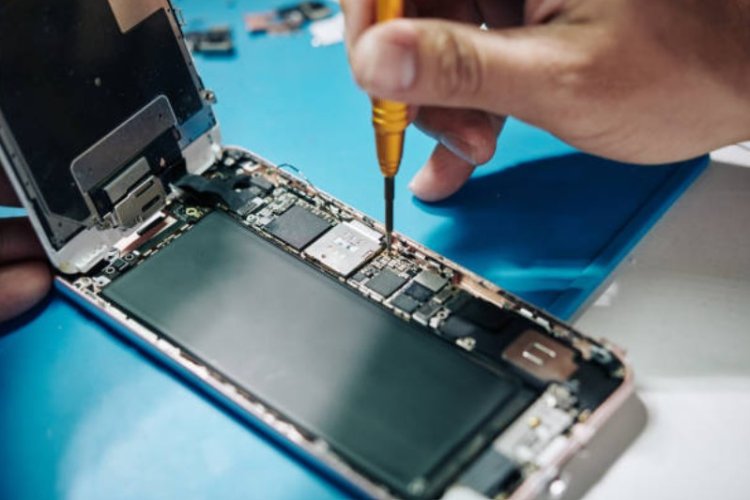
Mobile phone manufacturing push: India’s rise as a smartphone manufacturing base has brought major global companies deeper into the country’s electronics supply chain. Apple, Samsung and Google have expanded production through their own facilities or manufacturing partners, while India-made smartphones are increasingly being supplied to overseas markets. Google, for instance, began rolling out locally manufactured Pixel phones in 2024.
That expansion is set to continue. In August 2026, the MeITY notified the ₹62,500 crore Mobile Phone Manufacturing Scheme, a five-year programme intended to increase production, deepen domestic value addition and strengthen the supply chain. It builds on the earlier production-linked incentive programme, which ended in March 2026, and provides incentives linked to domestic sourcing of components as well as manufacturing.
READ | Make in India: Mobile phone manufacturing industry muscles up, eyes global leadership
As manufacturing expands, so does the number of workers and worksites involved. That makes it important to look beyond production and investment figures and examine what happens inside these workplaces.
Labour disputes in 2024 offered some indication of the risks. A Reuters investigation found that Foxconn, an Apple supplier, had excluded married women from some jobs at its main iPhone assembly plant in India. The Indian government subsequently asked Tamil Nadu authorities for a report on the allegations.
At Samsung’s Sriperumbudur consumer-electronics plant, more than 1,000 workers went on strike from September 9, demanding higher wages and union recognition. The dispute lasted more than a month before workers returned to work in October. The plant makes televisions, refrigerators and washing machines rather than smartphones, but the episode remains relevant to the wider electronics manufacturing ecosystem that India is trying to expand.
Major workplace disputes rarely appear without some prior indication of dissatisfaction. Workers may raise concerns through internal grievance channels long before a dispute becomes visible through a strike or public protest. The effectiveness of those channels therefore matters to workers as well as to companies trying to identify operational and labour risks.
Drawing on professional experience and conversations with people who operate grievance channels in supplier facilities, one pattern is clear: workers’ concerns rarely fit neatly into separate categories.
A workplace issue may begin as a health and safety complaint but also involve compensation, medical support and employment security. In one case encountered through grievance work, a worker suffered a serious eye injury after exposure to lithium carbonate released from a pipeline inside a smartphone supplier’s factory. The complaint extended beyond the accident itself to medical expenses and the worker’s employment situation after the injury. A safety incident had therefore become a wider question of how the worker would be treated after suffering harm.
Other complaints have involved accommodation costs and availability. This can be particularly important for migrant workers who move from other states and depend on housing arranged by their employer in or near the workplace. For a worker earning a modest wage, an increase in rent or the loss of employer-provided accommodation can affect the viability of remaining in the job.
READ | Make in India: PLI scheme boosts mobile phone exports
Complaints about management practices can also overlap with wages and discrimination. A company may place these matters in separate administrative categories. Workers experience them as parts of the same employment relationship.
Grievance channels are more than compliance
These cases show why grievance mechanisms matter for understanding workplace conditions. Social audits and worker interviews can provide useful information, but they do not necessarily show whether workers feel safe raising concerns or whether they believe those concerns will lead to action.
A grievance mechanism provides another route. It can allow workers to raise sensitive issues outside routine compliance processes and, when properly designed, reveal problems that periodic audits may miss.
That is particularly relevant in a fast-growing manufacturing sector. A factory can have written policies, committees and scheduled audits while workers remain reluctant to report problems because they fear retaliation or doubt that complaints will be investigated.
The UN Guiding Principles on Business and Human Rights set out effectiveness criteria for operational-level grievance mechanisms, including accessibility, predictability, transparency and compatibility with human rights. They also emphasise that such mechanisms need to be trusted and usable by the people they are intended to serve.
The OECD Guidelines for Multinational Enterprises similarly place access to remedy within a broader system of responsible business conduct and risk-based due diligence. The Responsible Business Alliance, whose code is widely used in the electronics industry, also provides expectations around grievance mechanisms and worker concerns.
The distinction between having a grievance channel and having an effective one is therefore important. Workers need to know that the channel exists, be able to use it without unreasonable barriers, have confidence that complaints will be handled fairly and see evidence that serious concerns lead to corrective action.
READ | Mobile manufacturing: India struggles against Chinese dominance
Grievances can become risk intelligence
Worker grievances should not be treated simply as individual cases to be closed. Taken together, they can provide information about emerging risks inside a supply chain.
A cluster of complaints about accommodation, for example, may point to a problem affecting migrant workers rather than to isolated dissatisfaction. Repeated complaints about medical treatment after workplace injuries may indicate a weakness in the employer’s response process. Concerns about wages, supervisors or discrimination can also reveal patterns that are difficult to detect through periodic audits.
This makes grievance data potentially useful as an early-warning system. The value lies not in the number of complaints alone, but in identifying recurring issues, their location, the workers affected and the company’s response.
For large global companies and their suppliers, that information can feed into broader human rights due diligence and operational risk management. It can also help identify problems before they become strikes, regulatory interventions or disruptions to production.
Mobile phone manufacturing: Labour standards are becoming a market-access issue
The importance of these systems extends beyond individual factories. Labour standards are increasingly connected to the rules governing international supply chains.
In July 2026, the United States took final action under Section 301 of the Trade Act following investigations into economies’ failure to impose and effectively enforce prohibitions on imports produced with forced labour. USTR determined a 10% Section 301 duty rate for India among a group of economies that have imposed, committed to impose, or partially implemented forced-labour import prohibitions.
The measure is part of a broader US effort to link trade policy with the enforcement of forced-labour import restrictions. Separately, US Customs and Border Protection can detain or exclude goods under its existing forced-labour enforcement authorities when the statutory conditions are met.
The European Union is moving in the same direction. Its Forced Labour Regulation will apply from December 14, 2027, and will prohibit products made with forced labour from being placed on, made available on or exported from the EU market. The regulation applies irrespective of where products are made.
For electronics manufacturers seeking to export, the implication is not that every labour complaint represents a forced-labour violation. Most do not. The more immediate issue is whether companies have credible systems for identifying labour risks, investigating complaints and providing remedy where harm occurs.
There is another complication for electronics supply chains. On August 5, 2026, China’s Ministry of Commerce placed six US entities on its countermeasure list, including the Responsible Business Alliance and Verité Group, citing their alleged support for US measures concerning forced labour. The decision prohibits organisations and individuals in China from conducting relevant transactions or cooperation with the listed entities.
For companies operating across multiple jurisdictions, such measures can make supply-chain due diligence more difficult. They also underline the need for companies to understand where their information, auditing and grievance systems depend on external organisations and cross-border access.
India’s next manufacturing test
India’s manufacturing opportunity is no longer only about attracting factories. The new mobile manufacturing scheme is explicitly intended to deepen domestic value addition and strengthen the supply chain.
That deeper ecosystem will bring more suppliers, more workers and more complex relationships between global brands and local manufacturers. Labour standards will form part of the scrutiny attached to those relationships.
India therefore needs manufacturing systems that can withstand closer examination of working conditions as production expands. Effective grievance mechanisms should be part of that infrastructure. They give workers a route to remedy and give companies information about risks that may otherwise remain hidden until they become harder and more expensive to resolve.
The success of the next phase of mobile manufacturing will be measured in production and exports. It will also depend on whether the workplaces supporting that growth have credible systems through which workers can raise concerns and obtain remedy when things go wrong. That is becoming part of what it means to build a durable electronics manufacturing ecosystem in India.
Mahendra Pal Singh is an expert in labour rights, grievance mechanisms, and ethical supply chain management.