


Global governance did not emerge suddenly in the 20th century. It evolved over centuries, shaped by war, commerce and the gradual rise of formal institutions. The Treaty of Kadesh in 1258 BC is often cited as one of the earliest recorded peace treaties. The Treaty of Westphalia in 1648 was more consequential for the modern world. It ended the Thirty Years’ War in Europe and strengthened the idea of secular political authority, territorial integrity and the sovereign equality of states. That framework still underpins international relations.
Later institutions helped organise cross-border cooperation in more practical ways. The International Telegraph Union, founded in 1865, and the Universal Postal Union, created in 1874, were built to manage transactions across borders, reduce friction and establish rules. They were early examples of how governance could extend beyond kingdoms and empires into structured international coordination.
Industrialisation gave European powers military and economic strength. That strength was used for territorial expansion, commercial penetration and extraction of raw materials. Global integration grew, but so did asymmetry. The modern world economy was built not only on exchange, but also on power.
READ I Why India’s FDI numbers are flashing a warning
Globalisation, shocks and unequal outcomes
Globalisation connected economies through trade, capital, technology, labour, data and ideas. Its modern phase gathered pace from the late 19th century and deepened after the Second World War, when restrictions on trade and capital flows were progressively lowered in the belief that growth and welfare would rise together.
The record was mixed. The global economy expanded, but it also became more exposed to shocks. The Great Depression of 1929-33 devastated employment, industrial output, trade and banking systems. The post-war decades brought their own turbulence: commodity volatility in the 1960s, oil shocks in the 1970s, debt crises in the 1980s, the difficult transition of former socialist economies in the 1990s, the US-led financial crisis of 2007-09, the eurozone debt crisis, the Covid-19 pandemic, the Russia-Ukraine war, and now the renewed instability in West Asia.

The latest conflicts have shown again how geopolitics can overturn economic assumptions. When missiles, drones and naval threats endanger energy infrastructure and shipping lanes, especially around the Strait of Hormuz, oil and gas markets react immediately. Higher energy prices then spill into inflation, fiscal pressure and slower growth. A world tied together by trade is also tied together by disruption.
That contradiction sits at the heart of globalisation. It has supported growth, expanded markets and accelerated technology transfer. It has also widened inequality, deepened labour insecurity in advanced economies and enabled harsh forms of labour exploitation in developing countries. The benefits were never evenly distributed.
READ I HDFC Bank chairman’s exit revives compliance questions
Global governance institutions after war
The First World War led to the creation of the League of Nations in 1920. It was meant to prevent another catastrophe. It failed, and was dissolved in 1946. Its failure remains a reminder that institutions without power, legitimacy or political backing cannot preserve peace.
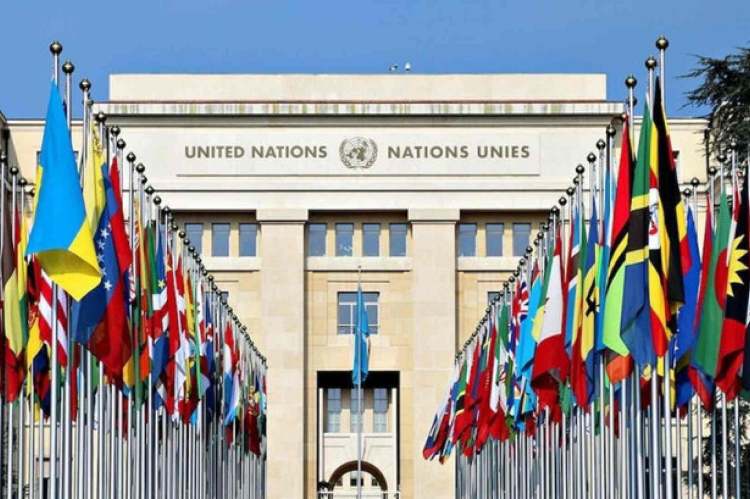
The United Nations was created after the Second World War with a broader mandate: peace, dignity, equality and cooperation. Its principal organs include the General Assembly, the Security Council, the Economic and Social Council, the Secretariat, the International Court of Justice and the Trusteeship Council. Around it grew a wider family of specialised agencies dealing with food, labour, health, civil aviation, telecommunications, education, industry, weather, intellectual property and development finance.
The Bretton Woods institutions were born from the July 1944 conference in New Hampshire. The International Monetary Fund was tasked with promoting monetary cooperation, exchange-rate stability and balance-of-payments support. The World Bank group evolved into a wider development finance system, providing loans, technical assistance, risk cover and dispute-resolution mechanisms. Together they became central pillars of post-war economic management.
The World Trade Organisation, established in 1995, went further than the old General Agreement on Tariffs and Trade by creating a more formal institutional structure for the global trading system. It sought to lower trade barriers, enforce rules and provide a dispute-settlement mechanism. For smaller countries, that structure offered at least some defence against raw power.
READ I Why oil demand remains resilient amid quest for critical minerals
Deglobalisation and institutional strain
That post-war architecture is now under strain. Deglobalisation does not mean the end of all cross-border exchange. It means a sharp reduction in interdependence, usually driven by tariffs, non-tariff barriers, strategic restrictions, migration controls and distrust of global supply chains. Recent US trade policies, including reciprocal and penal tariffs, visa restrictions and tighter immigration rules, have reinforced that shift.
The change is not merely economic. Gordon Brown once remarked that the world had moved from a phase in which economics shaped politics to one in which politics shapes economics. That is now visible everywhere. Trade policy has become industrial policy, security policy and electoral politics rolled into one.
Multilevel governance has therefore become harder, not easier. The challenge now extends beyond the UN, IMF, World Bank and WTO to regional agreements, free-trade blocs, treaties and transnational corporations. The system is denser, but not stronger.
UN Security Council and the crisis of representation
The institution most visibly entrusted with preserving global peace is the UN Security Council. It is also the clearest example of structural imbalance. Its five permanent members, China, France, Russia, the United Kingdom and the United States, retain veto power. That power has repeatedly paralysed action.
The problem is not the veto alone. Representation is unequal. Accountability is weak. Transparency is limited. Action is often selective. A council designed to uphold peace has too often reflected the power hierarchy of 1945 rather than the political realities of the present century.
WHO, Bretton Woods and WTO reform
The World Health Organisation was created to advance the highest attainable standard of health. In practice, it has often been constrained by slow bureaucracy and heavy dependence on voluntary funding. Those limits have been exposed during global crises.
The IMF and the World Bank face a different criticism. Their voting structures continue to favour developed countries. Their policy prescriptions, especially in the era of structural adjustment, have often come with hard conditionalities: privatisation, liberalisation and compression of public expenditure. These institutions were set up to stabilise and rebuild economies. Too often, they have also exported a standard policy template to countries with very different social and developmental conditions.
The WTO initially worked better than many expected. It widened the trade agenda to include goods, services and intellectual property. Its dispute-settlement system gave both developed and developing countries a rules-based forum. But once major economies found rulings inconvenient, support for that system weakened. The refusal to restore a functioning appellate mechanism was not a procedural lapse. It was a political decision that damaged the credibility of the institution.
Global governance reform and the road ahead
The case for reform is strong because the deficits are now clear. Global governance cannot remain credible if power remains concentrated, representation remains narrow and enforcement remains selective.
A more workable framework would require greater transparency, responsiveness and inclusiveness. The IMF cannot apply near-uniform prescriptions to economies at radically different stages of development. The World Bank cannot remain credible if its voting structure continues to mirror old power arrangements. Climate finance, capital adequacy, debt transparency and private-sector mobilisation need more serious attention. The WTO cannot recover unless it restores a transparent and binding dispute-settlement system and updates rules for the digital and green economies.
Some analysts reduce good global governance to six principles: decentralised authority, transparency, direct participation, universal human rights, environmental stewardship, and post-growth or regenerative thinking. The list is less important than the direction. Institutions will survive only if they adjust to present realities rather than defend inherited privilege.
That is the central challenge. The world has more institutions than ever before, but less confidence in them. Unless reform begins where power is concentrated, calls for cooperation will sound increasingly rhetorical. The stated objectives remain familiar: higher living standards, more employment and sustainable development. The difficulty lies in making the institutions of global governance serve those ends again.