


Energy transition: India has committed to net zero by 2070 but the calculations behind that target have changed faster than the policy debate. It was assumed that a developing country would first build its industrial base on cheap fossil fuels and deal with emissions later. That sequence made sense when cleaner energy was expensive. It is harder to defend when renewable power can meet additional demand at a lower compared with coal-fired energy.
India’s solar capacity has crossed 150 GW, and tariffs have fallen from nearly Rs 17 a unit when the national solar mission began to about Rs 2.5-3 a unit. Solar power backed by storage costs about Rs 5 a unit, compared with roughly Rs 5.5 from a new thermal plant. These numbers weaken the case for committing capital to coal plants that are expected to operate for several decades.
READ | India’s clean energy transition needs a stronger grid
Solar power procurement cut investment risk
The more useful lesson from solar lies in procurement. Private investors entering a new sector need clarity on two things: whether they can sell the output and the price they will receive. Competitive bids for 25-year supply contracts, introduced from 2010, dealt with both risks. Developers entered, domestic and foreign finance followed, and prices fell.
That experience matters beyond electricity. India spent years debating the shortage of concessional climate finance. Solar showed that private capital becomes available when projects have predictable revenues and manageable risks.
The same principle could support domestic manufacturing. India remains dependent on China for battery chemistry. Pumped storage and concentrated solar thermal offer alternatives with a much larger domestic content. India has more than 100 GW of pumped-storage potential. Concentrated solar thermal uses mirrors to store heat and relies on established technology.
For solar panels and batteries, the government could invite bids tied to full domestic value addition and offer long-term purchase contracts for the output. A domestic panel producing power at Rs 4 a unit would still compare favourably with electricity from a new thermal station.
Green procurement can reach steel and cement
Long-term procurement can also be used in steel, cement and fertiliser, where cutting emissions is harder. The government could invite bids for low-carbon output, buy at the competitively discovered price and repeat the process until several producers have entered.
The additional cost need not be prohibitive. Even a large increase in the price of steel has a modest effect on the cost of a building when spread over each square foot of construction.
READ | South Asia plastic waste problem needs a PPP solution
Trade policy is adding pressure. The European Union’s carbon border regime will increasingly penalise carbon-intensive production. This creates a different problem for established industrial economies, where companies may have to retire operating plants and replace them. India is still adding capacity. New steel and other industrial plants can therefore be built to lower-emission standards from the outset.
New fossil-fuel assets carry closure risk
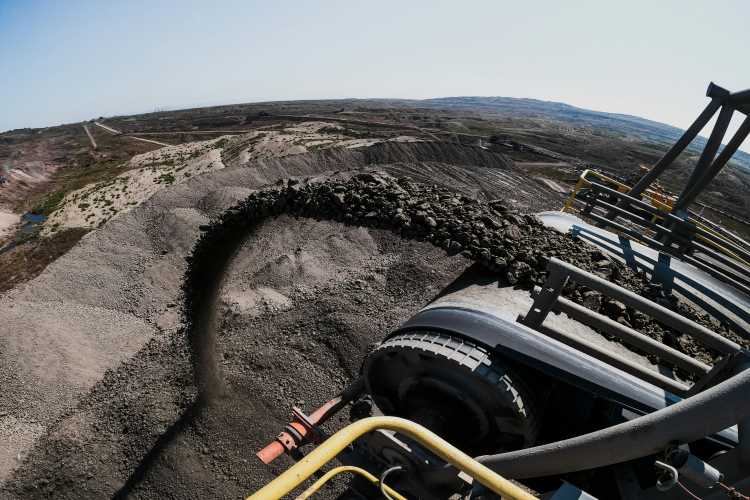
India also needs to reconsider the assumption that domestic coal should be burnt simply because it is available. Carbon capture does not yet offer an economical answer at the scale required.
The larger problem is investment in assets expected to operate for 30 or 40 years. New gas terminals, refineries and the target of raising gas to 15 per cent of the energy mix should be assessed against the possibility that some assets will have to close before the end of their planned lives.
Closure has a cost. But many fossil-fuel installations also occupy large tracts of valuable land. Redevelopment could recover part of the loss.
Energy storage and grids remain weak links
The transition still faces hard constraints. Storage costs may not continue falling at the recent pace. India’s cost of capital remains high, while expectations of large flows of concessional climate finance have diminished. Dependence on rare earths creates both supply and environmental risks.
Electricity demand will also become more difficult to manage. Electric vehicles and electric cooking will add to evening demand. Storage capacity may therefore have to grow at roughly 1.5 times the pace of new renewable capacity.
Transmission and distribution are a larger constraint than generation. Time-of-day tariffs can shift consumption away from expensive peak periods by giving households and businesses a direct price incentive.
READ | Nature finance in India needs bankable projects first
Energy transition: Biomass is an underused energy resource
Agricultural and other biological waste offers another large source of energy. Estimates cited in the discussion put surplus crop residue at the equivalent of 230-260 million tonnes of coal, with forest biomass adding another 260 million tonnes. Animal waste could provide biogas well above current compressed-gas demand. Municipal waste adds to the potential.
Much of this material is burnt in the open or left unused. The technologies already exist. Gasification can convert biomass into useful energy, while biochar can substitute for part of the coking coal used in steelmaking.
The bottleneck is commercial. Crop residue and other waste must be collected, transported and supplied at a price that supports a viable business. That requires an organised market rather than another technology programme.
Solar offers the policy precedent. Government reduced revenue risk through competitive procurement and long contracts, while private investors supplied the capital. Applying that model to storage, low-carbon industrial production and biomass could make the 2070 commitment part of India’s industrial investment strategy rather than a separate environmental programme.
This article is written with inputs from a discussion hosted by EGROW Foundation.