


When the price of cooking gas, petrol or electricity rises, a wealthy household adjusts its budget. A poor one may adjust its meals, or its fuel. That is the case for energy subsidies, and it is a strong one. Yet the design of support can undermine its purpose.
The Centre’s decision in June to limit the ₹300 Ujjwala subsidy to four LPG refills a year, and Delhi’s new Aadhaar requirements for electricity subsidies, bring that problem into focus. Governments must contain costs and prevent misuse. They must also establish whether households can afford essential energy after the rules change. Beneficiary counts alone cannot answer that.
READ | LPG price shock is pushing migrants out of India’s cities
Energy subsidies: Ujjwala’s four-refill limit
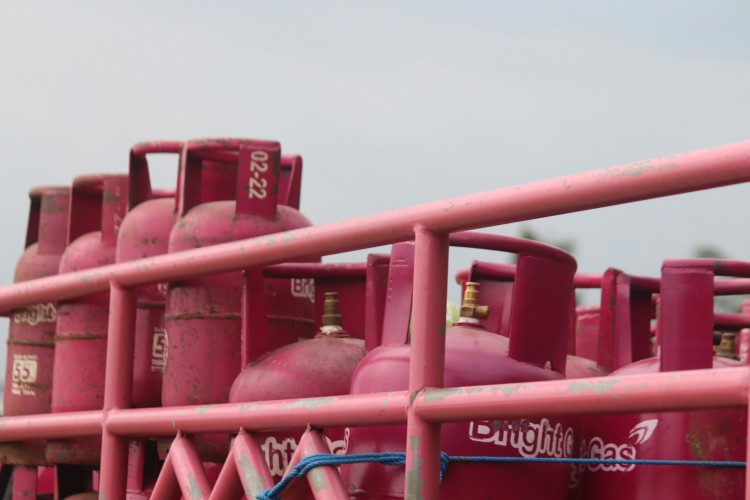
The Pradhan Mantri Ujjwala Yojana illustrates both the promise and the problem. By June 2026, it had provided more than 10.58 crore LPG connections, a substantial expansion of access to clean cooking. Under the revised arrangement, beneficiaries receive ₹300 on each of their first four annual refills. At the Delhi price announced in June, this reduced the effective cost of a 14.2-kg cylinder from ₹942 to ₹642. Subsequent refills lost that additional discount. Press Information Bureau
A connection, however, is not the same as sustained use. PRS Legislative Research, drawing on parliamentary data, reported average Ujjwala consumption of 4.5 refills in 2024-25. It also cited a parliamentary committee’s finding that refill rates remained below those of other LPG consumers, who averaged about 6.5. Household size and cooking habits may explain part of the difference. Affordability may explain another part. The figures do not establish how much each contributes. prsindia.org
The government’s defence deserves consideration. The petroleum ministry said four refills broadly matched typical Ujjwala consumption. It also pointed out that domestic LPG prices remained below supply costs, so households buying additional cylinders still received implicit support. The restriction capped the targeted cash subsidy, rather than the quantity a household could purchase. The previous entitlement, approved for 2025-26, covered nine refills. Press Information Bureau
But an average is not a household. A larger family may need more fuel. A household cooking entirely with LPG may buy more cylinders than one still using firewood. A four-refill ceiling can therefore reduce support precisely when a family makes fuller use of clean fuel.
There is another difficulty with using existing consumption to set the limit. If households already ration LPG because refills are expensive, their purchases understate their needs. A subsidy designed around that average risks preserving the deprivation it was intended to reduce.
Preventing diversion remains a legitimate objective. It does not, by itself, establish that four subsidised refills are sufficient. That judgment requires evidence on consumption by household size and income, alongside surveys of continued biomass use.
READ | LPG crisis 2026: Fiscal strain meets energy insecurity
Petrol and diesel relief spreads widely
Petrol and diesel support works differently. On March 27, the Centre cut excise duty by ₹10 a litre on both fuels. The official announcement explicitly said pump prices would remain unchanged: the reduction would partly offset losses being absorbed by public sector oil marketing companies. It was protection against a price increase, rather than a price cut for consumers. Press Information Bureau
There is a fair argument for cushioning an abrupt fuel shock. Lower diesel costs can restrain freight charges and, through them, prices paid by people who never drive. Broad price relief also avoids the eligibility tests that can exclude households from targeted schemes.
Its weakness is equally plain. Direct relief grows with fuel consumption. A two-car household gains more than a family that walks or takes the bus. The indirect benefit to poorer households depends on how far businesses pass lower transport costs through to customers.
Holding retail prices below supply costs also leaves a bill. Oil companies absorb it initially; government compensation can transfer part of it to taxpayers. A tax reduction has a separate cost in revenue forgone. These mechanisms should be reported clearly, rather than grouped together as though they were interchangeable.
Temporary relief during a supply shock may be defensible. Indefinite support needs a stronger justification, particularly when its largest direct benefits go to heavy consumers.
READ | LPG price shock exposes India’s clean cooking gap
Delhi’s electricity subsidy uses an imperfect proxy
Delhi offers a different approach. Eligible domestic consumers using up to 200 units a month receive a full subsidy on energy charges. Those consuming between 201 and 400 units receive 50% support, capped at ₹800. These consumption slabs provide a simple way to limit assistance without requiring every applicant to prove income. indianexpress.com
Low consumption is a reasonable starting point for identifying need. It is an imperfect one. A large poor family sharing a meter may consume more than an affluent couple. Low electricity use can reflect hardship, but it can also reflect a small household, an efficient home or limited occupancy.
Delhi’s recently notified requirements ask beneficiaries to furnish Aadhaar proof or undergo authentication and renew their choice annually. People awaiting an Aadhaar number can submit their enrolment ID. The provision matters because identity checks need workable alternatives for eligible applicants.
Verification can help prevent duplicate claims. It cannot establish whether a household needs financial support. Nor should a failure to complete paperwork be counted automatically as the removal of an ineligible beneficiary.
The same concern now applies to LPG. From October 1, biometric Aadhaar authentication became necessary to book domestic refills at the regulated price with applicable subsidy. The petroleum ministry provided several routes, including authentication during delivery or at a distributor. Whether these arrangements prevent exclusion needs to be measured alongside the savings they produce.
Measure whether families can keep using energy
Subsidies compete with spending on schools, healthcare and public transport. Their benefits must justify that cost. Clean cooking also has a public-health purpose, which a calculation confined to the subsidy bill can miss.
Governments should publish refill distributions, rather than rely on averages, and examine how consumption varies with household size. Any allowance for larger families would need to weigh improved support against the burden of additional verification.
Direct transfers can make assistance easier to trace, but they do not remove the problem of finding money upfront. A household may struggle to purchase a cylinder even when part of the payment will later return to its bank account. Grievance systems and assisted verification therefore belong in the scheme’s budget.
The fifth cylinder provides a useful test. If an eligible family returns to firewood because the additional discount has ended, the saving on the subsidy account comes at the expense of the clean-cooking objective. The government needs to know how often that happens before treating four refills as an adequate entitlement.
Mauli Arora is an economics student, and Dr Shivani Giri Assistant Professor at Christ University Delhi-NCR Campus.