


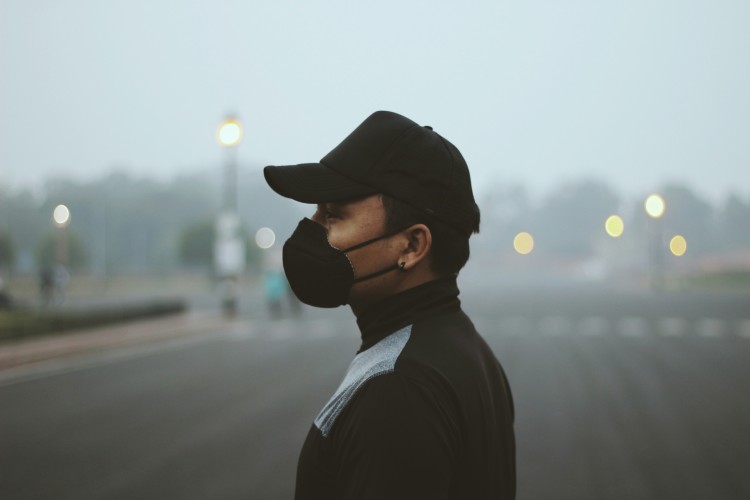
Delhi air pollution plan: Every winter, Delhi falls into a recurring cycle. The sky turns grey, hospitals see a rise in respiratory diseases, schools cancel outdoor activities and emergency restrictions are reintroduced under the Graded Response Action Plan (GRAP). For years, the city’s approach to air pollution has been mostly reactive, waiting for the air quality to worsen before imposing temporary restrictions on construction, cars and industrial activities.
The Delhi government’s Proactive Winter Air Quality Management Framework 2026 hopes to reverse that. The goal is to avoid disaster by making changes well before winter, instead of waiting until pollution reaches dangerous levels. It represents a major change in Delhi’s air quality governance in more recent years, from emergency response to preventative planning. But whether this move succeeds or not will depend not only on new legislation but also on the state’s ability to address the underlying causes of the pollution crisis in Delhi.
READ | Air pollution is now a drag on India’s economic growth
Delhi air pollution plan 2026
Delhi has never known pollution as a seasonal affair. Vehicular emissions, construction dust, industrial pollutants, biomass burning, landfill fires and road dust combine to create poor air quality throughout the year. These emissions are only increased in winter due to temperature inversions and low wind speeds that trap pollutants near the ground. Acknowledging this, the new framework outlines a series of actions to be implemented each year from November to February, rather than relying heavily on emergency GRAP interventions.
Its main features are denying fuel to vehicles without valid Pollution Under Control Certificate (PUCC), banning non-BS VI commercial vehicles from entering Delhi in peak winter months, increasing parking charges to discourage ownership of private cars, encouraging staggered office hours and tightening construction controls. The strategy is straightforward: reduce emissions before the atmosphere turns them into a public health crisis.
A nice break from seasonal politics
Delhi’s pollution debate has been an annual political blame game for a decade. The state governments have blamed the stubble burning in the neighbouring states. Delhi’s vehicle emissions are reflected in Punjab and Haryana. Municipalities blame construction dust, while environmental activists claim the problem is lax enforcement across all sectors. The result has been a broken-up administration. The 2026 framework is to be credited for recognising that pollution is not a seasonal phenomenon.
Air quality management requires ongoing surveillance, institutional preparedness, and inter-departmental collaboration months before the onset of winter. Preventive governance is far more effective and economically less disruptive than imposing unexpected limitations after pollution has hit “Severe” or “Severe Plus” levels.
Businesses have better policy clarity; commuters get advance notice of mobility limitations; and regulatory bodies have more time to ensure compliance rather than scrambling in an emergency.
That’s still the transport problem
Vehicles continue to be among the biggest local sources of air pollution in Delhi. The government’s plan to make genuine PUCC certificates mandatory for buying fuel is aimed at improving pollution compliance and discouraging the use of poorly maintained cars. At the same time, restrictions on older commercial vehicles and flexible office hours are designed to ease traffic during peak hours. These are important steps, but they only take us so far.
Delhi needs to massively expand low-cost public transport, improve last-mile connectivity, accelerate the deployment of electric buses and provide stronger incentives for the adoption of electric vehicles. Legal restrictions alone will not bring long-term reductions in emissions unless public transportation is more convenient than private vehicles. Stricter enforcement of polluting cars has to go hand in hand with transparent inspection mechanisms that reduce corruption in the issue of pollution permits, just like that.
Dust and construction are polluters in desuetude
Every winter, stubble burning dominates the public conversation, but scientific studies have repeatedly proven that road dust and building activity are major drivers of particulate pollution in Delhi. The government’s attention to mechanised road sweeping, better waste management, required dust barriers and higher compliance at building sites reflects a long-overdue recognition of these factors. The Commission for Air Quality Management (CAQM) has also issued specific guidelines on management of construction dust and on particle emissions from industries in the National Capital Region. But enforcement is the big issue.
Delhi has seen instances where environment-related laws exist on paper, but are not uniformly enforced. Dust control measures are routinely ignored in construction projects, illegal burning of waste continues in many communities and road maintenance is inadequate. If inspections are not carried out regularly and sanctions are not severe, policies can remain symbolic rather than transformative.
Air pollution doesn’t recognise borders
Delhi’s clean air plan may have its biggest flaw outside the city. The pollution in the air of the National Capital Region is essentially regional. Winter pollution is largely due to burning of crop residue in Punjab and Haryana, along with industrial emissions from surrounding states, thermal power plants and dust carried across state borders. This is why the establishment of the Commission for Air Quality Management was an important institutional reform.
Instead of each state coming up with its own policies, the CAQM sets up a regional governance structure that can coordinate pollution control measures across Delhi, Haryana, Punjab, Rajasthan and Uttar Pradesh. Similar environmental standards are being aimed at in the NCR through recent efforts on crop residue management, industrial emissions and electric mobility.
But a good regional government requires political cooperation, which is often difficult to achieve. Air pollution is often politicised, with governments passing the buck rather than sharing responsibility.
Public health must be the top priority
Air pollution is often discussed in relation to environmental regulation or urban management. But it is, fundamentally, a public health emergency. Long-term exposure to PM2.5 and PM10 particles increases the risk of respiratory illness, cardiovascular disease, stroke and premature death. The burden falls disproportionately on children, the elderly, outdoor workers and low-income populations because they have fewer resources to protect themselves. Therefore, policies to reduce emissions can be viewed as investments in health care, labor productivity and economic resilience rather than simply environmental expenditures.
This takes a different view and demands more public participation. Citizens cannot be passive recipients of official warnings. Less dependence on private vehicles, vehicle maintenance, proper waste disposal and adherence to environmental standards help to clean up the air. To be sustainable, urban governance requires collective accountability and state engagement.
After the winter
Delhi’s 2026 Air Pollution Control Plan is one of the most comprehensive attempts at institutionalising preventive environmental regulation in the city. Its greatest strength is not any one policy tool, but the recognition that pollution control must be an all-year administrative priority, not a periodic emergency response. That said, no framework can be successful without good execution.
Ultimately, whether Delhi’s air becomes cleaner will depend on the enforcement of regulations, cooperation between states, investment in public transport, a cleaner industry, dust management and ongoing surveillance. Big plans have already been announced by the city. How consistently policies are implemented is the key to successful environmental governance.
If Delhi can sustain this preventive approach through political cycles and seasonal headlines, the 2026 framework could be the beginning of a more long-term clean-air policy. If not, the capital risks falling into a familiar pattern: reacting to poisonous air after the haze has arrived.
Anusreeta Dutta is a columnist and climate researcher with experience in political research analysis. ESG research and energy policy.