


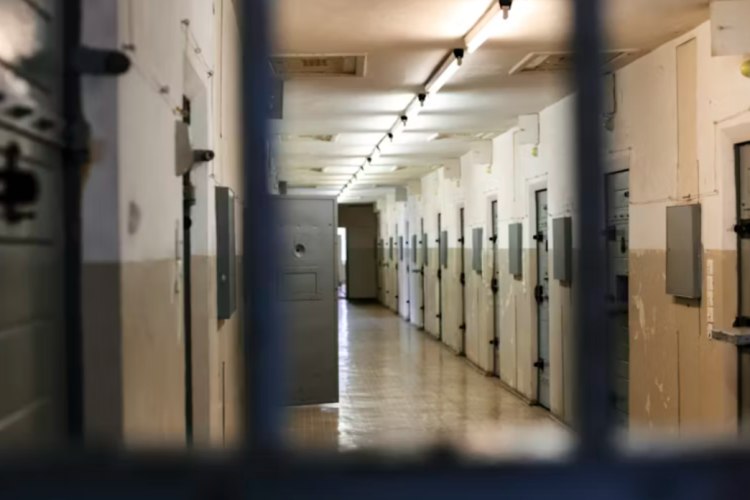
India presents itself as the world’s largest democracy, a constitutional republic committed to rule of law, judicial independence and human rights. Yet the growing international scrutiny over custodial torture and deaths points to a widening gap between constitutional promise and institutional practice.
The recent intervention by United Nations Special Rapporteurs on torture and extrajudicial executions, amplified by REDRESS, is significant because it treats custodial violence in India not as a series of isolated police excesses but as a systemic failure. In February 2026, UN experts raised concern over persistent reports of torture, deaths in police and judicial custody, arbitrary detention, encounter killings and impunity in India’s policing system.
READ | Hantavirus outbreak calls for stronger zoonotic preparedness
Custodial deaths and rare accountability
India’s own institutions give weight to that concern. The National Human Rights Commission received 2,346 intimations of deaths in judicial custody and 160 intimations of deaths in police custody during 2023-24, according to its latest annual report. Earlier data placed deaths in judicial custody at 2,152 and deaths in police custody at 155 in 2021-22.
The number by itself does not prove torture in every case. Many prison deaths are officially classified as natural. But the accountability gap is unmistakable. Government data placed before Parliament showed that disciplinary action in custodial-death cases was rare, and prosecutions were not directed in any case covered by that response. This is no longer a question of aberrant conduct by individual officers. It is a pattern of institutional impunity.
India’s UNCAT failure weakens its case
The international legal context makes the concern sharper. India signed the United Nations Convention Against Torture in October 1997 but has still not ratified it. The UN treaty database records India’s signature but no ratification. Ratification would require India to criminalise torture as a specific offence and strengthen mechanisms for investigation, prosecution and redress.
Successive governments have argued, in effect, that existing constitutional safeguards and criminal law are adequate. Article 21 protects life and personal liberty. The Supreme Court has issued guidelines on arrest and detention. The NHRC requires reporting of custodial deaths. Yet the persistence of custodial deaths, allegations of torture and weak prosecution outcomes make that defence increasingly thin.
India seeks the legitimacy of the human-rights vocabulary, but resists the institutional obligations that give that vocabulary meaning. That is the central contradiction.
READ | NEP 2020’s mother tongue push may deepen India’s school divide
Constitutional promises need institutional proof
The crisis also exposes the limits of democratic exceptionalism. Indian governments often answer international criticism by invoking sovereignty, elections and constitutional democracy. These are not trivial arguments. India is not an authoritarian state. It has courts, legislatures, civil society and an active press.
But international human-rights law does not judge states by constitutional text alone. It asks whether rights are protected in practice. When people continue to die in custody and accountability remains exceptional, constitutional guarantees begin to look formal rather than substantive.
The question raised by the UN intervention is therefore larger than policing. Can a democracy remain genuinely constitutional when state violence is protected by institutional inertia?
Violent policing has gained social licence
Equally troubling is the social normalisation of violent policing. The Status of Policing in India Report 2019 by Common Cause and Lokniti-CSDS found that a large share of police personnel saw beating suspects to extract confessions as acceptable, while 37% believed minor offenders should receive police punishment rather than face legal trial.
This matters because custodial violence does not survive only inside police stations. It survives in public approval. Encounter killings are often projected as proof of strong governance. Due process is made to look weak, slow or elitist. The police officer who bypasses law is recast as a decisive agent of justice.
That is a dangerous inversion. A constitutional state is not defined by the speed with which it punishes, but by the limits it places on punishment.
Custodial violence is not socially neutral
The burden of custodial violence is not evenly distributed. The UN experts and rights groups have drawn attention to the vulnerability of Muslims, Dalits, Adivasis, the poor and other marginalised communities in cases of arbitrary detention, torture and denial of due process.
This is what makes the problem structural. Those with money, political access or social standing can often secure legal intervention quickly. Those without it enter a different legal universe. They are more likely to be detained informally, denied timely medical care, pressured into confessions or left dependent on overburdened legal-aid systems.
Custodial violence is therefore not only police brutality. It is also a measure of how caste, class and communal power operate inside state institutions.
Impunity corrodes public trust
The damage does not end with the victim. Custodial violence corrodes the credibility of the wider justice system. The police station, the prison, the magistracy, the medical examiner and the human-rights commission are all expected to form a chain of protection. When that chain fails, the constitutional promise collapses at the first point of contact with the state.
For poor and excluded communities, this failure is not abstract. It shapes everyday expectations of justice. The state is not seen as a guarantor of rights, but as a coercive power that can act without consequence. Once that belief takes hold, formal guarantees lose moral force.
This is why custodial deaths are not merely a law-and-order issue. They are a test of democratic legitimacy.
READ | Foreign universities in India face a credibility test
India’s global role needs rule-of-law credibility
India’s response will also shape its international standing. The country seeks a larger role in the G20, the United Nations and the Global South. It presents itself as a democratic counterweight in a world marked by authoritarian resurgence. That claim rests not only on elections or economic growth. It also rests on institutional transparency, civil liberties and the rule of law.
Allegations of torture, extrajudicial killings and arbitrary detention weaken that claim. They allow critics to argue that India wants global democratic leadership without domestic accountability. That perception may be unfair in parts, but it cannot be dismissed when the evidence comes from Indian institutions as well as international experts.
Custodial torture is a constitutional crisis
The UN action raises a question larger than policing. It asks what kind of state India is becoming.
A constitutional democracy cannot be sustained by elections alone, nationalist rhetoric or formal assurances. Its legitimacy depends on whether the state subjects its own coercive power to law. If torture, custodial deaths and encounter killings persist with institutional apathy, India risks normalising a model of governance in which violence is folded into democracy itself.
The real danger is not embarrassment abroad. It is the slow domestic erosion of constitutional morality. A republic that cannot protect the powerless in custody cannot credibly claim that its Constitution governs the exercise of power.
Dr Amit Anand holds a PhD in Law from Lancaster University, an LL.M.(Human Rights) from University of Reading. His research engages with questions of human rights, gender justice, and socio-legal understandings of violence and vulnerability. Anusreeta Dutta is a columnist and climate researcher with experience in political analysis, ESG research and energy policy.