


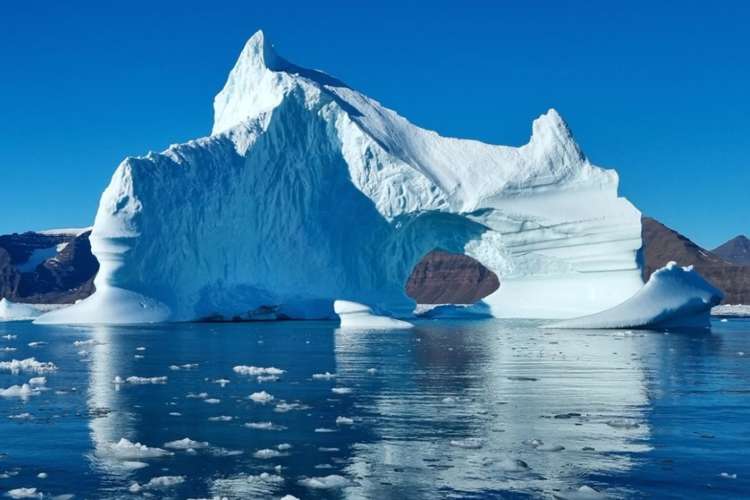
Arctic warming threatens global climate stability: The Arctic has long been perceived as a distant and isolated region, far removed from the everyday concerns of people living in Asia, Africa, Europe or the Americas. To many, it evokes images of vast ice sheets, polar bears, and sparsely populated Indigenous communities living at the edge of human habitation. But this perception is increasingly misleading. The Arctic is not a remote environmental curiosity. It is one of the most critical components of the Earth’s climate system, and the dramatic changes taking place there are restructuring environmental, economic, and political realities across the globe.
What happens in the Arctic can longer remain in the Arctic. The region functions as a critical regulator of the planet’s climate, influencing atmospheric circulation, ocean currents, and temperature patterns that affect billions of people. Today, however, it is undergoing unprecedented transformation.
READ I Cooling infrastructure must be India’s next climate priority
Arctic warming and global weather risk
Scientists estimate that the Arctic warming is nearly four times faster than the global average, making it one of the fastest-changing regions on Earth. This phenomenon, often described as Arctic amplification, has far-reaching consequences that go well beyond the polar circle. The Arctic has become a warning signal for the future path of the planet, revealing the speed and scale at which climate change is being reported.
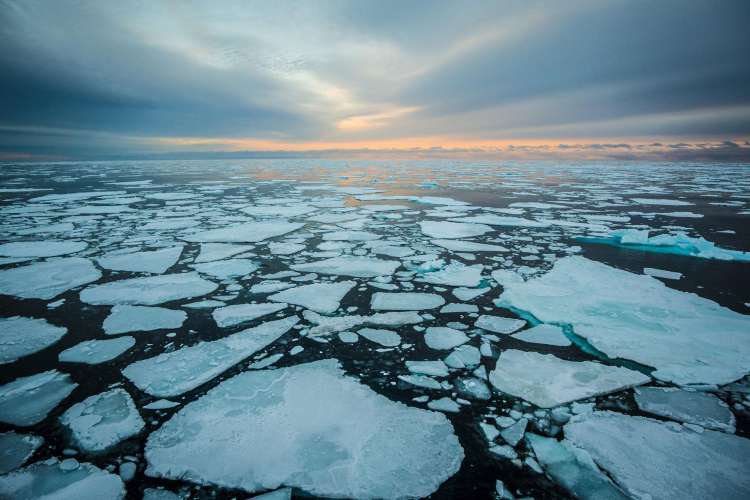
For centuries, Arctic sea ice acted as a natural cooling mechanism for the Earth. Its bright white surface reflected a substantial portion of incoming solar radiation back into space, helping maintain a stable global climate. This reflective capacity, known as the albedo effect, has been one of the most important safeguards against excessive planetary warming. However, this protective shield is disappearing at an alarming rate. Data compiled by the International Institute for Sustainable Development indicate that nearly three-quarters of Arctic ice volume has vanished within the last fifteen years. The ice that forms today is thinner, more delicate, and less capable of surviving seasonal warming than the multi-year ice that once dominated the region.
The consequences of this loss go far beyond the Arctic Ocean. As sea ice retreats, dark ocean water is exposed to sunlight. Unlike ice, which reflects solar energy, open water absorbs heat. This creates a self-reinforcing cycle in which warming leads to more melting, which in turn generates additional warming. Scientists increasingly warn that the Arctic could experience virtually ice-free summers within the next decade or two. Such a development would represent a profound shift in the Earth’s climate system, accelerating global warming and altering environmental conditions far beyond the polar regions.
READ I Cleaner mobility scheme targets Delhi-NCR’s dirty trucks
The Arctic’s influence on global weather patterns is equally significant. The temperature difference between the Arctic and lower latitudes helps drive atmospheric circulation systems, including the jet stream that shapes weather across much of the Northern Hemisphere. As the Arctic warms, this temperature gradient weakens, contributing to a more unstable and erratic jet stream. The consequences are becoming increasingly visible. Prolonged heatwaves, devastating floods, severe droughts, and unusual winter storms are occurring with greater frequency and intensity across many parts of the world. These events are often experienced as local disasters, but they are increasingly linked to broader changes occurring in the Arctic climate system.
The economic implications are equally substantial. Extreme weather events damage infrastructure, disrupt transportation networks, reduce agricultural productivity, and place enormous pressure on public finances. Crop failures in one region can affect food prices globally. Floods and storms can interrupt supply chains that support international trade. Insurance costs continue to rise as climate-related disasters become more frequent. In this sense, the Arctic is already influencing the daily lives of people who may never travel anywhere near the polar regions. The costs of climate instability are increasingly being transferred into household budgets, national economies, and international markets.
READ I Climate finance gap gives BRICS a larger role in 2026
Arctic warming and permafrost thaw
Perhaps even more alarming is what lies beneath the Arctic surface. Large areas of the region are underlain by permafrost—ground that has remained frozen for thousands of years. Permafrost serves as a vast repository of organic carbon accumulated over millennia. Scientists estimate that Arctic permafrost contains significantly more carbon than is currently present in the atmosphere. As temperatures rise, this frozen ground begins to thaw, releasing carbon dioxide and methane into the atmosphere. Methane is particularly concerning because it is many times more effective than carbon dioxide at trapping heat over shorter timescales.
This process creates one of the most dangerous feedback loops in the climate system. Rising temperatures thaw permafrost, which releases greenhouse gases, which in turn generate additional Arctic warming. Black carbon deposits from industrial activities and shipping further accelerate the process by darkening snow and ice surfaces, reducing their ability to reflect sunlight. The result is a cascading cycle of Arctic warming that becomes increasingly difficult to reverse. Climate scientists view the large-scale thawing of permafrost as one of the most significant tipping points facing the global climate system.
The human consequences of these changes are quite significant. The Arctic is home to approximately four million people, including Indigenous communities whose histories, cultures, and livelihoods are closely tied to the region’s unique environment. For generations, Indigenous peoples such as the Inuit, Sámi, Yu’pik, Iñupiat, and Athabascan communities have developed sophisticated knowledge systems that enabled them to thrive in challenging climatic conditions. Today, these communities face unprecedented uncertainty as changing temperatures disrupt hunting patterns, threaten food security, and undermine the environmental foundations of their traditional ways of life.
Infrastructure throughout the Arctic is also becoming increasingly vulnerable. Roads, buildings, pipelines, and industrial facilities were constructed on the assumption that the ground beneath them would remain permanently frozen. As permafrost thaws, these foundations become unstable. The consequences can be catastrophic. The 2020 Norilsk oil spill in Siberia, which released more than 21,000 tonnes of diesel fuel into surrounding rivers and ecosystems, demonstrated how climate change can trigger industrial disasters with long-term environmental consequences. Such incidents reveal that the Arctic warming is a growing challenge for environment, economic security, public safety, and governance.
Arctic geopolitics and resource competition
Paradoxically, the same processes that threaten the Arctic are also making it more attractive to powerful states and corporations. As sea ice retreats, previously inaccessible regions are opening to commercial shipping, resource extraction, and strategic competition. The Arctic is believed to contain approximately 13% of the world’s undiscovered oil and 30% of undiscovered gas reserves, along with significant deposits of rare minerals and other valuable resources. For governments seeking energy security and economic advantage, these resources represent enormous opportunities. Donal Trump’s interest in the Greenland has no other purpose.
At the same time, new maritime routes are emerging across Arctic waters. Shipping corridors connecting Europe and Asia through northern passages could significantly reduce travel times and transportation costs compared with traditional routes through the Suez Canal. Commercial interests increasingly view the Arctic as a new frontier for global trade. Tourism is also expanding rapidly, with cruise vessels venturing into fragile environments that until recently remained inaccessible for much of the year.
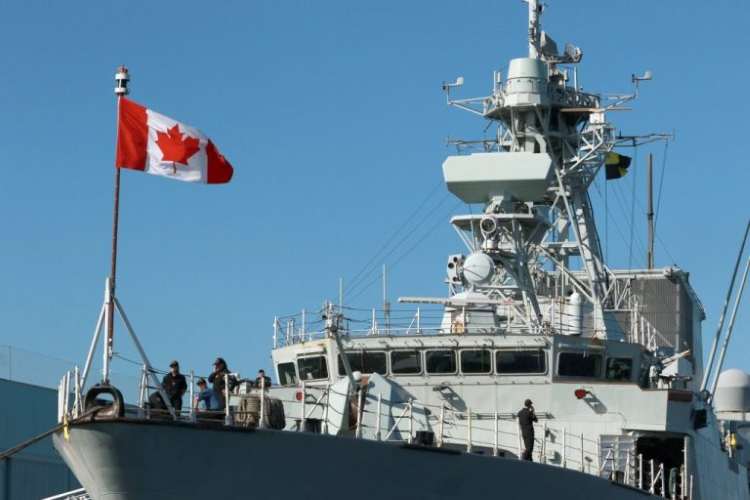
These developments are transforming the Arctic into an arena of geopolitical competition. Major powers are investing heavily in icebreaker fleets, military infrastructure, surveillance systems, and territorial claims. Russia, the United States, Canada, and several Nordic countries are expanding their strategic presence in the region, while non-Arctic states such as China and India are also seeking influence through investment and scientific engagement. The risk is that a region once characterized by cooperation may increasingly become defined by strategic rivalry and resource competition. NATO’s expansion into the region further exacerbates the situation.
This trend is particularly alarming because the Arctic has historically provided important examples of international cooperation. During the late twentieth century, concerns about pollution and environmental degradation encouraged unprecedented collaboration among Arctic and non-Arctic states. Scientific research revealed how toxic pollutants generated thousands of kilometres away were accumulating in Arctic ecosystems and threatening both wildlife and Indigenous communities. These findings contributed to international agreements such as the Stockholm Convention on Persistent Organic Pollutants, demonstrating that collective action could address environmental challenges effectively.
The establishment of the Arctic Council in 1996 strengthened this cooperative approach. Bringing together Arctic states, Indigenous organisations, and observer countries, the Council became a model for science-based governance and inclusive decision-making. It reflected a recognition that the Arctic’s future could not be managed through unilateral action or narrow national interests alone. Protecting the region required cooperation grounded in scientific evidence, environmental stewardship, and respect for Indigenous knowledge.
That lesson remains relevant today. The Arctic cannot be another region to be exploited for short-term economic and geopolitical gains. It is a critical component of the Earth’s life-support system. Decisions taken there will influence climate stability, food security, energy systems, and international relations for generations to come. The future of the Arctic will therefore help determine the future of the planet itself.