


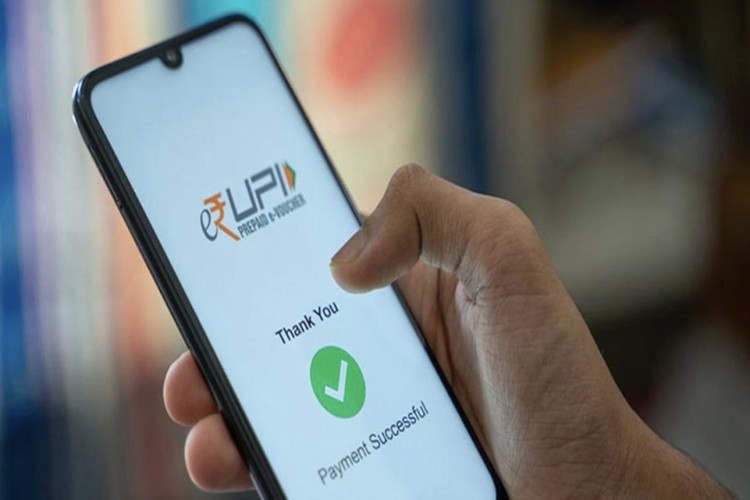
10 years after UPI went live for customers, India has little left to prove on the scale of its digital payments revolution. The Unified Payments Interface handled 24,161.69 crore transactions worth ₹314 lakh crore in 2025-26, averaging around 66 crore transactions a day. The harder question is what this extraordinary expansion has done for financial inclusion, and what remains unfinished. UPI reduced the friction involved in moving money, while Jan Dhan widened access to bank accounts. Aadhaar, mobile connectivity and sustained regulatory support helped bind these systems together. The next phase will depend on whether people can use this infrastructure regularly, safely and for purposes that extend beyond making payments.
Interoperability made UPI work
The National Payments Corporation of India launched the UPI pilot in April 2016, and the system went live for customers of 21 banks on August 25 that year. Its appeal was straightforward. Money could move instantly between bank accounts around the clock without repeatedly entering account numbers and IFSC codes. A virtual payment address, mobile-linked identifiers and QR codes made payments easier while keeping the underlying transaction within the banking system.
READ | UPI MDR debate shifts from users to large merchants
The more important innovation was interoperability. A customer using one UPI application could transact with someone using another application or bank. Users therefore did not have to join the same closed network before they could pay each other.
That design choice mattered. A 2025 IMF study using transaction-level UPI data found that interoperability helped increase adoption by giving customers greater freedom to choose applications and allowing new providers to compete without first building closed networks of their own. Cross-app transactions became an important part of UPI’s expansion. The IMF now describes UPI as the world’s largest retail fast-payment system by volume.
The lesson extends beyond payment technology. Infrastructure works better when users are not locked into a single provider. India created common rails on which banks and private applications could compete for customers. The resulting network effects accrued largely to UPI rather than to a single wallet.
That does not remove competition concerns. An interoperable network can still have a concentrated application market. As UPI becomes larger, regulators will have to preserve meaningful competition among payment providers while maintaining the openness that helped the platform grow. The IMF itself cautions policymakers to remain alert to market power as interoperable payment systems mature.
UPI’s scale is becoming global
The numbers now dwarf those of UPI’s early years. By March 2026, 703 banks were live on the network. During FY2025-26, transaction volume increased 30% over the previous year. In July 2026 alone, UPI processed 2,365.8 crore transactions worth ₹29.87 lakh crore.
India also accounts for around 49% of global real-time payment transaction volume, according to the ACI Worldwide estimate cited by the government. This figure is sometimes described too loosely as half of all global digital payments. It refers specifically to real-time payment transactions. The IMF’s separate finding is that UPI is the world’s largest retail fast-payment system by volume.
READ | UPI MDR needs a shield for small merchants
UPI’s international reach is widening as well. By August 2026, UPI-related payment acceptance or cross-border remittance links were live in 11 foreign countries: the UAE, France, Bhutan, Sri Lanka, Nepal, Singapore, Mauritius, Qatar, Cambodia, Greece and the Maldives. The arrangements are not identical. Some support merchant payments, while others provide person-to-person remittance links.
That distinction matters as India seeks to export its payments architecture. Cross-border transactions involve foreign-exchange conversion, settlement arrangements, fraud liability and local regulation. Travellers also face risks from unfamiliar or fraudulent QR codes. The domestic success of UPI provides a strong foundation, but international expansion requires safeguards suited to a more complicated payments environment.
Jan Dhan gave digital payments reach
UPI’s success cannot be separated from the expansion of basic banking access. The Pradhan Mantri Jan Dhan Yojana, launched in August 2014, sought to provide unbanked citizens with basic accounts and access to remittances, credit, insurance and pensions. A payments network has limited value to people who remain outside the banking system. Jan Dhan helped address that constraint.
By August 19, 2026, PMJDY had 59.09 crore beneficiaries, up from 14.72 crore in March 2015. Deposits had risen from ₹15,670 crore to ₹3.17 lakh crore. Women accounted for 32.92 crore accounts, or 55.7% of the total, while 45.95 crore accounts were at rural and semi-urban centres. More than 41 crore RuPay debit cards had been issued.
These numbers establish reach. They do not settle the question of how intensively accounts are used.
Inactive accounts continue to require policy attention. During the government’s 2025 financial-inclusion saturation campaign, banks undertook re-verification of KYC details for 2.32 crore inactive accounts by mid-September and were asked to contact holders of inoperative Jan Dhan accounts. The exercise underlined a basic point: opening an account is an important first step, but sustained financial participation requires regular use.
Financial inclusion therefore has to be judged by more than account ownership. Households need reliable ways to save, receive payments, insure themselves, borrow where appropriate and resolve problems when transactions fail. An account that is rarely used contributes less to economic security than one integrated into a household’s everyday financial life.
READ | Public AI infrastructure can give India its next UPI moment
From access to effective use
Technology can itself create new forms of exclusion. The Reserve Bank of India’s National Strategy for Financial Inclusion warned that technology-led financial services may leave behind people without reliable internet connections or smartphones. It therefore argued for a balance between digital delivery and physical agents such as business correspondents, alongside stronger financial literacy and consumer protection.
That remains relevant even as UPI reaches record volumes. Rural connectivity, digital skills and confidence in grievance redress determine whether a new user remains in the system. Fraud has made trust more important, particularly for people who have recently moved from cash to app-based transactions. Bank Mitras and other local banking touchpoints retain an important role where connectivity is unreliable or customers require assistance.
Financial literacy also needs to move beyond instructions on how to scan a QR code. Users should understand transaction confirmations, fraud warnings, overdraft terms, insurance products and the avenues available when money is transferred incorrectly or an account is compromised. Digital inclusion becomes durable when people know both how to use the system and how to protect themselves within it.
India’s first phase of financial inclusion built access on an exceptional scale. UPI then made that access useful for everyday payments. The policy task for the next decade is deeper: improve reliability, financial capability, consumer protection and the range of services available to low-income users while keeping the payments network open and interoperable.
Transaction volumes will almost certainly continue to set records. The more meaningful measure will be how far India’s digital public infrastructure lowers the cost and risk of participating in the formal economy for those who remain closest to its margins.