


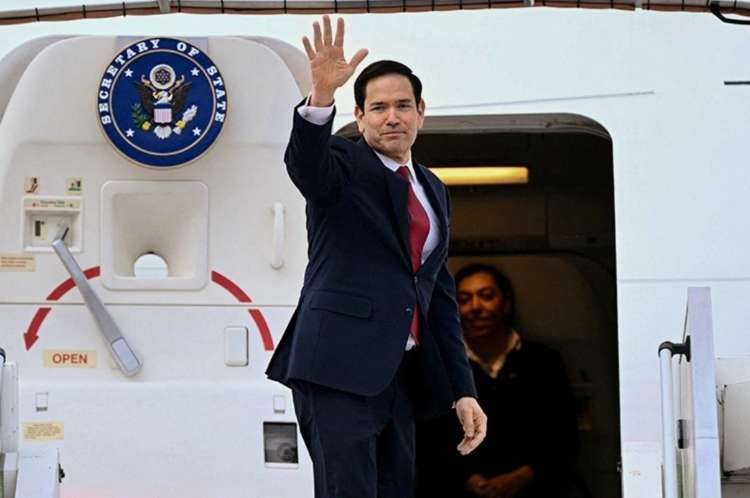
Marco Rubio came to New Delhi with a simple task. He came to assure that the US-India ties had not lost momentum. He had to say it often enough to make it sound true and he did that. The harder task was to persuade India that Washington’s recent conduct was an aberration, not a new doctrine. On that question, the visit offered reassurance, but not certainty.
The state of US-India ties after Rubio’s visit is therefore neither rupture nor reset. It is a more uncomfortable condition: strategic dependence without strategic ease. India needs the United States for technology, capital, defence cooperation, maritime balance and access to advanced supply chains. The US needs India if it wants an Indo-Pacific strategy that is not merely a Pacific strategy. Yet both capitals now know that convergence can coexist with distrust.
Rubio’s language was careful. He called India central to the American policy in the Indo-Pacific. He said the relationship remained strong. He treated trade, defence, technology and energy as the working pillars of the partnership. In his joint press interaction with S Jaishankar on May 24, both sides tried to place the relationship back within institutional channels rather than presidential mood swings.
That itself was revealing. Serious relationships do not usually need public certification of their seriousness. The insistence that nothing had changed showed that much had changed.
READ I Trump China visit: All form, little content
US-India ties under Trump’s shadow
The immediate injury was trade. Donald Trump’s tariff actions against Indian exports shook a compact that had held across administrations. Since the early 2000s, Washington had largely treated India as a strategic exception. It was not an ally, but it was not an ordinary trading partner either. Defence, technology and diaspora links were allowed to carry the relationship past disputes over market access.
That bargain has weakened. Rubio’s defence of the tariff policy was that India was not being singled out. This may be formally correct. It is not politically sufficient. India judges American policy not only by legal category but by strategic context. A partner cannot be told that it is indispensable in the Indo-Pacific and expendable in trade arithmetic.
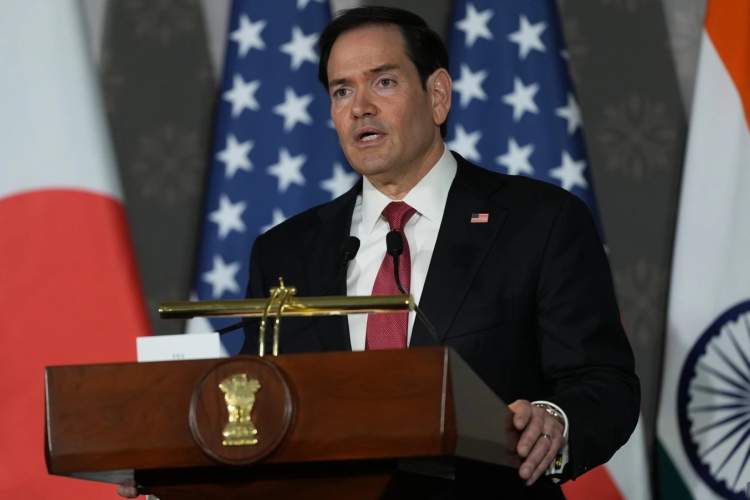

The damage was compounded by Washington’s renewed warmth towards Pakistan and China. Rubio said US ties with any country would not come at the expense of the strategic alliance with India. That is the right diplomatic formulation. It is not a strategic answer. India’s concern is not that Washington talks to Islamabad or Beijing. It is that Trump’s personal diplomacy can elevate Pakistan’s military leadership and flatter Xi Jinping while asking India to absorb the costs of alignment.
This is where Rubio’s visit helped, but only at the margin. He is among the more China-conscious figures in Washington. His presence gave the Indo-Pacific argument a sharper edge. But the American system now sends many signals. Some come from the State Department. Others come from the White House. India has learnt to read the difference.
READ I Trump’s foreign policy: India should read the pattern correctly
Rubio visit and the trade bargain
Trade remains the largest unresolved test. The reports around the visit point to progress towards a deal, including claims of Indian commitments to buy more American goods and energy. Reuters reported that Rubio pressed the case for US energy sales to India and told Modi that American energy products could diversify India’s supply. The same report noted that the Iran war had complicated US efforts to reduce India’s reliance on Russian oil.
This is not merely commerce. It is geopolitical substitution. Washington wants India to buy less from Russia and more from the United States. India will do so when price, reliability and logistics make sense. It will resist if energy policy is converted into a loyalty test.
India’s position should be clear. Energy diversification is useful. It should not become energy dependence under another name. Russian oil entered India’s import basket because markets and sanctions created an opportunity. US energy may expand for the same reason. But India cannot allow its refinery economics, inflation management and external account to be subordinated to Washington’s domestic politics.
A trade agreement can still stabilise ties. It can lower friction, give exporters visibility and restore confidence among firms. But the content matters. A deal that looks like managed purchases will not endure. A deal that protects mobility, services, digital trade, critical minerals and predictable tariffs will.
The mobility issue is especially sensitive. Legal Indian workers, students and professionals are not a concession extracted from America. They are part of the productive base of the American economy. If immigration tightening falls heavily on Indians waiting for green cards, no amount of rhetoric on advanced technology will hide the contradiction.
READ I Europe’s Iran war response exposes its strategic weakness
Quad after New Delhi: Useful, but not enough
The Quad meeting in New Delhi gave Rubio’s visit a second platform. The foreign ministers of India, the United States, Japan and Australia announced initiatives on maritime security, port infrastructure, energy security and critical minerals. Reuters reported that the Quad unveiled its first joint infrastructure project, a port initiative in Fiji, and agreed on frameworks for critical minerals and energy security.
This was useful. It showed that the Quad can still produce work even when leaders do not meet. It also moved the grouping closer to the practical agenda India prefers: resilient supply chains, maritime awareness, infrastructure and energy routes. AP reported that the ministers also announced a maritime surveillance initiative and an Indo-Pacific energy security initiative, with Washington expected to host a Quad fuel security forum later this year.
Yet the absence of a leaders’ summit cannot be dismissed. Symbolism is not policy, but it is not irrelevant. China watches it. ASEAN watches it. Indian officials watch it. When the Quad meets at ministerial level but not at leader level, it suggests that domestic politics and bilateral irritants can still interrupt strategic choreography.
India should not over-invest in optics. The Quad is most valuable when it delivers capabilities. Maritime domain awareness, undersea cables, ports, critical minerals, emergency logistics and trusted technology networks matter more than communiques. But the grouping cannot become a substitute for a stable US-India bilateral relationship. It rests on that foundation.
US-India ties and the China question
The central question remains China. For two decades, American policy towards India had a quiet premise: India’s rise would help balance Chinese power. India did not accept the language of containment. It accepted the logic of a multipolar Asia. That difference was manageable.
Trump’s recent overtures to Beijing have disturbed that balance. If Washington treats China as a negotiable commercial problem rather than a structural strategic challenge, India will hedge. It will talk more to Moscow. It will reduce exposure to American pressure. It will repair parts of its relationship with Beijing where it can. It will keep the Quad, but it will not mortgage its autonomy to it.
This is not anti-Americanism. It is risk management.
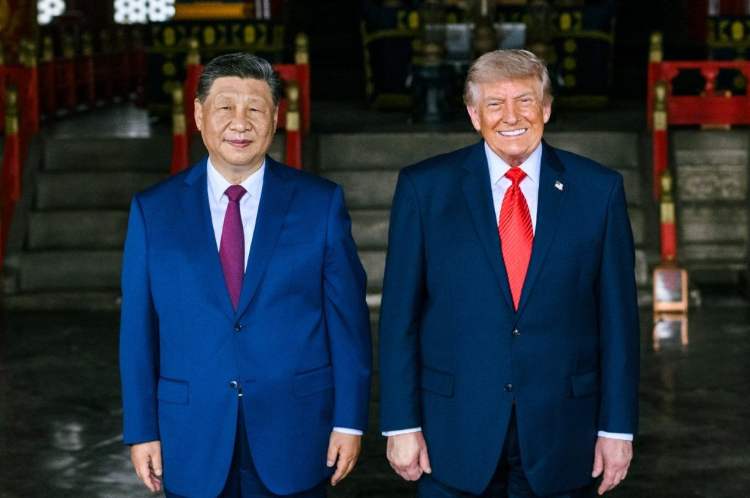
Rubio seemed aware of this. His stress on critical minerals and energy security was an attempt to bring China back into the strategic frame without saying so too loudly. The Quad’s statement of concern over the East China Sea, South China Sea and militarisation of disputed features kept the old vocabulary alive. Reuters reported that China criticised the Quad as an exclusive grouping and warned against bloc confrontation.
India’s task is to avoid both naivety and petulance. The United States will pursue China when it suits American interests and bargain with China when it suits American interests. India should do the same. It should deepen defence, technology and maritime cooperation with Washington where interests overlap. It should not confuse overlap with obligation.
India’s room for manoeuvre
Rubio’s visit should therefore be read as a holding operation. It stopped the slide. It did not erase the causes of the slide.
The sensible Indian response is not to downgrade the United States. That would be self-defeating. The US remains the world’s most consequential technology economy, the largest source of strategic capital, a key defence partner and home to an Indian diaspora that links the two societies in ways no treaty can replicate.
Nor should India exaggerate American reliability. Washington’s policy is now more openly transactional. Trade tools can be used for political theatre. Immigration can become a domestic weapon. Pakistan can be rediscovered when convenient. China can be courted by the same president who asks India to stand firm in the Indo-Pacific.
New Delhi must deal with the United States as it is, not as it was imagined in the optimistic years after the civil nuclear agreement. That means three priorities.
First, agree on a trade pact that reduces tariff uncertainty without accepting one-sided obligations. Second, lock in cooperation in defence technology, semiconductors, critical minerals, cyber security and clean energy through institutional mechanisms. Third, protect legal mobility as a core bilateral interest, not as a diaspora grievance.
Rubio’s visit restored some civility to the conversation. It did not restore innocence. That may be no bad thing. Mature partnerships do not require sentiment. They require clarity, leverage and habit. US-India ties still have all three. They now need discipline.