


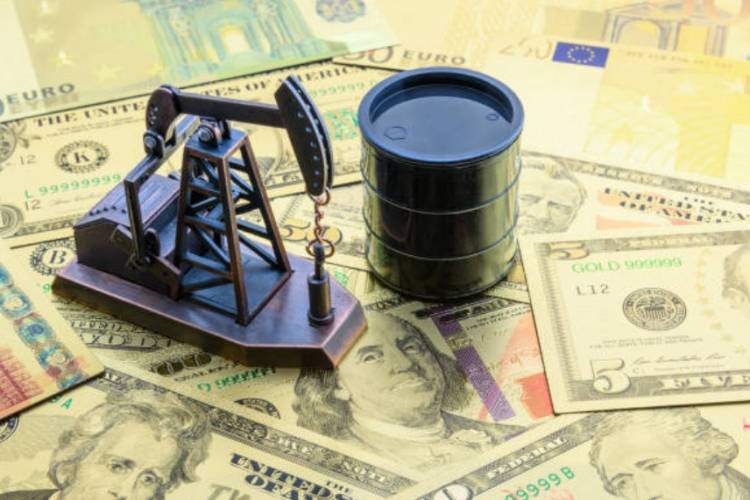
The petrodollar does not survive because oil is sold in dollars by habit alone. It survives because, in moments of fear, markets still prefer the balance sheet, payment rails, legal infrastructure, and military umbrella of the United States. That is why the latest shocks, the US capture of Nicolás Maduro in January 2026 and the US-Israel war with Iran that began on February 28, are more likely to prolong the reign of the petrodollar in the near term than to end it.
That does not make the petrodollar immortal. It only means that its challengers remain weaker than its critics admit. The hard truth is that wars in energy-producing regions do two things at once. They drive angry rhetoric about de-dollarisation, and they drive actual demand for dollar liquidity. In a crisis, the second matters more than the first.
READ | LPG import dependence meets Hormuz disruption: Indian kitchens may feel the pinch
Hormuz risk and the logic of petrodollar resilience
The immediate market logic is plain. The Strait of Hormuz carried about 20 million barrels a day in 2024, equal to roughly one-fifth of global petroleum liquids consumption, and around one-fifth of global LNG trade also moved through that route. Any military threat to Hormuz is therefore not a regional disturbance. It is a global liquidity event. Traders need the deepest hedging market. Importers need the fastest settlement currency. Central banks need reserves they can mobilise without delay. That still means the dollar.
That is precisely what the Iran war has revealed. Reuters reports that the conflict has pushed Brent sharply higher, strained Asian currencies, and driven India’s rupee to record lows as oil importers scramble to absorb the shock. Even where Washington has had to relax some sanctions to ease supply stress, the wider monetary effect has been to pull markets back toward the dollar system, not away from it.
Venezuela, coercive power and the dollar system
The Venezuela episode points in the same direction, though by a different route. Reuters confirms that US forces captured Maduro on January 3 and that legal experts questioned the operation under international law. That was not merely a police action with geopolitical theatre attached. It was also a reminder that the United States remains uniquely willing, and uniquely able, to fuse financial sanctions, criminal indictments, military force, and control over market access. Such behaviour may weaken the moral legitimacy of the dollar order. It does not weaken its coercive reach in the short run.
READ | Strait of Hormuz shutdown could ignite oil shock, inflation spiral
This is where many petrodollar debates become lazy. They ask whether Washington fights wars only to defend dollar supremacy. That is too neat. Iraq, Libya, Venezuela and Iran each had their own strategic contexts. But it is equally naïve to pretend that currency power is incidental. The United States does not need to invade countries simply because they threaten dollar invoicing. It only needs to preserve a system in which energy insecurity, sanctions risk, and financial panic keep pushing states back into dollar-based trade and reserve management. The pasted reports are right on that larger point.
Reserve currency data still favour the dollar
The structural evidence still favours dollar endurance. According to the BIS, the dollar was on one side of 89.2% of all foreign-exchange trades in April 2025, up from 88.4% in 2022. IMF data show that the dollar’s share of disclosed global foreign-exchange reserves slipped only modestly to 56.92% in the third quarter of 2025. That is lower than two decades ago, but it is still a position of overwhelming centrality. The euro is distant. The renminbi remains small. Gold is rising, but gold is not a full-service payments architecture.
China is the obvious long-term contender, but not yet a replacement. Beijing has made progress in building alternatives: more bilateral trade in local currencies, wider use of the renminbi in trade with Russia, and experiments such as mBridge for cross-border settlement. Saudi Arabia’s participation in that platform mattered symbolically. Yet symbolism is not reserve quality. A rival currency needs deep and open bond markets, predictable rule of law, full capital mobility, and the confidence of surplus states that they can enter and exit without political hazard. China still does not offer that combination.
READ | Europe’s Iran war response exposes its strategic weakness
Why war still reinforces petrodollar dominance
This is why the current wars are likely to reinforce, not rupture, the petrodollar over the next few years. Energy shocks enlarge precautionary dollar demand. Insurance, shipping, derivatives, and trade finance remain organised around dollar conventions. Gulf producers may accept marginal settlement diversification, especially with China, but their wider asset management and security calculations are still tied to US-centred markets and defence arrangements. In other words, the petrodollar is no longer exclusive, but it remains hegemonic.
Yet the longer horizon is less comfortable for Washington. Every sanctions package, every seizure of sovereign assets, every war that exposes chokepoint risk teaches other states the same lesson: concentration is dangerous. The ECB has noted growing links between invoicing patterns and geopolitical alignments. Central banks are buying gold at record pace. More governments are exploring payment systems outside the traditional correspondent-banking chain. None of this will dethrone the dollar tomorrow. But it does mean that the United States is extending dollar dominance in a way that also invites a future search for exit.
So the answer is not that Venezuela and Iran will permanently save the petrodollar. The answer is narrower and more defensible. These conflicts strengthen the dollar’s grip in the short term because fear still rewards liquidity, scale, and coercive capacity. They may even extend that dominance through the rest of this decade, because no rival monetary system is yet ready to absorb global energy trade under stress. But they also deepen the resentment and strategic caution that make a more plural currency order conceivable later on. The petrodollar is not ending in war. It is being prolonged by war, even as war slowly corrodes the political foundations of its legitimacy.