


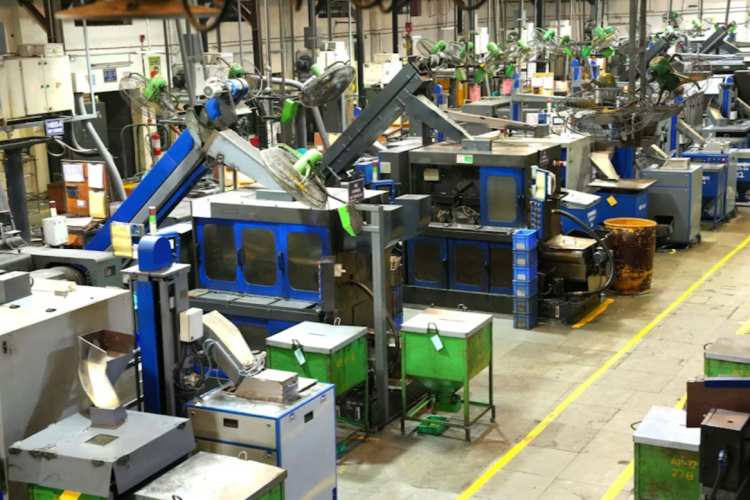
New IIP series: India’s industrial statistics have been updated. The National Statistics Office has released the new Index of Industrial Production series with 2022-23 as the base year, replacing the 2011-12 series. Industrial output grew 4.9% in April 2026, against 3.2% in March under the comparable new series. Manufacturing grew 6.2%. Capital goods output rose 16%. The new series also provides detailed indices from April 2023 onwards. That matters. It allows analysts to compare recent industrial trends under one base, rather than treat the April 2026 print as an isolated break in the data.
The number is useful. The revision is more important.
READ | IIP growth slows despite record factory output
The earlier IIP series measured an economy that had changed beyond its statistical frame. Since 2011-12, India has seen the expansion of electronics manufacturing, renewable energy, electric mobility, defence production, digital infrastructure and new consumer industries. Many of these activities were poorly represented in the old index.
Outdated indicators distort policy. The government uses high-frequency data such as the IIP to read industrial momentum, identify sectoral stress and frame interventions. An index that gives weight to declining industries, while missing new ones, makes policy look at the wrong economy.
The revised series addresses that weakness. But a new base year is not, by itself, a new statistical architecture. The TAC-IIP has recommended a chain-linked approach in addition to the fixed-base IIP, with annual updating of weights using the latest available NAS and ASI data. That is the larger reform. Without more frequent weight updates, even the new series can begin to lag the economy it seeks to measure.
READ | India’s new IIP series to reflect a changing economy
New IIP series reflects industrial change
The shift from 2011-12 to 2022-23 is the central change. Base years must be updated to reflect current production patterns and industrial weights. MoSPI says the new series has an updated item basket, revised weights and wider sectoral coverage. The Technical Advisory Committee report on the base-year revision was released on May 25, 2026.
The IIP has traditionally covered mining, manufacturing and electricity. The revised series adds sharper coverage of gas supply, water supply, sewerage and waste management. It also gives more granular indices for renewable and non-renewable electricity, gas supply, fuel minerals, metallic minerals, non-metallic minerals, water supply, sewerage and waste management.
This is not a cosmetic expansion. Modern industrial activity is no longer limited to factory floors, mines and power stations. Urban infrastructure, utility networks, environmental services and energy distribution now shape industrial capacity.
Mining has also been revised. The new basket includes minor minerals and rare-earth minerals. That matters because rare earths are critical to electronics, batteries, renewable energy systems and defence manufacturing.
Electricity has been split into renewable and non-renewable generation. This is necessary for an economy attempting an energy transition. Renewable power generation grew 18% in April, against 2.8% growth in conventional energy generation, according to the first release under the new series.
READ | Indirect tax windfall brings cheer amid bad news on inflation, IIP fronts
IIP item basket captures new industries
The revised IIP covers 463 item groups. MoSPI’s FAQ says 120 new item groups have been added. The wider basket includes products that better reflect current industry, such as aircraft components, CCTV cameras, cards with magnetic strips and non-woven textile products. Older items such as kerosene and fluorescent tubes have been removed.
The old series faced a familiar problem. It continued to carry products and units that had lost economic relevance. Some production units had closed. Response rates weakened. Statistical noise increased.
The harder task lies below the headline basket. The reporting panel must remain live. The TAC-IIP has recommended selecting factories accounting for up to 80% of the total gross value of output of the items in the basket, with at least four factories per item. This matters because an updated basket will not help if the reporting units again become stale.
Manufacturing now carries the largest weight in the index, at about 76%. In April, it was the main driver of industrial growth. Within the use-based classification, capital goods rose 16%, intermediate goods 7.7%, and infrastructure and construction goods 7.1%. These are useful signals for an economy relying on infrastructure spending and domestic manufacturing.
But they should not be overread. One month’s capital goods growth does not prove a private investment cycle. It only shows that the new series is better placed to track one.
Industrial output still faces weak spots
The new IIP improves measurement. It does not remove industrial stress.
Mining output contracted 5.1% in April. Gas supply fell 11.2%. External conditions are also fragile. India remains exposed to energy price shocks, weak export demand and supply-chain disruptions. Reuters noted that the April print came against the background of disruptions and rising energy costs linked to the conflict in West Asia.
This is the right way to read the data. The 4.9% headline suggests momentum. The sectoral details show unevenness. Manufacturing is stronger. Mining is weak. Energy-linked inputs remain a risk. Domestic infrastructure spending can support output, but it cannot fully offset a weak global trade cycle.
The next statistical reform should be the Index of Service Production. The government has already indicated that such an index may be introduced. It would allow more frequent tracking of logistics, telecommunications, financial services, hospitality and digital platforms.
That gap is large. Services account for more than half of India’s GDP. Digital platforms and technology-enabled services are reshaping work, consumption and investment. A high-frequency services index would improve the reading of the economy as much as the new IIP improves the reading of industry.
The new IIP series arrives at the right time. The April growth number will dominate the first discussion. The deeper significance lies elsewhere. India now has a better instrument to measure an industrial economy that no longer resembles the one captured by the 2011-12 series.