


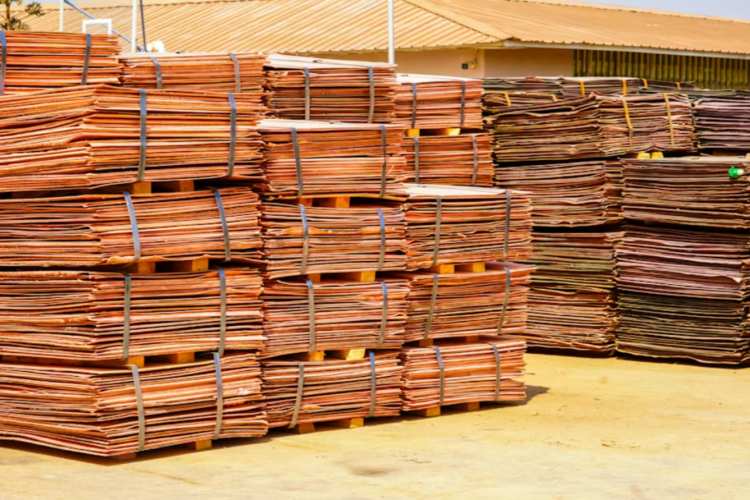
India wants to become a global manufacturing hub and a clean energy power. Both ambitions rest on assured access to minerals and metals. Copper is among the most important of them. It is used in electric vehicles, solar modules, power grids, telecom networks, semiconductors and defence equipment. Yet India’s capacity to mine, process and refine copper has not kept pace with demand. The result is a widening import trap.
PM Narendra Modi recently pointed to the problem, saying India had become a net importer of copper after domestic plants shut down amid protests. The numbers show the scale of the reversal. India’s copper imports rose from Rs 22,856 crore in FY17 to Rs 1.03 trillion in FY26 till February, an increase of more than 350% in less than a decade.
READ | Why oil demand remains resilient amid quest for critical minerals
The problem is not confined to one plant or one policy decision. Data shared by the International Copper Association India show that India’s copper demand was about 1.1 million tonnes in FY18, while domestic production was roughly 800,000 tonnes. India then exported around 334,000 tonnes of copper cathodes. By FY25, demand had risen to nearly 1.8 million tonnes, while production had fallen to about 600,000 tonnes. India became a net importer of copper cathodes, with imports reaching around 221,000 tonnes.
Copper reserves, weak mining
The irony is that India is not without copper resources. The weakness lies in exploration, mining and processing. A Centre for Social and Economic Progress report says India remains a net importer despite significant reserves because of low exploration success, outdated technologies, exhausted mines, weak auctions, insufficient investment and limited private participation.
The 2018 closure of Sterlite Copper’s Tuticorin smelter marked the turning point. The plant had operated for nearly 22 years before it was shut over environmental violations. Its closure reduced cathode output by 40%, according to CSEP, and left India more dependent on imported refined copper.
The deeper failure lies upstream. Hindustan Copper Ltd remains the only domestic copper miner of scale. Its expansion has repeatedly lagged targets. The company had planned to raise ore production capacity from 3.6 million tonnes in 2010 to more than 12 million tonnes by FY17. More than a decade later, output was still around 3.8 million tonnes in 2023, with revised targets pushed to FY31.
India’s mining incentives have not drawn enough private capital into copper exploration and extraction. The country accounts for a small share of global mineral exploration spending. That limits discovery, delays mine development and leaves downstream industry exposed to imported ore, concentrate and refined metal.
READ | India’s critical minerals push needs a midstream reset
Copper refining under pressure
Existing mines are also under strain. Ore grades are falling, extraction costs are rising, and ageing mines are approaching exhaustion. Copper refining is capital-intensive and needs large working-capital lines. Indian refiners face borrowing costs of 8-9%, while competitors in Japan and parts of East Asia often access cheaper capital. That gap matters when margins are thin.
The global economics of copper refining have also worsened. Smelters earn through treatment and refining charges, the fees paid for converting copper concentrate into refined metal. CSEP notes that these charges have fallen sharply because of large smelting capacity additions and tight concentrate supply, eroding smelter margins.
China is central to this pressure. CSEP estimates that China controls more than 44% of global copper processing capacity. That concentration gives Beijing strategic leverage in a metal that will determine the pace of electrification, grid expansion and advanced manufacturing.
Critical mineral for energy transition
Copper is now a strategic mineral, not merely an industrial input. The International Energy Agency and other agencies expect global refined copper demand to rise sharply through 2050 as electric vehicles, renewable energy systems, transmission lines and industrial electrification expand. CSEP projects India’s copper demand at 3.24 million tonnes by FY30 in conventional sectors alone, with additional demand from energy-transition uses.
That makes India’s import dependence a strategic vulnerability. A Reuters report on a government policy document said India’s copper demand could rise to 3-3.3 million tonnes by 2030 and 8.9-9.8 million tonnes by 2047. The same document warned that copper concentrate imports could rise to 91-97% by 2047 unless domestic capacity and overseas sourcing improve.
Trade policy has added another complication. India’s agreements with Japan, ASEAN and the UAE allow duty-free imports of refined copper cathodes. Overseas refiners often benefit from cheaper finance and better raw material access. They can process copper abroad and sell finished cathodes into India without duties. Indian refiners, carrying higher finance and operating costs, compete on unequal terms.
READ | Critical minerals mission to power clean-tech supply chain
Copper imports and Indian policy
Copper is linked directly to energy security, industrial competitiveness and geopolitical resilience. India cannot build a manufacturing base or a clean energy economy while depending heavily on imported copper and copper-bearing products. The risk is not only a larger import bill. It is also the loss of domestic value addition in a metal that will sit at the centre of future industrial supply chains.
Reviving copper capacity will require faster mining clearances, credible private participation in exploration, better financing conditions for refiners and policy support for processing investments. Trade agreements and duty structures also need review where they expose domestic producers to structurally cheaper imports.
Environmental safeguards cannot be weakened. But industrial policy and environmental regulation must work with predictability. Sudden capacity shocks, as the Sterlite episode showed, can leave lasting gaps in a strategic sector.
The missing piece is a full copper security strategy. The National Critical Mineral Mission gives India a framework for exploration, overseas asset acquisition, processing, recycling and stockpiling. Copper should sit squarely within that framework. Domestic mining will matter, but it will not be enough. India must secure concentrate supplies through partnerships with countries such as Chile, Peru, Australia, the Democratic Republic of Congo and Zambia, while building quality-assured recycling capacity at home.
Scrap-based copper cannot be left in a regulatory grey zone. Nor can new smelters solve the problem if they remain dependent on imported concentrate. The task is to build a copper value chain, not merely replace one closed plant.
India’s copper import bill crossing Rs 1 trillion is not a routine trade statistic. It is a warning. Unless the copper value chain is rebuilt, India’s clean energy and manufacturing ambitions will rest on imported metal, imported risk and imported leverage.