


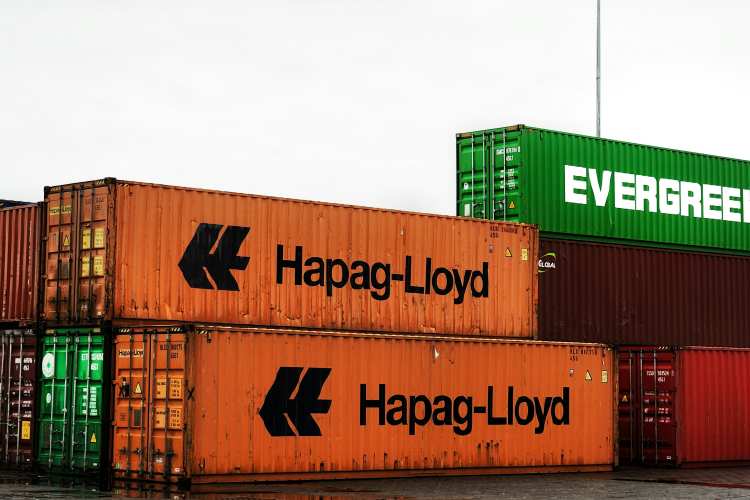
The Union Cabinet’s approval of the ₹10,000 crore Container Manufacturing Promotion Scheme (CMPS) on October 28 is an attempt to reduce India’s dependence on imported shipping containers and develop a new manufacturing industry. The scheme, which will run from 2027-28 to 2039-40, seeks to increase annual domestic manufacturing capacity nearly tenfold, from about 70,000 to 7.5 lakh twenty-foot equivalent units (TEUs). For a country seeking a larger share of global manufacturing and exports, building domestic container capacity is a sensible objective. But its success will depend on whether Indian manufacturers can compete with established foreign suppliers, particularly China, and whether improvements in container availability are matched by greater efficiency in the wider logistics system.
Containers transformed global trade by allowing standardised cargo boxes to move between ships, trains and trucks without repeated unloading and repacking. They reduce handling costs, cargo damage and transit times, making them indispensable to the movement of manufactured goods.
READ | Coastal Cargo: Private ports surge ahead in India’s shipping revolution
The pandemic exposed the risks associated with the concentration of container manufacturing in a few countries. Shipping disruptions, port congestion and imbalances in container availability sent freight rates soaring. The Red Sea crisis, which escalated in late 2023, added pressure as vessels diverted around the Cape of Good Hope, extending transit times and tying up shipping capacity for longer periods.
Container leasing rates and availability are influenced by global shipping conditions, while procurement depends on the capacity of major manufacturing countries. Even when exporters face no disruption to their own production, problems elsewhere can raise transport costs. Domestic manufacturing can provide an additional source of supply, although it cannot protect exporters from disruptions to shipping services or international trade routes.
China’s cost advantage in container manufacturing
China enjoys a considerable cost advantage in container manufacturing. According to industry estimates reported by Business Standard, a Chinese container costs around $1,700 per TEU, compared with $2,200-2,400 for one manufactured in India. These are indicative industry estimates rather than uniform market prices, but they illustrate the competitiveness gap that Indian producers must overcome.
China benefits from an established industrial ecosystem, ready access to steel, specialised components and large production volumes. These advantages help manufacturers keep costs low. India will need improvements in productivity, component sourcing and scale to compete. Subsidies can support the industry’s development, but they cannot substitute indefinitely for lower production costs.
The CMPS provides financial support through three components. Of the ₹10,000 crore outlay, ₹859 crore is earmarked for interest subvention, ₹8,891 crore for operational expenditure assistance and ₹150 crore for testing and certification facilities.
Interest subvention will provide assistance of three percentage points annually on eligible term loans for new manufacturing facilities and expansion of existing units. The scheme requires new facilities to have a minimum annual capacity of 1 lakh TEUs, while expansions must add at least 25,000 TEUs.
Operational assistance is intended to bridge the cost gap for containers manufactured to international shipping standards and sold by eligible producers. The government has specified assistance of ₹49,500 for a standard 20-foot container and ₹86,625 for a 40-foot container. Manufacturers must meet a minimum domestic-content requirement of 70% through 2031-32, rising to 90% from 2032-33.
Testing support will help establish common facilities for specialised procedures, including dynamic longitudinal impact testing. The scheme could also benefit domestic steelmakers and suppliers producing corner castings, wooden flooring, paints and other components.
READ | Transport authority must make infrastructure work as a network
Subsidies must create competitive capacity
Establishing factories is only the first challenge. Producing containers at internationally competitive prices while meeting the durability and safety requirements of global shipping companies will be harder. If Indian manufacturers remain substantially more expensive than Chinese suppliers, their capacity could remain underutilised once government assistance is withdrawn.
The scheme’s production-linked assistance offers manufacturers time to improve efficiency and build their supply chains. Its domestic-content requirements could encourage investment in specialised steel and components. However, these requirements will also increase pressure on costs if domestic inputs remain more expensive than imported alternatives.
The ambition to establish India as a container export hub will depend on whether financial assistance creates a self-sustaining industry. There are encouraging signs. In July 2026, A.P. Moller-Maersk unveiled its first Indian-manufactured export-import container and placed an order for another 1,000 containers with the DCM Shriram Group. The order provides an opportunity for Indian manufacturers to establish credibility with international shipping companies. Repeat orders at competitive prices will offer a more reliable measure of progress than initial procurement commitments.
Container manufacturing and India’s logistics costs
The CMPS must be viewed alongside the National Logistics Policy, PM Gati Shakti, Sagarmala and Dedicated Freight Corridors. These initiatives address different aspects of moving goods efficiently from factories to ports and international markets.
India’s logistics costs were estimated at ₹24.01 lakh crore, equivalent to 7.97% of GDP in 2023-24, according to a study by the Department for Promotion of Industry and Internal Trade and the National Council of Applied Economic Research. The estimate covers transport, storage, warehousing and material handling, among other activities. It provides a broader measure of the costs confronting Indian businesses than container procurement alone.
Manufacturing containers domestically can improve availability and reduce dependence on imports, but exporters will continue to face high costs if freight movement, port operations and multimodal connectivity remain inefficient. Expanding port capacity without improving cargo evacuation, for example, can shift congestion from terminals to roads and railways.
READ | Western freight corridor must now deliver lower logistics costs
The government has previously had to address container shortages, shipping delays and port congestion through operational measures, including additional facilities for storing empty containers. Such interventions underline the importance of coordination among ports, shipping lines, container operators and inland transport providers.
The proposed Bharat Container Shipping Line is another element of this effort. An agreement signed in February 2026 brought together the Shipping Corporation of India, Container Corporation of India and several port authorities to develop an Indian container shipping network. Its effectiveness will depend on commercially viable services and reliable connections between ports and inland markets.
Measuring the success of the container scheme
The success of the CMPS should ultimately be judged by whether domestic manufacturers can compete without permanent financial support. Affordable specialised steel, skilled workers, dependable components and predictable orders from shipping companies will determine how far production costs can fall.
The government should monitor actual production, capacity utilisation, export orders, domestic value addition and the price gap between Indian and imported containers. These indicators will establish whether public spending is helping create a competitive industry or merely compensating manufacturers for higher costs.
India has good reasons to develop its own container manufacturing capacity, especially after recent disruptions exposed the vulnerability of international supply chains. The important test will come as subsidies are reduced. By then, Indian manufacturers should have built the productivity and customer relationships required to retain orders on commercial terms.