


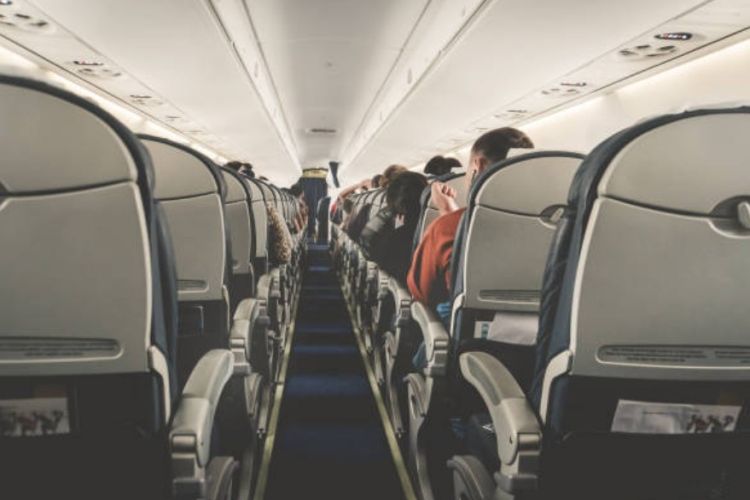
Airline seating policy: India has finally moved to curb one of the airline industry’s most effective digital nudges. On March 18, the Ministry of Civil Aviation, acting through the Directorate General of Civil Aviation, directed airlines to make at least 60% of seats on every flight available free of charge, and to ensure that passengers booked under the same PNR are seated together, preferably in adjacent seats. The trigger was passenger inconvenience. The larger issue is that airlines, often aided by travel aggregators, have been using digital design to push passengers into paying more than they planned.
These are now widely described as dark patterns: interface choices that manipulate users into decisions that serve the seller more than the buyer. In airline booking, this has evolved into a system in which an optional payment is made to feel unavoidable.
READ | Duopoly in aviation sector cannot be fixed by CCI action alone
Most air travellers know the sequence. After choosing a flight, they are shown a seat map. Most adjacent seats are marked paid, often at different price points. The free seats are scattered, poorly located, or revealed only late in the booking process. For families or groups, the message is simple: pay extra or sit apart. The interface does not force the purchase. It makes refusal inconvenient.
Airline seating policy and coercive design
That is what makes dark patterns effective. They rely less on compulsion than on behavioural pressure. Consumers are known to respond strongly to defaults, scarcity cues and the fear of a worse outcome. When a booking interface signals that adjacent seating is unavailable unless one pays, many passengers will do so rather than risk an unpleasant journey. The revenue may be classified as ancillary. The method is closer to coercion by design.
This is not merely an ethical concern. India already has a regulatory framework for such conduct. In November 2023, the Central Consumer Protection Authority issued the Guidelines for Prevention and Regulation of Dark Patterns, formally defining and prohibiting manipulative interface practices that mislead or impair consumer choice. The aviation ministry’s latest move should therefore be seen not as an isolated passenger-relief measure, but as a sector-specific extension of a wider consumer protection principle: digital interfaces cannot be designed to extract payment through confusion, pressure or engineered disadvantage.
This matters because ancillary revenue is no longer peripheral to airline economics. IndiGo, the country’s largest carrier, reported a 13.6% year-on-year rise in ancillary revenue to Rs 2,446.2 crore in the October-December quarter of FY26. Revenue from passenger tickets grew 6.2%. That gap says a lot about where airline incentives now lie.
The model is straightforward. Keep the base fare attractive, especially in a price-sensitive market such as India, and recover margins through add-ons: seat selection, baggage, meals, priority boarding and similar services. The booking journey then becomes the real marketplace. Airlines appear cheap at the start and profitable by the end.
READ | What the descent of Indigo means for the aviation sector
Low-cost carriers pioneered this model. Full-service airlines have moved in the same direction. The change is not merely commercial. Pricing power now often comes from interface design rather than transparent tariff structure. That is where legitimate upselling begins to blur into manipulation.
Dark patterns in India’s aviation market
India’s aviation market is now the world’s third largest in domestic traffic, with more than five lakh passengers flying daily. It offers ideal conditions for such practices. Growth is rapid. Competition is intense. Margins are thin. Regulation has not kept pace with digital selling tactics. Many passengers still do not fully know which charges are optional and which are not. Dark patterns work best where information is unequal.
The government’s intervention is thus less about seat allocation than about resetting the terms of choice. By requiring 60% of seats to be available free of charge, it alters the default built into the booking process. By directing airlines to seat passengers on the same PNR together, it closes a loophole that had become a revenue opportunity. If enforced seriously, both steps should reduce the pressure to pay for seat selection.
READ | India’s aviation industry boom faces a grim safety test
Airline ancillary revenue after the new rule
But this is also where the next round begins. Ancillary revenue has become an important cushion in an industry exposed to fuel price swings, currency movements and operational shocks. Airlines will not surrender a stable source of income without searching for substitutes. Some resistance will be open. Much of it will be inventive.
That is the larger regulatory challenge. Firms usually adapt faster than rules do. If monetising seat selection becomes harder, airlines may redesign, repackage or reprice other parts of the booking flow. The state cannot respond to each abuse only after it becomes widespread. It needs a broader approach to identifying and curbing dark patterns across the entire digital purchase journey.
This issue also extends well beyond aviation. Dark patterns are embedded across e-commerce, fintech and digital services. Pre-ticked subscription boxes, countdown timers that create fake urgency, and cancellation flows designed to exhaust the user are now standard features of the online economy. The interface is no longer a neutral channel. It is the point of sale.
Consumer awareness matters, but it is not enough to tell users to be vigilant in a rigged environment. Digital literacy can help people recognise a nudge. It cannot substitute for rules against engineered disadvantage. As more commerce moves online, fairness in markets will depend less on what companies disclose and more on how they design choice itself.