


Viksit Bharat needs a different MSME playbook: Much of India’s policy debate still carries the habits of an earlier era. We continue to look for large, centralised solutions to problems that are increasingly local, sector-specific and entrepreneurial. If India is serious about becoming a developed country by 2047, we need to change not only our policies but also the way we think about development itself.
That is why I believe the idea of Viksit Bharat must be understood not as another central plan, but as a national vision within which states, districts, firms and individuals create their own pathways to growth. This is also the right framework within which to rethink the future of India’s MSMEs.
READ | India’s MSMEs face a cash-flow crisis as Iran war prolongs
From central planning to national vision
One of the least understood institutional changes of the past decade was the replacement of the Planning Commission by NITI Aayog. The old system was built around centralised national planning. The Centre drew up plans, called in states, announced national priorities and allocated money to governments and the public sector. In practice, this was often a national plan only in name.
The shift after 2014 was not merely administrative. It reflected a deeper recognition that India must move away from top-down planning towards decentralised development. States must plan for themselves. Districts, blocks and local institutions must think in detail about their own needs and capabilities. The role of the Centre is to provide the larger setting, the broad direction and the national ambition.
Of course, decentralisation creates coordination problems. Economic theory tells us that dispersed decision-making works only if there are mechanisms for alignment, especially in public infrastructure. That is why coordination platforms such as PM Gati Shakti matter. But the core shift remains: from instruction to vision, from command to enabling conditions.
The Prime Minister has articulated the broad vision of Viksit Bharat in many speeches. At NITI Aayog, our task has been to give some of those ideas a more concrete shape. In my view, this also requires a change in policy mindset: away from excessive focus on expenditure and towards policy and institutional reform. The objective is not for government to do everything itself. It is to create an environment in which job creators, entrepreneurs and the private sector can flourish.
The MSME debate is stuck in old grooves
I have been dealing with these issues for many decades. Two complaints about MSMEs have persisted for as long as I can remember. The first is lack of credit. The second is lack of demand. Both are real. But we should ask what is new and what has changed.
Let us begin with credit. The central problem of credit has always been asymmetric information. Lenders do not know enough about borrowers, especially small borrowers. That is why formal finance has often failed to reach MSMEs at the scale required. But this is where recent reforms begin to matter. The GST system, for all its imperfections, creates a channel for generating information on transactions and business activity. Tax reform and the wider formalisation process strengthen that information base.
Nothing is perfect. Reform in India is always gradual. I have been in this business long enough to know that change can take decades. But once the data architecture exists, it becomes possible to imagine a far more integrated system in which credit to MSMEs becomes increasingly automatic. If a firm is part of the formal digital and tax ecosystem, much of the information that lenders need is already available. That should eventually make access to credit less dependent on discretion and more on systems.
READ | Budget 2026: Export facilitation and MSME liquidity take centre stage
The second perennial complaint is demand. Here too, the environment is changing. A wide range of digital marketplaces is emerging, whether through public procurement platforms, e-commerce systems or private digital networks. When I met MSMEs in small towns, I found that many who complained of poor demand were not even aware of the platforms available to them. Yet many were already using WhatsApp-based mechanisms to do business. The specific platform is not the point. The larger point is that digital marketplaces are changing how small firms can reach buyers. Policy must therefore focus on helping MSMEs enter and use these markets effectively.
Government cannot and should not try to do everything. Its role is to create the conditions in which the private sector can solve problems, build networks and discover opportunities.
India is ignoring its largest enterprise category
There is, however, a more serious weakness in our MSME thinking. We neglect entire categories that should be central to the policy discussion. The first is what I call nano enterprises.
In our labour force data, workers are broadly divided into casual labour, regular wage employees and the self-employed. Most people assume that casual labour or regular jobs dominate. They do not. The largest category by far is the self-employed. Roughly 58% of India’s workforce falls into this category. Regular wage employees are a much smaller share, and casual labour is smaller still.


This is the real base of India’s enterprise economy: one-person businesses, own-account workers and tiny producers who are barely visible in mainstream policy discourse. Yet they are central to employment, livelihoods and productivity. If we are serious about employment generation, we must stop treating self-employment as an afterthought.
The most important intervention for these nano entrepreneurs is skilling. Their earnings rise not through rhetoric, but through better capabilities, better tools and better access to markets. What we often call the wages of the self-employed is really their income. That income will rise only if productivity rises, and productivity will rise only if we invest seriously in skills and create a market environment in which these people can do more with what they already have.
Exporting units are not getting the attention they deserve
The second neglected category is the exporting unit. I use that phrase deliberately. We often talk about the export sector as though exports were still mainly about foreign exchange. That was once true. It is no longer the right way to think about the issue.
After the reforms of the 1990s, including customs reforms and the move to a more modern foreign exchange regime under FEMA, exports should be seen not as a foreign exchange compulsion but as a window into competitiveness. The exporter is not merely earning dollars. The exporter is often the most dynamic part of the economy, the firm that is closest to international standards, design, quality and cost discipline.
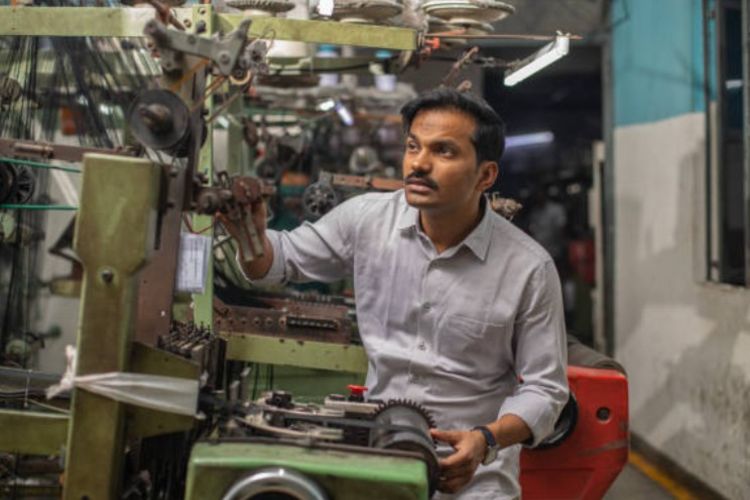
In my travels across the country, I have met remarkable exporters. I have seen firms making products that compete with Italian producers, firms exporting most of what they make, firms that have indigenised machinery and achieved world-class capability. These are dynamic entrepreneurs. Yet they are rarely brought into the policy conversation. They do not participate enough in the shaping of the very systems that affect them.
What do they need? Very often, they need the same things India as a whole needs: skills, responsive policy and anticipation of future bottlenecks. One exporter told me he was growing so fast that his main concern was not current labour availability but the shortage of skilled people five years from now. This is exactly the kind of forward-looking signal policymakers should be paying attention to.
The medium sector also needs a policy focus
The third neglected category is the medium enterprise. These firms sit just below the corporate layer. They are often capable of producing at high quality, competing with imports and participating in exports. Yet policy attention tends to skip over them. We talk about small firms, and we talk about large firms, but the middle often gets lost.
This is unfortunate because medium-sized firms can become the backbone of a more competitive manufacturing ecosystem. They can scale, specialise and innovate in ways that small firms often cannot. They deserve far more systematic policy attention than they currently receive.
Development also requires a change in how we think
At one level, all this is about specific sectors and policy categories. But at another level, it is about a broader change in mindset. We need more observation, more local problem-solving and more willingness to think from the ground up.
I often use a simple example from primary education. Many children complete primary school without basic reading ability. This is not only an Indian problem; it is common at our level of per capita income. But the deeper issue is that we do not teach children how to think. Thinking begins with observation, curiosity and questioning. A child in a village can learn by observing leaves, plants, colours and patterns, and by asking why one thing differs from another. Yet our educational culture often reduces learning to the completion of a syllabus.
The relevance of this to economic policy is direct. A decentralised development model requires people at every level to observe, question and solve. That is true of a teacher in a village, an entrepreneur in a district town and a policymaker in Delhi.
READ | Budget 2026 treats MSMEs as infrastructure, not beneficiaries
Startups and deep-tech firms are central to the future
I also believe that startups are the future of the MSME ecosystem. The Prime Minister recognised this early, and policy has increasingly reflected that understanding. Startups are not peripheral. They are emerging as an important bridge between innovation, manufacturing and national capability.
This is particularly true of deep-tech startups. In current discussions on production-linked incentives and supply chains, we often focus on the large anchor manufacturer. That is understandable. But the real strength of an industrial ecosystem lies in what develops around that anchor.
I recently visited a major manufacturing facility linked to new supply-chain development. One fact stood out. From the date the company received the land, it produced its first item within 18 months. Anyone who has watched Indian industry over the past several decades will understand why this matters. There was a time when such speed would have seemed impossible.
What impressed me even more was what came next. The company was already moving towards backward integration. It had identified the cost disadvantages of importing key inputs from abroad and was actively trying to localise them. That is how competitiveness deepens. But such localisation does not happen by itself. It requires an ecosystem of capable firms that can solve very specific production problems.
In one instance, a supplier startup was asked to develop a solution that the larger company thought might take a year. The startup promised six months and delivered in four. That is the India many people still do not see clearly enough. These are the firms that will shape the future of Indian manufacturing. These are the deep-tech enterprises that can make supply chains more resilient, reduce costs and build real domestic capability.
Viksit Bharat will come from vision, reform and participation
The central lesson is simple. Viksit Bharat will not be built through old-style central planning. Nor will it be achieved by public expenditure alone. It will come from a combination of vision, decentralised initiative, policy reform, institutional reform and private entrepreneurship.
Government must set the direction and create the enabling conditions. But firms, startups, exporters, self-employed workers, local institutions and citizens must all participate in building the future. That is why I have argued for looking beyond the standard MSME narrative. The real task is not merely to support small firms in the abstract. It is to recognise the diversity within the enterprise ecosystem and design policies for the categories that matter most: nano entrepreneurs, exporting units, medium firms and deep-tech startups.
India has more entrepreneurial energy than many of our policy debates acknowledge. The challenge now is to match that energy with better systems, better coordination and a sharper vision of where we want to be by 2047. If we can do that, Viksit Bharat will become more than an aspiration. It will become a practical national project.
(Edited transcript of a speech by Dr Arvind Virmani, Member NITI Aayog, at a conference organised by Policy Circle and EGROW Foundation.)