


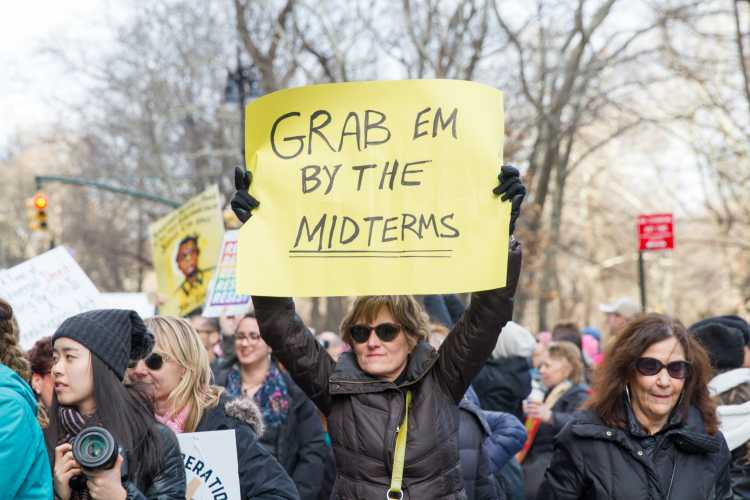
The US midterm elections 2026 have received unprecedented international attention because of the sweeping victory for the Democrats. The Democratic Party secured majority in both the houses of Congress, raising some questions about the Presidential powers wielded by Trump like a weapon.
The midterm elections saw several firsts. Keisha Lance Bottoms became the first black female to be elected as a state Governor in the USA. Deb Haaland became the first woman of native American descent to hold the position of Governor. Michigan elected their first Muslim senator, Abdul El-Sayed. Chris Pappas in New Hampshire became the first openly gay man to be elected to the US Senate. Peggy Flanagan became the first native American woman to be in the Senate and Melat Kiros in Colorado became the first Gen-Z woman to enter Congress.
READ | India should not turn Trump’s trade battle into a political cause
While these are symbolic, they indicate that the voting population in the US is becoming more diverse. Also, the majority of young citizens aged between 18 and 29 voted for the Democrats. Minority groups are becoming more able to gain representation in government. However, there needs to be a focus on whether they are able to turn their votes into meaningful policy changes.
The international attention also highlighted how important this vote was. From the European press referring to it as a political tsunami, to Asian countries looking to see how it affects America’s foreign policy. This was due to Trump making this a vote on his presidency; however, the political situation within the US is becoming more relevant to the rest of the world, with direct impacts on trade, immigration, security and diplomacy.
What do we make of a Lame Duck President?
Trump has become a weakened President after this election, at least domestically. While the term Lame Duck refers to a politician who has lost clout and influence, Trump has only two years left in his constitutionally allowed time in the White House, and has little chance of pushing through his agenda without negotiation with the opposition-controlled Congress. In the meantime, the newly elected members will take some time to get up to speed and get used to working in Congress; this gives Trump some more time to work unopposed.
However, the US is not a parliamentary system, meaning that just because the opposition has control of Congress, Trump is still able to carry out his executive functions, being Commander-in-Chief and having the ability to veto.
READ | Trump-Xi Summit ends with truce, not a settlement
The new Democratic Congress will have at least four key tools to limit Trump.
1) The US Senate can block or delay any appointments made by the President to high-level executive roles and judicial roles.
2) Congress can control how the government spends money. This means the Democrats will have great influence over how much money is spent on immigration enforcement, defence, foreign aid and the military.
3) Congressional committees can look into how the administration is carrying out tariffs, reorganisation of agencies, executive orders and military actions. This can lead to embarrassment if things go wrong with their policies.
4) While Congress has constitutional powers over trade and tariffs, previous administrations have been given the ability to implement tariffs under certain conditions. The new Democratic Congress can look into this and question the legality of these actions. However, they cannot completely stop the Executive from doing what they want.
In a nutshell, this means that the more Congress try to limit Trump, the more he will use his executive powers. He can implement tariffs, sanctions, military actions and executive-driven agreements with other countries.
READ | US midterm results leave the world waiting for economic relief
US midterm elections: What does this mean for India?
Since Trump’s second term, the India-US relationship has had tensions regarding tariffs, buying energy from Russia, immigration and security in the region. The new Congress could allow India to have better engagement with members of Congress from across the political spectrum. With likely budget-related scrutiny, New Delhi will not be able to focus solely on the White House. Getting to know committees, influential figures and state leaders will become increasingly important.
While defence partnerships, technology and trade are important, India still needs to maintain strategic autonomy with a multi-aligned approach. The 2026 mid-terms have shown there is a contradiction in American politics. America is seeing a change in generational representation; however Trump has become a weakened president. While he has lost a lot of political power, the powers of the American president are still strong.
Furthermore, India should be patient and give the new and divided administration some time to get settled. While it is almost certain that the India-US relationship across pharmaceuticals, defence, energy and people-to-people will grow further, there are still issues such as H-1B visas, trade and Washington’s relationship with Pakistan that could cause friction. Overall, it is important to stay patient and pragmatic. As they say, this too shall pass!
The key takeaway for India is to get involved with Washington, but don’t become reliant on the political situation of the President. While American politics can change every two years, India’s strategic interests should remain development-based, strong and long-term.
Purushendra Singh, Senior Research Consultant at the Chintan Research Foundation (CRF), New Delhi.