


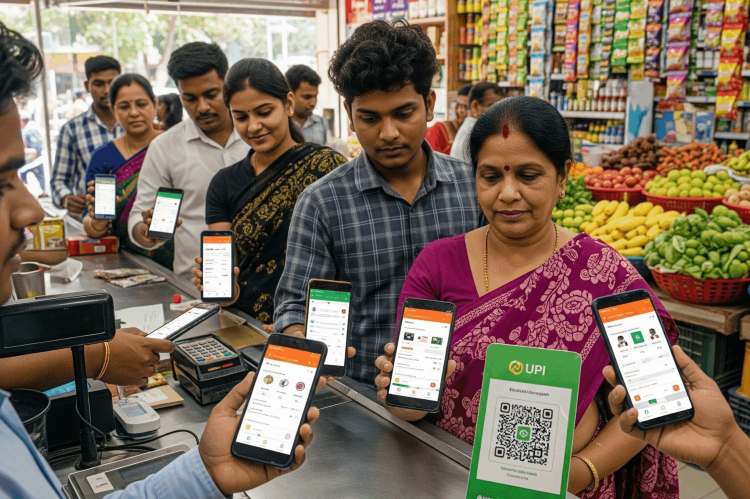
UPI MDR charges 2026: The convenience of the Unified Payments Interface (UPI) has made its cost of operation easy to overlook. Since its introduction, UPI has become a routine means of payment for millions of Indians, from small purchases at neighbourhood shops to high-value transactions online. Yet banks, payment applications and other service providers must finance the infrastructure that keeps the system running.
The government announced a Merchant Discount Rate (MDR) for selected UPI merchant transactions on September 15, 2026, with implementation scheduled for October 15. The proposal marks a departure from the zero-MDR regime introduced in January 2020. Reports on October 8, however, indicated that the government was considering postponing implementation, possibly until January 2027. The underlying policy question remains: can India establish a more sustainable funding model for UPI without discouraging its use by merchants and consumers?
READ I UPI MDR isn’t about card fees, it’s about a lapsed subsidy
What the new UPI MDR charges would cover
Under the announced framework, person-to-merchant (P2M) transactions above ₹2,000 would attract an MDR of 0.4%, capped at ₹300 for transactions of ₹75,000 or more. Payments above ₹2,000 in specified sectors, including railways, telecommunications, insurance, fuel and agricultural inputs, would attract a flat charge of ₹5 per transaction. Capital-market transactions would carry an MDR of 0.02%, subject to the prescribed cap.
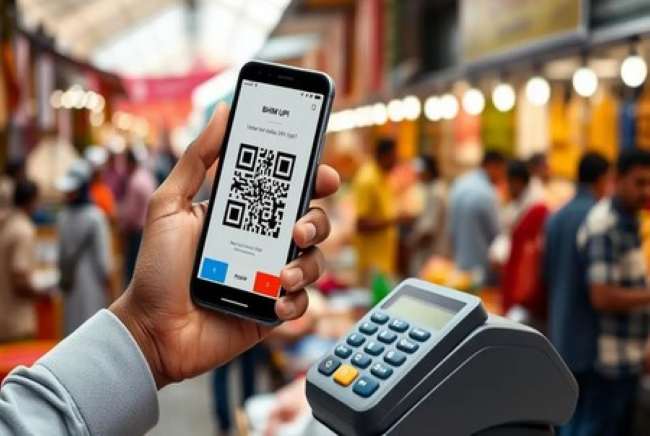

Person-to-person (P2P) transfers would remain free. Merchant payments up to ₹2,000 would also remain free, as would transactions covered by the zero-MDR provision for small merchants receiving up to ₹1 lakh a month through UPI QR codes. The Ministry of Finance estimates that approximately 96% of merchant transactions would therefore remain unaffected. The framework also provides for 5% of total MDR collections to be allocated to a fund supporting UPI adoption among small merchants.
For a merchant receiving ₹3,000 through UPI, the proposed percentage-based charge would amount to ₹12. The customer would not be charged MDR directly. The distinction is important, although the prohibition on passing the charge to customers cannot eliminate every possibility of indirect price increases.
READ I UPI MDR charges must balance financial viability and inclusion
Free payments still have a cost
The zero-MDR regime was introduced in January 2020 to encourage digital payments. It helped remove a direct cost that might otherwise have discouraged merchants from accepting UPI. But a zero price to users does not eliminate the costs of operating the payment network. Banks and payment service providers must pay for transaction processing, fraud prevention, cybersecurity and the infrastructure needed to extend digital payments to underserved areas.
The funding gap is substantial. The Union Budget for 2026-27 provides ₹2,000 crore under the incentive scheme for RuPay debit cards and low-value BHIM-UPI merchant transactions. The Standing Committee on Finance has cited an estimated industry operating cost of ₹20,700 crore. The budgetary provision is therefore less than one-tenth of that estimate.
The figures point to a problem with relying on public incentives to finance a rapidly expanding payment system. The ₹2,000 crore allocation is not necessarily intended to reimburse every rupee of industry expenditure, and the two figures should not be treated as directly equivalent measures of the same programme. Nevertheless, the gap raises a legitimate question about how the system will finance investment as transaction volumes grow.
In microeconomic terms, a service that costs money to provide cannot depend indefinitely on a funding model that fails to cover its costs. Underfunding may eventually constrain investment in reliability, security and the expansion of acceptance infrastructure. The case for an MDR rests on whether a modest, targeted charge can help meet those costs without undermining the adoption that made UPI successful.
READ I UPI MDR: The government can ban a surcharge, not a price rise
Who ultimately bears the charge?
The government has advised banks to ensure that merchants do not pass the MDR on to customers. The intended allocation of the charge, however, does not by itself determine its ultimate economic incidence.
The outcome will depend partly on competition. A small retailer operating in a crowded market may find it difficult to raise prices when customers can switch to nearby shops or pay in cash. Such a merchant may have to absorb the charge from existing margins. An online seller or a business with few competitors may have greater scope to adjust prices, introduce other fees or recover the cost through its broader pricing structure.
The distinction between a direct surcharge and an indirect price increase is important for enforcement. Authorities can prohibit an explicit UPI fee or a payment-specific surcharge. It is harder to establish whether a general price increase reflects MDR, higher input costs or another commercial decision. The policy should therefore be accompanied by transparent complaint mechanisms and monitoring of merchant behaviour, without assuming that every price increase is an attempt to evade the rule.
The flat ₹5 charge for specified sectors is easier to justify than a percentage-based rate where transaction values vary widely. Processing a ₹3,000 payment and a ₹30,000 payment does not necessarily cost ten times as much. A fixed charge limits the amount payable by merchants in these sectors, although it can still weigh heavily on businesses operating with narrow margins.
The threshold could distort payment choices
A threshold-based charge can influence behaviour at the margin. Under the proposed framework, a ₹2,000 merchant payment would attract no MDR, while a ₹2,001 payment would attract a charge of about ₹8. The charge applies to the full transaction rather than only to the amount above the threshold.
This creates an incentive to split a payment into smaller transactions, where operationally possible, or to switch to cash. Such responses are not inevitable, and splitting payments may be inconvenient or inappropriate for many purchases. But the size of the incentive makes transaction patterns worth monitoring. Retailers and petrol pump operators have also raised concerns that even the flat charge could encourage some businesses to reconsider accepting UPI.
A decline in merchant acceptance would have consequences beyond the businesses that withdraw. UPI is a two-sided payment network: consumers value it because merchants accept it, while merchants benefit from accepting a payment method used by their customers. If acceptance weakens in some segments, consumers may have fewer opportunities to use the system, reducing its usefulness to others.
The government’s estimate that 96% of merchant transactions will remain unaffected is reassuring, but it does not settle the question. The share of transactions subject to MDR says little by itself about their share of transaction value, the distribution of the charge across types of merchants, or the behaviour of businesses facing tight margins. A small proportion of affected transactions could still have a disproportionate effect on particular sectors.
The opposing case also deserves consideration. Keeping every merchant payment free may preserve adoption, but the cost of the system does not disappear; it is borne by service providers or supported through public funds. A targeted MDR could reduce dependence on budgetary incentives and help finance the infrastructure on which UPI relies. Whether it achieves that purpose will depend on the revenue generated, the costs of administering the framework and the response of merchants.
A policy that needs review, not a fixed timetable
The National Payments Corporation of India and the Ministry of Finance should publish quarterly data during the first year of implementation, covering the number and value of MDR-bearing transactions, the distribution of charges across merchant categories, changes in acceptance and evidence of a shift towards cash. The authorities should review the rates after twelve months and revise them if the data reveal unintended effects.
The prohibition on passing MDR directly to customers also needs a workable enforcement mechanism. Consumers should be able to report explicit surcharges through their UPI applications, with complaints referred to the relevant acquiring banks. Enforcement should distinguish a payment-specific fee from a general price increase, which cannot reliably be attributed to MDR without further evidence.
The threshold deserves a separate review. Authorities should assess whether the sharp difference between payments just below and just above ₹2,000 encourages artificial splitting. Any adjustment, such as a phased threshold or a charge limited to the amount above the threshold, would need to be assessed against administrative costs, ease of compliance and the risk of avoidance.
Finally, the distribution of MDR revenue should be transparent. Merchants and the public should be able to see how the proceeds are shared among banks, payment service providers and application providers, and how the allocation for small merchants is spent, particularly in rural and semi-urban areas.
UPI’s early success depended on making digital payments easy to adopt. Its next phase requires a funding arrangement that supports continued investment without weakening merchant acceptance. The proposed MDR may contribute to that objective, but the case for it will ultimately rest on evidence about costs, revenue and payment behaviour. If implementation is postponed, the intervening period should be used to resolve operational concerns and establish a credible review mechanism, rather than simply shifting the start date.
Prachi Khanna is an economics student, and Dr Shivani Chaudhry faculty at Department of Economics, School of Social Sciences.