


India’s rural non-farm economy has a productivity problem: The familiar account of development runs like this. Workers leave farms, factories and offices absorb them, productivity rises and incomes converge. Three decades of Indian and international evidence point to a less orderly process. Workers are leaving agriculture, but many are ending up in small, low-productivity work outside the farm. Growth has widened the distance between the modern economy and the traditional one.
During the high-growth years from 1999-2000 to 2015-16, agriculture’s share of employment fell steadily. Formal industry did not absorb most of those who left. Informal non-farm work and construction did. The rural non-farm economy expanded faster than its urban counterpart, with much of the movement concentrated among households with the fewest assets.
Productivity followed a different path. Value added per worker rose in formal manufacturing, modern services, construction and larger informal firms. In rural own-account enterprises, mostly tiny units dependent on family labour, it remained below agricultural productivity. Some workers moved into better jobs. Many moved into work that paid less than the farms they had left.
READ I Women farmers carry Indian agriculture without equal access
Rural non-farm economy splits into two
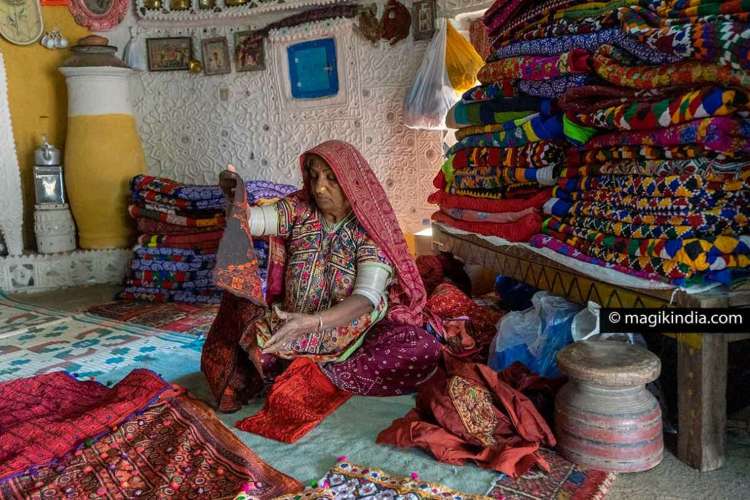
The rural non-farm economy contains two very different kinds of enterprise. Own-account units rely on family labour and traditional skills. Their employment growth is concentrated among the smallest firms. Establishments that hire workers generate a surplus, sell into expanding markets and add jobs mainly once they grow beyond five workers.
Both expanded during the high-growth years. That matters because an increase in non-farm employment, by itself, says little about structural transformation. The destination matters.
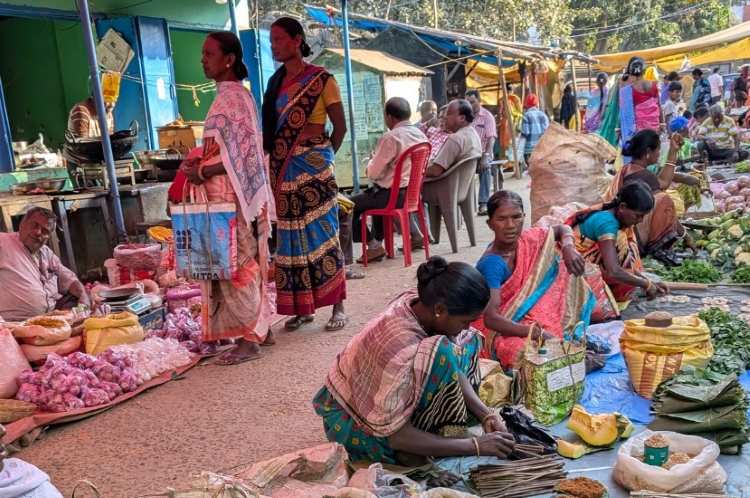

Agriculture was changing at the same time. The number of cultivators fell while the number of agricultural labourers rose. Operational agricultural land declined from about 163 million hectares to 157 million hectares as urbanisation and infrastructure took land out of farming. Inheritance and population growth fragmented holdings. Costs per unit are higher on the smallest plots, prompting some small owners to lease land to larger cultivators.
Crop patterns also shifted. Cereals and pulses lost ground while higher-value crops expanded. Demand from the formal economy supported this transition, but marginal cultivators found independent farming harder to sustain.
When capital accumulation stalled and urban employment weakened, workers returned to villages. Few returned to cultivation, which was already difficult at very small scales. Many entered traditional non-farm work instead. Informal firms reduced hiring, sometimes falling back on one or two workers or family labour.
READ I Farm income gains from crop diversification in tribal Rajasthan
Informal employment is not an exception
The pattern extends beyond India. Between 2005 and 2015, agricultural employment shares declined across developing regions while rural non-farm and urban employment increased. The rural non-farm increase was larger in poorer regions.
Self-employment still accounts for close to nine in ten workers in South Asia and sub-Saharan Africa, while the earnings gap between high-skill and low-skill work has widened. In Ethiopia, tiny holdings and weak irrigation depressed land productivity. In Rwanda, soil erosion produced similar pressures. Distressed households in both countries moved into petty non-farm work.
Indonesia shows another route. Growth averaging 5.3 per cent between 2001 and 2018 raised wages and prices. Large farms responded through mechanisation. Small farms short of capital could not.
Indian field surveys show why national averages conceal as much as they reveal. One surveyed location combined rainfed farming and weak credit with petty non-farm activity. Non-farm earnings supported agriculture rather than replacing it. A second district combined traditional and modern farming. A third, based on horticulture and sericulture, generated enough surplus to support mechanised non-farm production serving urban construction, though water-intensive crops imposed their own constraint.
Eastern Europe offers a more drastic comparison. Three-quarters of the labour force left agriculture within a generation, but governments directed the movement and created industrial jobs to receive the workers. During the subsequent market transition, a quarter of industrial employment disappeared and dualism returned. History offers little evidence that workers released from farms are automatically absorbed into high-productivity industry.
READ I Why fertiliser subsidy reform is vital for Indian agriculture
India needs investment in rural economy
Credit, education, skills and social networks determine who can cross from the traditional economy into more productive work. Access to all four is weaker for socially deprived groups and women.
Skills matter, but they take time to build. Nearer-term policy has to raise productivity where people already work. That means traditional agriculture and the small non-farm economy.
Clusters can reduce the disadvantages faced by tiny producers. Public procurement can create markets that such firms cannot reach on their own. The intervention will also have to differ by region because the constraints facing rainfed agriculture, horticulture belts and areas tied to urban construction are not the same.
The larger point is uncomfortable. Growth can create new forms of dualism even as it dismantles old ones. Faster GDP growth will not by itself move workers from low-productivity agriculture into high-productivity jobs.
The rural non-farm economy is already a durable part of India’s employment structure. Policy has treated much of it as a temporary holding area for workers waiting to enter modern industry. Its persistence suggests a different task: raise productivity, access to capital and market opportunities where these workers are.
This article is written with inputs from a discussion hosted by EGROW Foundation.