



Coal fuelled the first Industrial Revolution, and oil defined the industrial and geopolitical order of the twentieth century. Wars were fought over it, alliances were built around it, and economies rose and fell with its price. Critical minerals are now rewriting that playbook, owing to two major forces.
First, climate change has made the continued dependence on fossil fuels untenable. Second, geopolitics has exposed oil itself as a strategic vulnerability, weaponised in conflicts, disrupted by wars, and concentrated in unstable regions. Together, these forces are accelerating a historic shift from hydrocarbons to critical minerals.
Critical minerals are set to underpin the next phase of technological and energy transformation. Yet, instead of open and competitive markets, the world is witnessing the rise of controlled supply chains, strategic alliances, industrial policy, and economic nationalism. This is the new age of critical mineral mercantilism.
READ I US-Iran deal leaves India’s energy buffers exposed
From energy security to critical mineral security
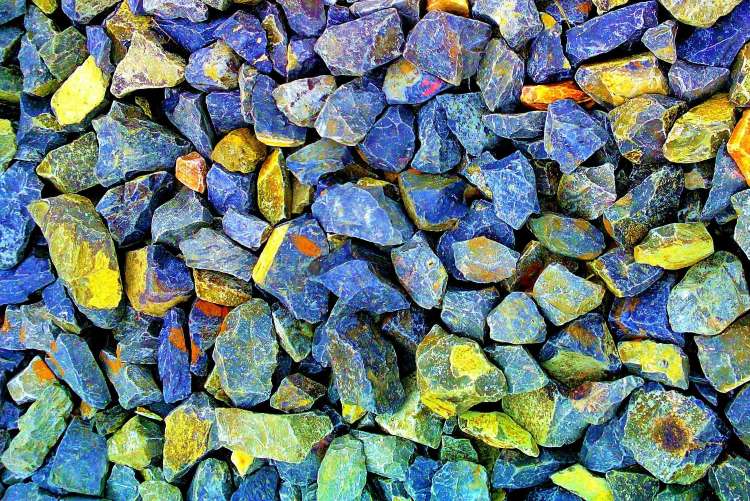
Unlike oil, critical minerals such as copper, graphite, lithium, cobalt, nickel, and rare earth elements are not just fuels. They are inputs embedded across technologies such as solar panels, wind turbines, batteries, electrolysers, electric vehicles, semiconductors, and advanced defence systems, emphasizing their unique strategic value. As a result, countries are not just competing for access to energy, but for control over entire supply chains, from mining and processing to manufacturing.

The urgency is immediate, but the supply response is slow. Developing upstream and midstream capacity can take over 15 years, while building a circular economy can be achieved in a comparatively shorter timeframe.
Demand, however, is accelerating rapidly in the present decade, driven by the global transition to clean energy technologies, decarbonization commitments, climate mitigation imperatives, and international pledges made across forums such as the G20 and COP. This mismatch is forcing countries, especially large economies like India, into a difficult position: deep import dependence in an increasingly unstable geopolitical environment.
READ I India’s critical minerals push needs a midstream reset
A fragmented supply chain reality
A recent study by the authors on Optimizing India’s Critical Mineral Import Portfolio highlights how complex this dependency really is. It examined how India can optimise its economy-wide import portfolio for critical minerals using a model-based assessment approach of potential sourcing partners.
The findings indicate that India’s future import portfolio for critical minerals is not uniform but sharply divided across three segments. Ores and concentrates are tied to geography, dominated by resource-rich countries such as Australia, Chile, Canada, and the Democratic Republic of Congo. Intermediate and finished products, utilised across economy-wide sectors, are controlled by industrial and processing hubs, with China at the centre, alongside Japan and South Korea. Meanwhile, scrap and recycled materials follow entirely different trade networks, dominated by China, Russia, and regional trade hubs.
This segmentation reveals a crucial truth: that mineral security is not just about access to resources. It is about control over value chains.
READ I Critical minerals mission to power clean-tech supply chain
China and the new mercantilism
China, more than any other country, has systematically positioned itself at the centre of global critical mineral value chains and transformed them into instruments of industrial and geopolitical power.
Over the past two decades, China has systematically secured overseas mining assets while simultaneously building dominant processing and refining capacity. Today, it controls roughly 90 percent of rare earth processing, along with significant shares in lithium, cobalt, and graphite value chains.
This is strategic. China has effectively operationalised a modern form of mercantilism by securing upstream resources globally, building domestic industrial capacity, using scale to undercut global competition, and controlling technology and exports when needed.
The result is a structural dependency that even advanced economies have struggled to reduce, despite subsidies, trade agreements, and strategic alliances such as the Minerals Security Partnership (MSP) and the Quad. The recently launched Forum on Resource Geostrategic Engagement (FORGE), however, signals a more coordinated attempt to diversify supply chains, strengthen allied cooperation, and reduce excessive dependence on concentrated mineral processing hubs.
India’s strategic dilemma
For India, the challenge is not just dependence, but the temporal structure.
Domestic mining and processing ecosystems will take years to mature. Circular economy adoption in India, while promising, is still nascent. Yet, the demand for critical minerals across clean energy and defence is accelerating rapidly. This leaves imports as the immediate solution, but also the biggest vulnerability. Analysis from the authors’ study suggests that while strategic imports of raw materials will remain necessary, excessive dependence on imported processed products amid rising geopolitical fragmentation and supply-chain vulnerabilities is increasingly unsustainable. At the same time, complete import independence is neither feasible nor economically efficient. This is where India risks being locked into the lowest-value segment of the supply chain.
What India can do
India’s response must be strategic, not reactive. The National Critical Mineral Mission (NCMM), launched in 2025 in recognition of the urgency, has the potential to execute its ambitions. First, it must build allied supply chains by leveraging trade agreements and partnerships with countries outside China’s dominant network across Latin America, Southeast Asia, and Central Asia.
Second, India must invest across the entire value chain, from upstream mining to midstream refining to downstream manufacturing. Competing with China will require long-term capital commitment, not short-term return expectations. Hence, multilateral investment opportunities and co-operation with allies would be strategically well-placed. At the same time, India must confront the structural constraint of being a highly price-sensitive market. This means that any domestic value chain must be designed to remain cost-competitive despite higher initial investments.
To manage this, India can pursue co-investment models, technology partnerships, and demand aggregation with allied countries such as Australia, Japan, and Russia to achieve economies of scale and reduce input costs, rather than relying solely on protectionist measures like price flooring, which could raise prices domestically.
Third, India has a unique opportunity to lead in circular economy systems. India already has a vast informal recycling sector. Formalising and scaling this could provide a strategic edge in secondary material supply. Doing this would entail improving policies towards collection, extraction, and recovery, financial implications such as reverse charge mechanisms in GST, constant technology upgradation, skilling and re-skilling the labour force, and a strong, adaptive research and development segment.
Finally, India must make the difficult but necessary choice of prioritisation. Attempting to simultaneously meet the demands of both defence and energy transition risks diluting strategic focus and intensifying pressure on critical mineral supply chains. Strategic sequencing rather than parallel expansion will, therefore, be key, alongside maintaining a diversified energy mix that reduces excessive dependence on critical minerals concentrated within specific clean energy technologies and supply chains, ensuring long-term energy security and sustainability.
A new resource order
The world is not moving away from resource competition; it is redefining it.
For India, the question is not whether to participate but how. It can remain a price-sensitive importer at the mercy of global shocks, or it can become a strategic actor shaping resilient, diversified, and future-ready supply chains.
The window to choose is narrow. And in this new resource order, delay is the costliest dependency of all.
Soumit Pandey is Junior Research Associate, and Dr Animesh Ghosh Senior Research Fellow at Ashoka Centre for a People Centric Energy Transition (ACPET). Originally published under Creative Commons by 360info
