


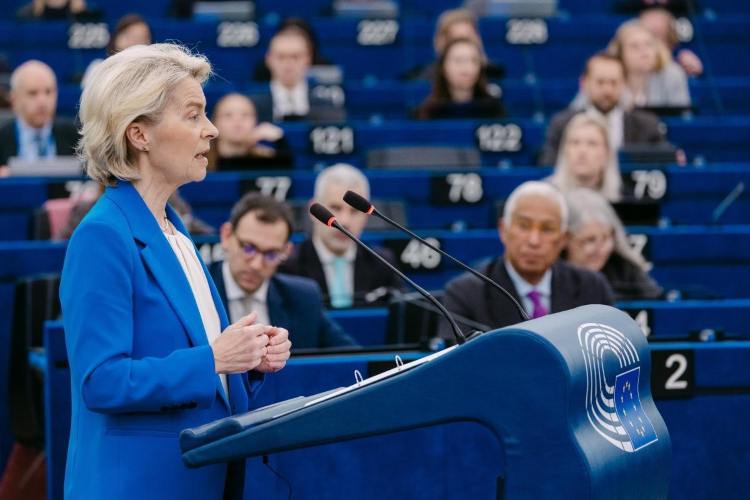
The presence of the President of the European Council and the President of the European Commission as chief guests at India’s 2026 Republic Day parade signals more than diplomatic warmth. It reflects a recalibration of India–Europe engagement around mobility, services, and people-to-people exchange. Tourism, often dismissed as a soft sector, sits at the centre of this shift.
In advanced economies, it functions as a strategic services industry linking culture, healthcare, mobility, and regional development. Europe’s experience suggests that tourism succeeds less because of destinations than because of institutional coordination—making this diplomatic moment a prompt for India to rethink tourism as an economic pillar.
READ I Trump’s tariffs tax Americans, not foreign exporters
Europe’s integrated tourism model
Tourism contributes roughly 10 per cent of global GDP and supports one in ten jobs worldwide. In Europe, policy has moved beyond destination marketing to system design. Religious travel, leisure tourism, medical mobility, and long-stay experiences are treated as complementary streams. Rome and Santiago de Compostela extend pilgrimage into cultural circuits.


Alpine and coastal regions manage seasonality through wellness, conferences, and festivals. Medical tourism is underwritten by insurance portability and cross-border healthcare arrangements. Tourism is therefore structured as a year-round economic ecosystem, supported by transport, insurance, and urban infrastructure, rather than as seasonal consumption.
READ I India-EU FTA and the emerging global economic power
Institutional coordination, not scale
The European model rests on coordination across ministries and regulators. Tourism is not confined to a single department. Transport networks, healthcare systems, insurance frameworks, and external mobility policies are aligned to reduce friction for visitors. This design allows Europe to convert visitor flows into predictable, high-value economic activity. Scale follows coordination, not the other way around.
India presents a contrast. Its assets—pilgrimage circuits, globally competitive healthcare, wellness traditions, and geographic diversity—operate in silos. Religious tourism draws millions to Kashi, Ayodhya, Mathura, and Tirupati, but visits are short and infrastructure prioritises crowd management over experience design. Integration with leisure or wellness remains limited. The outcome is high footfall with shallow economic depth.
Leisure tourism shows similar fragmentation. Destinations such as Goa and Kashmir experience sharp seasonal swings, leaving infrastructure idle for long periods. The North-East, despite ecological and cultural advantages, remains constrained by connectivity gaps and weak institutional support. Officials involved in infrastructure and tourism planning acknowledge that the constraint is not destination scarcity, but the absence of coordination across tourism, transport, and external mobility.
READ I India’s MSMEs need systems, not more schemes
Medical tourism: Scale without systems
Medical tourism offers India its most scalable opportunity. World-class outcomes at a fraction of Western costs, English-speaking professionals, and internationally accredited hospitals provide a strong base. Combined with Ayurveda, yoga, and wellness traditions, India holds a distinctive position in global healthcare travel. Yet medical tourism remains fragmented. Patients arrange visas, treatment, accommodation, and recovery independently.
Insurance portability is limited. Post-treatment recovery is rarely integrated into destination planning. Countries that link hospitals with recovery hubs retain visitors longer and generate higher per-capita value. India captures only a part of this potential.
The cost of institutional gaps
The core difference between Europe and India lies in institutional design. Europe treats tourism as a coordinated system spanning healthcare, transport, insurance, and urban planning. India treats it as a collection of destinations administered in silos. The result is higher transaction costs for international visitors and the loss of long-stay, high-value demand, particularly in medical travel. The absence of insurance portability reinforces dependence on episodic, out-of-pocket visits.
India’s tourism transition requires institutional reform, not new destinations. An integrated framework would link religious tourism, leisure travel, and medical–wellness mobility. Pilgrimage centres could connect with cultural and wellness circuits. Medical hubs could align with recovery destinations such as Kerala, Rishikesh, or the North-East. Leisure destinations could be developed as year-round hubs through festivals, conferences, and wellness infrastructure. Tourism would then function as a continuous economic cycle rather than isolated visits.
Priority areas are clear: integrated tourism corridors; insurance portability for medical travel; coordinated medical mobility infrastructure; and structured inter-ministerial coordination across tourism, health, aviation, and external affairs. Regional specialisation would reduce seasonality and improve asset utilisation. Senior officials have noted that without predictable insurance and mobility frameworks, India will remain dependent on fragmented medical travel rather than attracting institutional flows.
Tourism and Viksit Bharat 2047
Tourism aligns closely with the objectives of Viksit Bharat 2047—employment generation, regional development, and services exports. Globally, it is among the most employment-intensive sectors. In India, it already supports large numbers of jobs across skill levels. Medical and wellness tourism strengthen this alignment. With treatment costs 60–80 per cent lower than in advanced economies, post-care recovery and wellness spending can anchor sustained local economic activity.
From a development perspective, integrated tourism supports balanced regional growth, MSME expansion, and services export diversification. When aligned with healthcare and mobility infrastructure, tourism becomes a driver of long-term economic transformation rather than a peripheral activity.
The presence of European leadership at India’s Republic Day reveals how diplomacy now operates through mobility and services as much as through trade agreements. In the India–EU relationship, tourism offers a visible pathway to translate engagement into development outcomes. Europe’s experience shows that success depends on institutional alignment, not scale alone.
India already possesses the cultural depth, medical capability, and geographic diversity required. What remains is administrative resolve. If institutions are aligned with assets, tourism can evolve into a strategic pillar of growth, employment, and economic diplomacy.
Dr Priya Gupta is Associate Professor, Atal Bihari Vajpayee School of Management and Entrepreneurship, Jawaharlal Nehru University, New Delhi.