


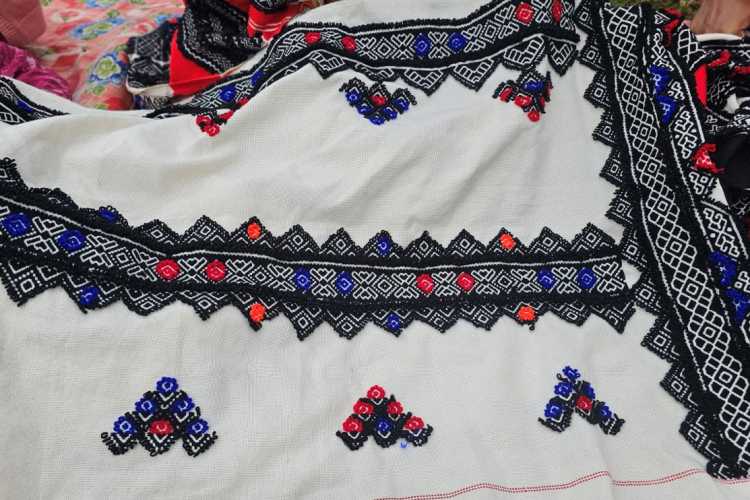
Toda embroidery GI tag: In mid-March 2026, at a Toda mund in the Nilgiris, an elderly woman worked on a thick white shawl. A finished putukuli lay across her shoulders, its black geometric bands broken by red and blue motifs. The unfinished shawl on her lap would take weeks.
A 48-year-old artisan had already spent 25 days on one putukuli and expected at least 15 more. “After I complete it, I will give it to the cooperative, and they will pay me around ₹4,000 to ₹5,000,” she said. Tourists usually paid ₹11,000 to ₹13,000 for the finished shawl.
READ | India can learn from China’s GI tag success story
Toda embroidery now has official recognition and a place in Nilgiri tourism. The women who make it still receive a small part of the retail price. Such returns give younger artisans little reason to depend on the craft for a livelihood.
Toda embroidery after GI registration
Toda Embroidery received Geographical Indication (GI) registration on March 4, 2013. The registration remains valid until September 2028. Since 2013, Toda shawls, bags and mufflers have appeared at craft exhibitions, tourism outlets and online stores.
For the Toda community, the putukuli is a garment of identity and ceremony. Its geometric designs grew within a pastoral culture centred on buffalo herding and the Nilgiri grasslands. Women learn the patterns by working beside older artisans.
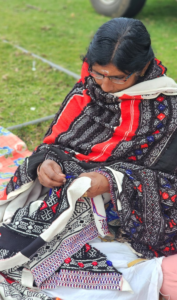

A Toda artisan practicing embroidery outside a Mund in the Nilgiri Hills..
“When we wear the putukuli, people recognise who we are,” said a 64-year-old artisan who had received a central government award for her embroidery. Another awardee stood beside her holding a certificate. Both said that awards and public recognition had brought no regular income.
The GI registration gave the embroidery a protected name. It did not determine what an artisan would be paid for several weeks of work.
READ | Devaraja Market: Mysuru must restore living heritage
Toda embroidery in the Nilgiri tourism market
Tourists now buy Toda shawls as products of Nilgiri culture. Artisans said buyers often saw the finished piece without understanding the labour behind it.
A muffler can take nearly a week, depending on the design. Every motif is stitched by hand. “The work is very difficult,” said a younger Toda artisan. “People think it is simple because they only see the final product.”
Several settlements visited during the fieldwork, including Kodanad, Aanakal, Neerkasi and Mulli munds, were far from major retail centres. Artisans therefore relied on cooperatives, self-help groups or intermediaries to reach buyers.
These channels give remote settlements access to a market. They also separate artisans from the final sale and the price paid by the tourist. Demand exists, but too little of the sale price reaches the woman who did the work.
Toda women carry the labour cost
Women in several settlements said they spent three to four hours a day on embroidery alongside housework, care of children and elders, and fuelwood collection. Much of the stitching was done in poor light.
Middle-aged and older artisans reported back, shoulder and neck pain, as well as weakening eyesight. Women in remote munds also had limited access to healthcare.
READ | GM mustard delay has deepened India’s edible oil shortage
Craft promotion rarely covers occupational health or income protection. Yet embroidery is largely women’s work in the Toda community. The low return falls on women who already carry most of the unpaid work at home.
Several artisans said the payment did not reflect the hours spent on each piece. For them, the physical cost of preserving the craft remains largely private.
Toda embroidery and the next generation
Education and salaried employment have given young Toda people options outside their settlements. Many still value the putukuli as part of their identity, but hesitate to treat embroidery as dependable work.
“The income is not enough for the amount of our hard work,” said a 19-year-old artisan.
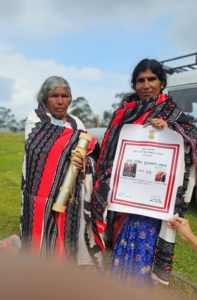

Two Toda artisans holding national award recognising their contribution to traditional embroidery practices in the Nilgiris.
Toda designs are learnt through practice beside older women. When fewer young women stitch, there are fewer occasions to pass on the designs and the knowledge attached to them.
The craft developed within the Toda pastoral economy and the grassland environment of the Nilgiris. Its future now depends partly on whether embroidery can compete with other forms of employment available to younger people.
Toda embroidery needs institutions that pay artisans better
Stronger cooperatives could improve the bargaining position of Toda artisans and reduce their dependence on intermediaries. Direct sales through digital platforms could also leave them with a larger share of the price paid by consumers.
Community-based tourism should give Toda settlements a role in decisions about craft sales and visits. Tourism income linked to the community’s culture should reach the people whose work draws visitors.
Health insurance, occupational care, pension support and income security remain limited for many artisans, according to the field interviews. Embroidery has to be treated as work, with the protections due to workers.
The Ministry of Tribal Affairs lists the Toda among Tamil Nadu’s Particularly Vulnerable Tribal Groups. Schemes for PVTGs should cover artisan health and livelihoods along with cultural preservation.
GI registration cannot keep a craft alive when a woman earns ₹4,000 to ₹5,000 for about 40 days of work. The putukuli will remain part of Toda life only if the women who make it can earn a living from it.
Dr Soumyabrata Mondal is Raja Jwala Prasad Post-Doctoral Fellow at Department of Economics, Banaras Hindu University. Dr Saheli Kumar is Research Assistant, Department of Physical Education, Banaras Hindu University.