


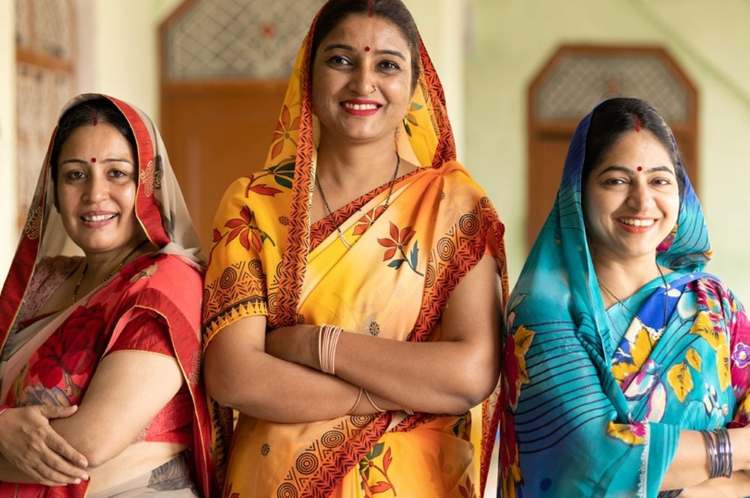
On September 17, 2024, PM Narendra Modi launched the Subhadra Yojana in Bhubaneswar. The date was his birthday, and the BJP’s communications machinery did not waste the detail. The first transfers went into women’s Aadhaar-enabled, DBT-linked bank accounts that day. The Union government said the Prime Minister initiated transfers to more than 10 lakh women at launch.
Under Subhadra, eligible women aged 21 to 60 receive ₹50,000 over five years, from 2024-25 to 2028-29. The annual ₹10,000 is paid in two instalments of ₹5,000. The stated coverage is more than one crore women.
READ I Women empowerment incomplete without safety, work and agency
Subhadra Yojana and Odisha welfare spending
₹833 a month is the scheme’s actual arithmetic. That sum is useful to a poor household. It can pay for food, medicines, transport, school expenses, or debt service. It is still less than two days of Odisha’s notified unskilled minimum wage. The Union statistics ministry’s reply to Parliament placed rural Odisha’s monthly per capita consumption expenditure at ₹3,357 in 2023-24. Subhadra’s monthly transfer is about a quarter of that figure.
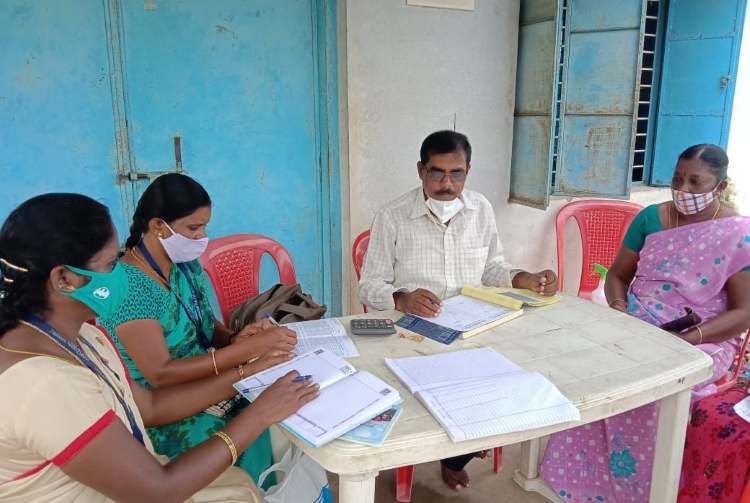

That makes the scheme a consumption supplement. It may reduce distress at the margin. It does not, by itself, create skills, assets, credit access, bargaining power, or independent income. Those require institutions around the transfer. Subhadra has very little of that.
READ I Pink tax hurts women’s income and Indian economy
Odisha budget and fiscal risk
Odisha enters this experiment from a position of relative fiscal strength. PRS Legislative Research notes that the state’s 2025-26 budget projected a revenue surplus of 3% of GSDP and a fiscal deficit of 3.2%. The revised fiscal deficit for 2024-25 was 3.1%, below the budgeted 3.5%. The state’s own budget highlights projected year-end debt stock at 12.7% of GSDP in 2025-26.
That is why the question is not insolvency. It is lock-in. A recurrent transfer of this size becomes a claim on future budgets. Odisha can afford Subhadra today. It still has to fund it through commodity cycles, elections, pay revisions, pension growth, capital works, and a changing mining economy.
The risk is sharper because Odisha’s fiscal comfort is tied to minerals. PRS’ 2026-27 analysis says 75% of the state’s own non-tax revenue is estimated to come from mining. Iron ore and coal receipts are cyclical. They are also drawn from finite resources. Funding a permanent political entitlement from such revenue is not the same as using it for roads, irrigation, logistics, schools, or industrial infrastructure.
READ I Women entrepreneurs grow, but labour gaps persist
Subhadra Yojana and Mission Shakti politics
The Subhadra Yojana’s politics is central to its economics. Subhadra was the BJP’s answer to the BJD’s Mission Shakti network. Mission Shakti says it has around six lakh women’s self-help groups with about 70 lakh members. That network gave the BJD organisation, credit channels, local legitimacy, and a women’s constituency built over years.
The BJP offered a simpler proposition. Individual cash, paid into bank accounts, without group mediation. A May 2024 report in The New Indian Express described the promise as an attempt to pull women SHG members away from the BJD’s orbit. The electoral result gave that strategy weight. The BJP ended Naveen Patnaik’s five-term rule.
A transfer born from electoral competition is not illegitimate. Competitive welfare has expanded pensions, food security, cooking gas, housing, toilets, and bank accounts across India. The problem begins when the language of empowerment is used for a scheme that offers money but no pathway to income.
Women empowerment without institutional design
Subhadra Yojana has no published baseline on beneficiaries’ pre-scheme income, assets, debt, work status, mobility, or control over household spending. Without that baseline, the Odisha government cannot credibly measure whether the transfer changes women’s agency or only household liquidity.
The scheme does not link the payment to skilling. It does not convert transfer history into a credit score or collateral substitute. It does not connect women to procurement, e-commerce, producer companies, local value chains, or industrial jobs. It does not ask whether the beneficiary controls the money after it reaches her account.
That last point is not academic. Mission Shakti’s experience showed that access to funds does not automatically mean control over funds. In many rural households, men still decide how women’s money is spent. A bank credit entry can coexist with weak bargaining power inside the home.
The disbursement calendar underlines the political nature of the programme. Instalments are tied to Raksha Bandhan and International Women’s Day. These are symbolic dates, not economic milestones. A scheme built around income generation would reserve at least part of the transfer for training completion, enterprise registration, savings deposits, working capital, or market participation. Subhadra pays, records the payment, and moves to the next cycle.
Cash transfers and the empowerment claim
Supporters cite the multiplier. That argument has force. Money placed in the hands of poor households is spent quickly, often locally. It supports small shops, transport, food vendors, medicine sellers, and informal services. In a demand-constrained local economy, that matters.
But the multiplier is a macroeconomic defence of cash transfers. It is not proof of women’s economic empowerment. Consumption demand can rise without women gaining durable income, market access, or bargaining power. A welfare programme may be justified on poverty grounds and still fail as an empowerment programme.
The counterfactual is uncomfortable because Odisha has sectors where women’s work could move up the value chain. Pattachitra, Sambalpuri textiles, dhokra metalwork, forest produce, food processing, tailoring, and rural services all need design support, working capital, quality control, digital catalogues, procurement access, and logistics. A fraction of Subhadra’s outlay could have capitalised women-led clusters or guaranteed credit for micro-enterprises.
That would not replace cash support for poor women. It would make part of the transfer productive. Odisha could have paid the first instalment as household support and tied later support to savings, training, enterprise formation, or market access. It chose not to.
Subhadra Yojana transfers money. That is a real act of public spending. It will ease some household strain and reward a political promise. But the scheme’s claim to empowerment rests on the act of payment, not on any institutional route to income, assets, or control. At ₹55,825 crore over five years, that gap is too large to be called a design flaw. It is the design.
Nihar Nalini Sarangi is a Cuttack-based commentator on political economy and public policy.