


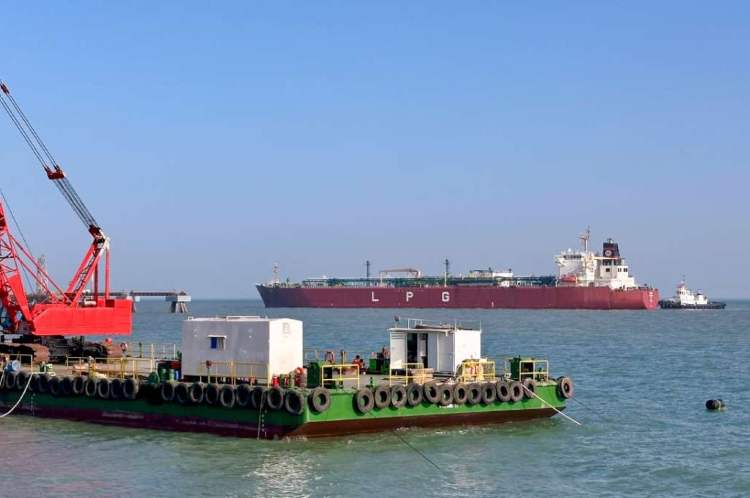
Straits are the Achilles’ heel of global maritime trade- narrow passages that carry an outsized share of the world’s commerce. When they are choked, even briefly, the impact travels far beyond their geography. The recent disruption, followed by the reopening of the Strait of Hormuz, was a reminder of how exposed the global economy remains to these vulnerable chokepoints.
With traffic through Hormuz restored, markets have steadied. Oil prices have softened and immediate supply fears have receded. The larger concern remains. If such disruptions become a recurring geopolitical tool rather than an exception, the damage will go well beyond a temporary price spike.
The Strait of Hormuz, the Strait of Malacca and the Bab el-Mandeb are among the most sensitive pressure points in global trade. Hormuz is still the world’s most important oil transit chokepoint. Bab el-Mandeb feeds into the Suez route, and Malacca connects the Indian and Pacific Oceans. The dependence is concentrated; the vulnerability is obvious.
READ I Trump’s Iran threats will run into hard limits
UNCLOS and freedom of navigation
International law recognises this imbalance. Under the United Nations Convention on the Law of the Sea, coastal states exercise sovereignty in the territorial sea, but straits used for international navigation are subject to the regime of transit passage, which is meant to ensure continuous and expeditious movement. Proximity does not confer a right to obstruct.

The risk lies in the erosion of that understanding. If disruption in Hormuz is treated as a legitimate strategic signal, it sets a precedent for similar behaviour elsewhere. Chokepoints can then become bargaining instruments, with access shaped by politics or by selective restrictions dressed up as security policy.
Such a shift would alter the character of global trade. The seas, long treated as open highways, would begin to resemble controlled corridors. Maritime geography would be used to extract leverage rather than facilitate commerce.
READ I What Iran’s resilience reveals about decentralisation
Economic risks from Hormuz disruption
The economic effects would be immediate. Energy markets would react sharply even to minor disruptions. For import-dependent economies such as India, that would mean higher inflation, pressure on public finances and slower growth. Supply chains would stretch, freight rates would rise and insurance costs would harden across sectors.
The precedent is more dangerous than the incident. Once one state uses a chokepoint for leverage, others will be tempted to follow. What begins as an isolated episode can harden into pattern. The risk of militarisation rises as states move to secure or bypass critical routes.
The 2021 Suez Canal blockage offers a useful baseline. That disruption was accidental, yet it still held up trade on a massive scale and exposed the fragility of global logistics. Hormuz points to something more troubling: the possibility of deliberate disruption. If that logic spreads across chokepoints, the trading system will become structurally more expensive and less predictable.
READ I Iran war escalation is redrawing the rules of war
Chokepoint resilience and alternate routes
Yet vulnerability is not the whole story. The system has built some buffers, and they matter. Saudi Arabia and the UAE already have pipeline infrastructure that can bypass Hormuz. The U.S. Energy Information Administration estimates that, in a disruption, about 2.6 million barrels a day of spare bypass capacity could be available through Saudi and UAE pipelines, including the Abu Dhabi pipeline to Fujairah, which links onshore fields to a terminal on the Gulf of Oman. That does not neutralise a Hormuz shock, but it does show that states have not remained passive in the face of chokepoint risk.

The same is true of maritime security. In the Red Sea, multinational naval frameworks have already been deployed to protect commercial shipping. Operation Prosperity Guardian was launched in response to attacks on merchant vessels, and U.S. officials said in early 2024 that more than 1,500 merchant ships had transited the Red Sea safely under that defensive presence. The operation remained in place into 2025, according to Pentagon briefings. Again, this is not a solution to coercion at sea. It is evidence that the international system does possess some capacity for organised response.
Energy markets, too, are less rigid than before. The International Energy Agency has noted growing liquidity and pricing diversity in global LNG markets, while long-term contracts remain an important risk-sharing mechanism. That flexibility does not eliminate the inflationary impact of a maritime shock, but it does help explain why not every disruption produces an uncontrolled spike.
Energy security and strategic reserves
For India, the exposure is direct, but so is the need for preparedness. India has already created strategic petroleum reserves through Indian Strategic Petroleum Reserves Ltd, with Phase I capacity of 5.33 million metric tonnes at Visakhapatnam, Mangaluru and Padur. These reserves are not large enough to insulate the economy from a prolonged maritime crisis, but they are meant precisely to cushion short-term supply disruptions and buy time for policy response.
That is why the real policy question is not whether chokepoint risk exists. It plainly does. The question is whether buffers will be strengthened before episodic disruption turns into accepted statecraft. India’s interest lies not only in defending freedom of navigation as a legal principle, but also in expanding strategic reserves, diversifying suppliers, and backing alternate corridors that reduce overdependence on a handful of sea lanes.
Open seas or controlled corridors
The response, then, has to be consistent. Freedom of navigation is not a slogan. It is an operating condition for global stability. It has to be upheld through diplomacy, collective pressure and adherence to established norms. But realism also demands that countries build redundancy into trade and energy systems before the next crisis arrives.
Straits are weak links, but they are also lifelines. Restrict them, and the system weakens. Allow even occasional disruption to become normal, and a new equilibrium emerges—one in which geography dictates power and access comes at a price. The choice is not abstract. It is between an open maritime order with built-in resilience, and a fragmented one in which every narrow passage becomes a checkpoint.
Col Mohinder Pal Singh, PhD is an Army veteran and a defence analyst.