


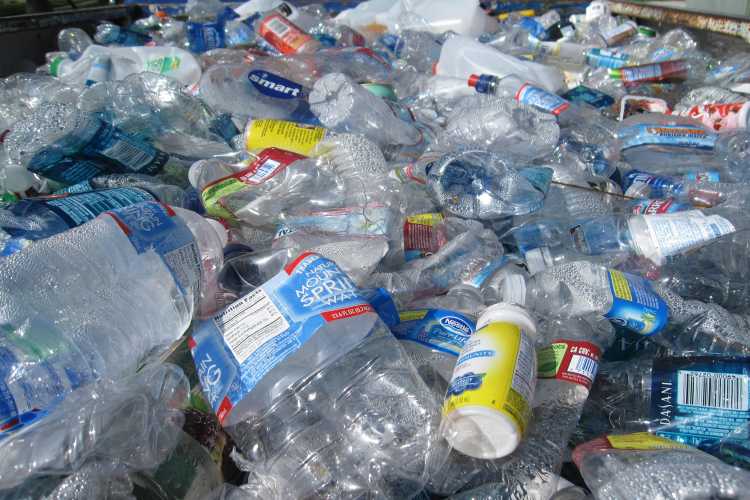
South Asia plastic waste problem: The world is still without a treaty to curb plastic pollution. Negotiations in Geneva broke down in August last year, and a resumed session in February 2026 was confined to procedural business. Informal consultations are now meant to prepare the ground for another formal round in March 2027. South Asia cannot afford to plan its response around that timetable, with plastic consumption and waste rising faster than many municipal systems can handle.
South Asian governments do not have the luxury of waiting. They have already put many of the necessary legal instruments in place, from restrictions on single-use plastics to Extended Producer Responsibility (EPR). The harder task is making these rules work. That requires collection networks, recycling capacity, reliable markets for secondary materials, finance and credible systems for measuring what happens to waste after it leaves a household or factory.
READ | Plastics treaty fate exposes weakness of global resolve
The arithmetic is heading the wrong way. The OECD expects global plastic waste to rise from 353mn tonnes in 2019 to more than 1bn tonnes by 2060 if current policies remain in place. Much of the increase will come from emerging Asian economies, where urban growth and higher consumption are adding to already strained waste systems. For South Asia, the risk is straightforward: more plastic entering cities that are still struggling to collect, sort and recycle what they produce today.
For South Asia, the policy question is therefore less about writing another set of rules and more about converting existing obligations into functioning economic arrangements. Public-private partnerships can help, but only if governments move beyond the conventional model of contracting out waste collection.
Plastic rules have moved faster than waste systems
The regulatory direction is already visible across the region.
India’s National Green Tribunal Act requires the tribunal to apply the Polluter Pays Principle. The Plastic Waste Management Rules go further. The EPR framework notified in 2022 assigns responsibilities to producers, importers and brand owners and sets out roles for pollution-control authorities, recyclers and waste processors.
Bangladesh’s National Action Plan for Sustainable Plastic Management takes a life-cycle approach based on reducing, reusing and recycling plastic. It proposes EPR, economic instruments and investment in waste-management infrastructure. Pakistan’s Single-use Plastics (Prohibition) Regulations, 2023 also incorporate producer responsibility and envisage transferring part of the cost of collection towards polluters. Sri Lanka prohibited several categories of single-use plastic products from October 2023.
These measures matter. But a legal obligation does not create a recycling plant, organise segregated collection or guarantee a buyer for recycled resin. Bangladesh’s own plastic-management plan identifies infrastructure, finance, technology and institutional capacity among the requirements for making its strategy work.
The same problem confronts much of the region. Environmental law can decide who bears responsibility. It cannot by itself organise the chain of transactions through which discarded plastic acquires value and returns to production.
That is where a different form of PPP becomes relevant.
READ | How India helped scuttle the global plastics treaty
PPPs should build markets, not merely collect waste
Most municipal waste partnerships begin with a service contract: a private operator is paid to collect, transport or process garbage. Plastic pollution demands a wider arrangement because responsibility is dispersed across producers, consumers, local authorities, recyclers and waste workers.
EPR offers a potential financing mechanism. Producers that place plastic packaging in the market have obligations for its subsequent management. A well-designed partnership can connect that obligation to municipal collection systems, sorting facilities and recycling capacity. It can also provide recyclers with more predictable volumes of material.
The design of such contracts matters. A private operator will naturally prefer waste streams that have commercial value. PET bottles are easier to monetise than contaminated films or low-value multilayer packaging. A poorly structured PPP can therefore produce impressive collection numbers while leaving the most difficult plastic untouched.
Governments should contract for measurable outcomes rather than tonnes of waste moved from one location to another. Recycling claims need independent verification. Material flows should be traceable. Payments should recognise the cost of handling low-value plastics. Public reporting is particularly important where companies can meet regulatory obligations by acquiring recycling certificates or credits.
The informal waste economy also has to be accommodated. Waste pickers already perform much of the collection and sorting on which recycling markets depend. A system that diverts valuable material into exclusive private contracts may improve corporate compliance figures while destroying existing livelihoods. Municipalities can instead use cooperatives, producer-responsibility organisations and private recyclers within a common contractual framework.
The objective is an economic chain in which responsibility for plastic survives beyond the factory gate.
READ | Plastics treaty talks expose India’s economic dilemma
Plastic pollution crosses South Asia’s borders
National regulation has another limitation. Plastic entering a river does not stop at a political boundary.
The World Bank has explicitly described South Asia’s marine plastic problem as regional because rivers and seas cross national borders. In 2020, the Bank, the South Asia Cooperative Environment Programme and Parley for the Oceans launched the $50 million Plastic Free Rivers and Seas for South Asia project. Its design sought greater cooperation between countries as well as investment and collaboration between public and private actors.
That approach deserves to be developed further. South Asia has little reason to maintain incompatible definitions of recycled material, separate monitoring methodologies and wholly national markets for secondary plastic.
Common standards would make it easier for recyclers to sell material across borders. Comparable data would allow regulators to identify leakage rather than merely record collection. Joint technical programmes could reduce the cost of developing recycling technologies. Larger regional markets would also improve the economics of investment in specialised processing facilities that may not be viable when confined to smaller national markets.
SACEP is particularly well placed to take this work forward. The institution already brings together the eight South Asian countries on environmental issues and has supported regional action on marine litter and solid waste.
Regional cooperation need not wait for a grand political agreement. Standards, data protocols, technical training and specific recycling projects offer more practical starting points.
Making circularity investible
The circular economy will remain a slogan unless someone has an economic reason to collect plastic that would otherwise be discarded.
EPR can provide part of that incentive. Public procurement can create demand for products containing recycled material. Municipal contracts can guarantee feedstock for processing facilities. Financial institutions can fund recycling infrastructure when revenue streams are sufficiently predictable. Digital systems can improve verification where regulators have access to the underlying data.
Government retains a central role throughout. PPP does not mean transferring environmental responsibility to companies. The state must set standards, enforce producer obligations, prevent false recycling claims and ensure that contracts do not reward the easiest waste streams while abandoning the rest.
Private participation is useful because plastic waste is also an industrial problem. Packaging design determines recyclability. Manufacturers influence demand for secondary raw materials. Recycling businesses determine whether recovered plastic has commercial value. Banks and investors decide whether processing capacity gets built.
South Asia already has many of the laws required to assign responsibility. Its next challenge is to construct the economic machinery through which that responsibility can be discharged.
The test for a new PPP model is fairly simple. Who pays for collection? Who verifies recycling? Who will buy the recycled material? Who bears the cost of plastic with little commercial value? Partnerships that answer those questions can turn EPR from a compliance requirement into a functioning market. Those that cannot will merely move waste around.
Kapila Chinthaka Premarathne is the Head of the Department of Agricultural Systems and a Senior Lecturer in Agricultural Economics at the Faculty of Agriculture, Rajarata University of Sri Lanka. His research focuses on sustainable development, economics of climate change, rural development and public policy in South Asia.