


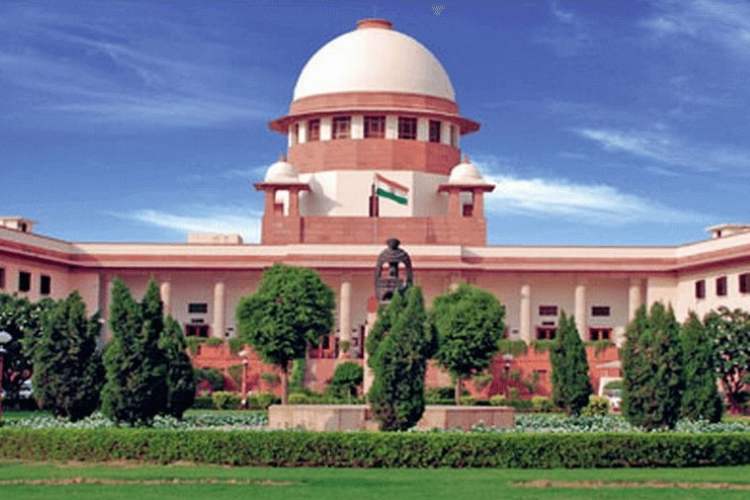
Supreme Court’s menstrual leave judgment: Nobody will hire them in the judiciary or government jobs; their career will be over. With that remark on March 13, 2026, Chief Justice Surya Kant dismissed advocate Shailendra Mani Tripathi’s third public interest litigation seeking nationwide paid menstrual leave for women employees and students.
The bench accepted menstruation as a genuine concern. But it refused to issue a mandamus, and instead asked the Ministry of Women and Child Development to consult stakeholders before framing policy. A documented health issue was thus sent back to the executive, where similar proposals have already stalled.
READ I Menstrual health is enforceable right after Supreme Court ruling
Menstrual leave judgement and Article 21
The reasoning deserves scrutiny. The court held that compulsory leave could disincentivise hiring and reinforce the idea that women are inferior. That view sits awkwardly with the court’s own recent jurisprudence.
In Dr Jaya Thakur v Union of India, the Supreme Court treated menstrual health as part of Article 21’s guarantee of life with dignity. “A period should end a sentence, not a girl’s education,” the court said while directing states to improve menstrual hygiene infrastructure. In that case, menstruation invited constitutional protection. In this one, it was pushed back into the realm of policy choice.


That shift matters. Article 21’s health component, read through Consumer Education & Research Centre v Union of India and Bandhua Mukti Morcha, has long supported a wider idea of dignity at work and in public life. Menstrual pain is not a symbolic inconvenience. It is a workplace issue. Presenteeism caused by severe dysmenorrhoea imposes a cost that formal leave may reduce rather than worsen.
READ I Universal health coverage begins with prevention, not insurance
Gender equality and judicial restraint
What is missing from the dismissal order is as important as what is present. Article 15(3), which permits women-specific measures, finds no meaningful place in the court’s reasoning. Nor does the Supreme Court’s own Centre for Research and Planning white paper, which treats menstrual leave as a health-based accommodation rather than a concession.
Instead, the court echoed a familiar line heard from sections of the political establishment in recent years: that such leave may entrench stereotypes and hurt women’s employment prospects. That is a legitimate concern to test. It is not a substitute for evidence.

The court’s own Handbook on Combating Gender Stereotypes asks judges to resist assumptions that turn biological realities into professional liabilities. Judicial restraint in the face of repeated PILs is understandable. But restraint is not the same as adopting an untested market assumption as constitutional wisdom.
READ I India’s global health opportunity amid US withdrawal
Menstrual leave policy and legislative drift
The legislative record offers little reason to expect quick movement from consultations alone.
Ninong Ering’s 2017 bill proposed two days of paid menstrual leave each month, along with rest facilities. Shashi Tharoor’s 2018 proposal linked menstrual support to educational access. Hibi Eden’s 2022 bill extended the argument to women and trans persons, pointing to endometriosis and other medical barriers. None became law.
A Draft Menstrual Hygiene Policy also remains unimplemented. During the July 2023 Monsoon Session, opposition members cited medical evidence and international experience to argue for structured support. The government resisted a national mandate, preferring state discretion. The matter has since remained there.
State models show feasibility
That makes the state-level record more important. Karnataka’s November 2025 order mandates one paid day off per month across sectors for those aged 15 to 52, without certification. Odisha, in October 2024, gave women government employees 12 additional casual leave days annually. Kerala allows female Industrial Training Institute trainees two paid menstrual leave days a month, with adjusted schedules to preserve training hours.
Bihar has extended menstrual leave to contractual women employees under Bihar Vikas Mission. The Sikkim High Court allows two to three days off with medical documentation. Several law schools, including NALSAR and NLU Delhi, have adopted one-day monthly leave on self-declaration while retaining attendance norms.
These are not abstract proposals. They are operating models.
Menstrual health, hiring fears, and labour market
The central anxiety in the judgment is that menstrual leave will lead employers to avoid hiring women. That is a serious claim. It also requires evidence.
The evidence cited in the draft points the other way. Karnataka, Odisha, Kerala, Bihar and Sikkim have not triggered any visible hiring shock. International examples are also instructive. Japan’s physiological leave regime has existed since 1947 with low uptake. Spain’s 2023 state-funded model likewise has not produced a visible employment disruption. The pattern is consistent: where leave is modest, self-declared and narrowly used, costs remain limited.
That is also why the argument should not be framed as generosity versus efficiency. It is a question of labour design. If women attend work in significant pain but cannot function fully, the economic loss does not disappear merely because it is hidden inside the workday.
Menstrual leave judgment and the limits of deferral
The court is right to be wary of converting every policy demand into a judicial command. But courts do not step outside the separation of powers merely by recognising a right and outlining constitutional principles. They have done so before in matters of workplace dignity, maternity protection and public health.
What the present order does is narrower and less convincing. It accepts the problem, notes the evidence only in passing, and then defers action on the basis of a speculative hiring argument that does not appear to be backed by the court’s own research material.
That leaves menstrual health in an odd constitutional position. It is serious enough to deserve sympathy, but not serious enough to justify enforceable accommodation.
The better view is simpler. Article 21 protects dignity. Article 15(3) permits targeted accommodation. State governments and some institutions have already shown that menstrual leave can be designed without administrative chaos or obvious labour market damage.
The court may have chosen procedural caution. But caution cannot become an alibi for indefinite postponement. Menstrual health is not a matter to be acknowledged and then administratively parked. It is part of the unfinished argument about what equality at work actually requires.
Justy Thomas is the founder of the initiative ‘M for Menstruation’ and Managing Director of Connecting Health Education Equality Rights (CHEER) Foundation.