


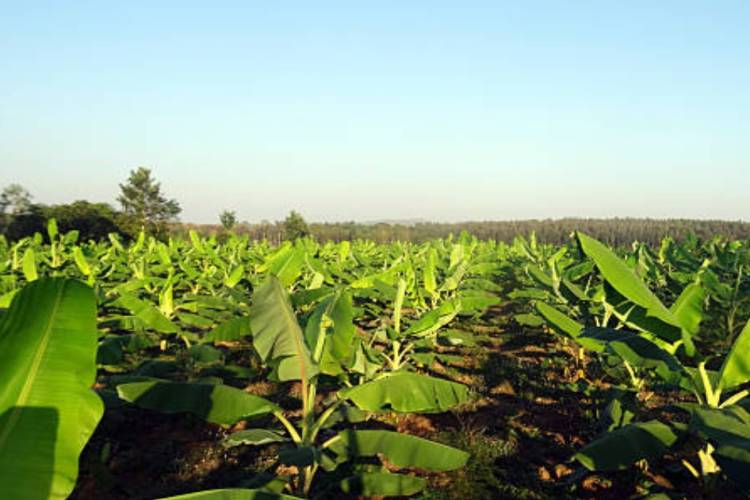
Plantation crops need FPO reform: India exported cashew worth $337 million in FY25. It also imported cocoa to meet domestic demand it could not produce. Along the coasts of Kerala, Tamil Nadu and Karnataka, coconut plantations support millions of livelihoods. These are not marginal geographies; they are large, underused systems where commercial scale and ecological value already coexist. That is precisely where policy has underperformed.
Budget 2026–27 has given coconut, cashew and cocoa greater attention. But recognition is not a strategy. Without institutional depth and executional clarity, policy intent will remain symbolic.
READ | Women’s land rights central to India’s agriculture reform
Coastal plantation crops carry climate value
Cocoa, cashew and coconut are not merely crops. They are long-duration ecological systems. Unlike seasonal agriculture, they hold soil, retain moisture and support biodiversity. A coconut grove on a cyclone-prone coastline is as much protective infrastructure as farmland.
Coconut plantations store about 24 tonnes of carbon per hectare, rising to nearly 139 tonnes in mixed agroforestry systems. That is comparable to secondary tropical forests and above most annual cropland systems. Cocoa plantations also accumulate carbon over time. Yet farmers receive no direct compensation for these climate benefits.
Cashew, cocoa and coconut offer opportunity
The commercial logic is equally strong. Cocoa production remains structurally below domestic demand, making it both an import-substitution and export opportunity. That combination is rare in Indian agriculture. Cashew and coconut already have export channels, but value addition remains limited. Much of the earnings still come from raw or lightly processed output.
This combination of climate value and market opportunity is uncommon in India, though more familiar in parts of Southeast Asia and West Africa. India has not exploited it. The gap is not accidental. Policy has favoured output over environmental performance, and raw commodity exports over processed value.
READ | India’s agriculture sector struggles amid WTO paralysis, tariff hikes
FPOs are the missing institutional link
The core constraint is not production. It is organisation.
Plantation crops require long investment horizons, coordinated processing infrastructure, and compliance with traceability and sustainability standards. These are not functions individual smallholders can perform easily, especially when 86% of Indian farmers operate on less than two hectares, according to the Agricultural Census.
This is where Farmer Producer Organisations are meant to matter. They are supposed to aggregate scale, reduce input costs, enable value addition and improve market access. In plantation systems, their role is even deeper. They are the institutional link through which ecological value can be converted into economic return. Without aggregation, farm-level environmental gains cannot be monetised through certification, processing or export access.
Why FPOs are underperforming
FPOs have remained stronger in concept than in practice. The problem is not the model itself. It is the structural weakness of the institutions built around it.
First, execution capacity is thin. Many FPOs are promoted through top-down schemes with too little attention to local market linkages. The result is an entity without a viable business model.
Second, access to capital is weak. Most FPOs lack working capital. That limits their ability to procure produce, invest in storage and processing, or withstand price volatility. Without financial depth, aggregation remains shallow.
Third, managerial and technical capacity is poor. Many FPOs are run without adequate expertise in supply chains, finance or marketing. That sharply limits their ability to scale or negotiate.
Fourth, governance is often fragile. Weak member participation, poor accountability and promoter-driven decision-making undermine collective ownership. Many FPOs exist largely on paper. When the institutional backbone is weak, downstream gains in value addition, exports or price realisation are unlikely.
Policy misalignment holding back plantation agriculture
The weakness is not only institutional. It is also policy-driven.
Environmental incentives are badly designed. Farmers who maintain mixed agroforestry systems generate measurable ecological gains, yet subsidy systems treat them much like monoculture producers. Sustainability is not rewarded.
Risk protection shows the same disconnect. Plantation crops have gestation periods ranging from five to twenty years, but insurance architecture is still designed around annual crops. A single extreme weather event can wipe out years of investment while leaving farmers poorly protected.
The global market is also becoming less forgiving. European Union deforestation rules and related sustainability standards are raising the bar on traceability and sourcing. Small farmers without access to certification systems will be pushed out of premium markets. The result is a system in which ecological value is neither rewarded nor protected, and market access becomes more unequal.
READ | India’s agriculture crisis deepens amid tariff war
Three policy fixes for plantation crops
The policy direction is broadly right. The follow-through is not. Three targeted fixes can narrow the gap.
First, align incentives with outcomes. A World Bank estimate suggests that a 15-20% per-hectare premium for certified mixed agroforestry systems, delivered through PM-KISAN and linked to Digital Agriculture Mission data, could shift behaviour by rewarding sustainability directly.
Second, redesign insurance for plantation realities. A dedicated product should cover multi-year losses, use weather-index triggers and price risk at the district level. Institutions such as NABARD and the Agriculture Insurance Company could anchor this effort.
Third, make certification accessible. Small farmers cannot overcome complex standards on their own. Embedding certification support within FPOs, backed by upfront public funding, would help them enter premium markets.
India’s coastal plantation economy combines environmental sustainability, commercial viability and livelihood security in a way few agricultural systems do. But potential does not produce outcomes. Without stronger institutions, aligned incentives and credible risk protection, it will continue to underperform. FPOs must move from nominal collectives to functioning economic organisations that can organise value at scale.
Jainam S Jain, Sudhiksha Raju, Vibhi Jain are economics students and Dr Barun Kumar Thakur Associate Professor at FLAME University, Pune.